Search the Community
Showing results for tags 'hypercars'.
Found 4 results
-
Wow, hypercars we do not exist in sgp.
-
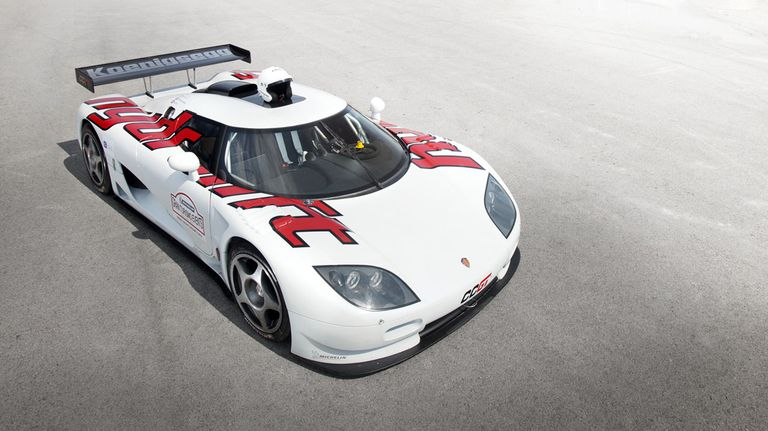
<Why Koenigsegg Never Went Racing, And Why It Doesn't Plan to Start Christian von Koenigsegg explains why his cars have never competed at Le Mans, and why he doesn't intend to participate in the new Hypercar class. KOENIGSEGG Despite building some of the most innovative supercars on earth, Koenigsegg does not currently have a racing team. That's not for lack of trying: Founder Christian von Koenigsegg actually built a viable race car with intent to compete at the 24 Hours of Le Mans when his company was in its infancy. But it never happened, and during a lengthy conversation with the man behind the Swedish performance car company, we learned more about why his Le Mans ambitions fell apart—and whether he hopes to try again. In 2007, Koenigsegg built a fully-functional race car that exactly followed the FIA's Group GT1 rules. The race car, called CCGT, bore a strong resemblance to Koenigsegg's second production model, the CCR. But its roots went back even further, to the very first prototype Koenigsegg built, called CC. As explained on a Koenigsegg company blog post, the original CC, and the race car it spawned, was designed to fit exactly into GT1's dimension requirements: The car could be two meters wide at the maximum, and the cockpit had to span 70 percent of the vehicle's overall width. It had a dry weight of 2200 pounds (significantly below the minimum weight for GT1, which would mean adding ballast to reach the required weight) and was powered by a naturally aspirated V-8 making well over 600 horsepower. But two months after the CCGT's first shakedown runs, the ACO and FIA had a change of heart. The governing bodies banned carbon-fiber monocoque construction, which was used in every Koenigsegg road car and thus formed the basis of the CCGT. The regulators also raised the minimum production requirement dramatically. Previously, an automaker was required to construct 20 street-legal examples of a model, in total, to be eligible to race. After the 2007 change, that number rose to 350 cars per year, impossible for a tiny automaker like Koenigsegg to achieve. The CCGT was ruled out of the class before it ever competed in a single race. The only Koenigsegg CCGT ever built. | KOENIGSEGG "We were aiming to go racing in the GT1 series, which was perfect for our type of cars—road-going hypercars turned race cars" von Koenigsegg told Road & Track during a recent, lengthy conversation. "Then they shut it down right when we were about to go racing, which was very annoying. Since then, there hasn't been any series for these types of cars." The rule change left von Koenigsegg without a place to take his supercars racing. "Even if we would be allowed to go to the highest level of GT racing, we would be competing against Porsche 911s and Ferrari 488s"—sports cars built to vastly different performance goals than Koenigsegg's cars, which commanded well over half a million dollars each. Even if von Koenigsegg had wanted to compete in such a class, he worried that his cars would be "completely downgraded through Balance of Performance via restrictors, because we are not supposed to be any faster. And then it would be just a super-expensive racing car, which would cost more to repair than a 911, and we might even get beaten by a 911 because of BoP, while in reality, they are completely different vehicles. That doesn't make any sense." So Koenigsegg's racing dreams died in 2007, before they could ever become real. But what about today? The WEC's new Hypercar class debuted this year, and it was seemingly built for exactly the kind of extreme vehicles that Koenigsegg builds. But the man behind the Swedish supercar company is unconvinced. "Of course, they started this Hypercar series at Le Mans, but in the end it turned out to be some kind of LMP car again, so it's just a new name for the same kind of thing, more or less." Does von Koenigsegg see a racing future for his cars? Not under the current rules. "The alternative, I guess, is to build some kind of a Le Mans Prototype, which has no relation to our road cars, which I don't find too appealing. I would like to go back to the GT1 type of class, where we [could] see Bugattis, Paganis, Koenigseggs—modified road cars featuring completely different technologies. Not this silhouette racing where you have the same chassis under different bodies. Granted, it would be a very expensive series, given the price of these cars, but then we could build up on what we have. Everyone could showcase something you could actually buy, if you're extremely wealthy. That's what we would like, but I'm not sure if it could ever happen.">

- 3 replies
-
- 2
-

-
- koenigsegg
- ccgt
- (and 27 more)
-
If you thought the original Enzo was a one off car, you'd be wrong. Because there's a new one on the way. The F70 has been confirmed to be put into production and it could be released as early as next year. The ultra-light carbon fibre supercar was first previewed as the 2007 Millechili concept which weighed only a ton! The original Enzo was built as a tribute to Ferrari's founder, and it was meant to showcase how Ferrari's F1 technology could be used on the road. And boy does the current Enzo show how the limits of a road car can be pushed using Formula 1 gadgetry. I've always felt that the Enzo wasn't entirely a good looking car, just like how F1 cars these days look more like carbon-fibre tubes with wheels. It was built with no compromise and design was influenced mostly by the way the car faired in the wind tunnel. Ferrari had built the 'Ultimate' supercar in their already stellar stable. But with the new F70, things are about to get even better. The new Enzo will use a 562bhp, mid-mounted V8 which is derived from the 458 Italia, with a chance that twin turbochargers will be thrown in to add more punch. More F1 inspired aerodynamic designs and weight shedding will be put into the F70 as well and surprisingly, Roberto Fedeli, Ferrari
-
New images have been revealed for the new Ferrari F70 which is set to leave rivals, the Bugatti Veyron and the Lamborghini Reventon, biting the dust. I don't feel like it looks more radical or special than the Reventon, neither does it have the presence or power of the Veyron, but this Stallion is going to be seriously quick. Its more serious and more focused than the Enzo, smaller, lighter and more fuel efficient. There are even rumours that a twin-turbo V8 is going to be at the heart of this Ferrari, which will be the first use of turbos since the Ferrari F40. The use of turbos may be due to Ferrari's efforts to become Greener, they have kick-started efforts to reduce CO2, having slashed output by 10 per cent in 2009. It promises further cuts from its current 387g/km average by 2012. But don't think for one moment that Green = slower. Ferrari are thinking of using hybrid chargers which utilize a small electric motor to spool up the turbos to prevent turbo lag. If their idea works, the F70 will have virtually no turbo lag at all, and that car will become legendary. The F70's output is likely to be 660bhp, but with a lightened load, that should bring this car's performance to another level. Expect a three-second 0-60mph time and top speed in excess of 370km/h. Just like the Enzo, not everyone can buy one of these, you need to be specially invited by Ferrari to buy one. So hopefully, Mr Tommy Goh gets an invitation and we will be able to see the F70 on Singapore roads one day.. maybe in 2012. We'll look out for it.