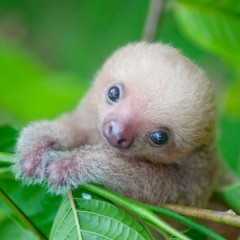
SGMCF328 Turbocharged March 28, 2025 Share March 28, 2025 It is not about Singapore (human) population but still a piece of good news. The efforts of our zoological team pay dividends. And 998 is quite an auspicious number too. 🙃 Bountiful baby year: S’pore wildlife parks welcomed close to 1,000 newborns in 2024 Source: https://www.straitstimes.com/singapore/bountiful-baby-year-spore-wildlife-parks-welcome-close-to-1000-newborns-in-2024 It was a huge bundle of joy for Mandai Wildlife Reserve in 2024 as it welcomed 998 baby animals across its parks. The bumper births surpassed 2023’s 970 newborns, which was then the highest number of babies the wildlife parks have collectively produced since 2013. Among the new additions are 34 species listed as threatened under the International Union for the Conservation of Nature’s Red List of Threatened Species, Mandai Wildlife Group (MWG) said on March 27. Singapore Zoo One of them was Putri, a proboscis monkey whose wild populations are declining due to habitat loss from deforestation for timber and oil palm plantations. Putri, whose name means “princess” in the Malay and Indonesian languages, is the second offspring to parents Malaka and Jeff. She can often be seen playing with her brother Bayu or clinging to her mother at the proboscis monkey habitat. Of the 143 species that gave birth in 2024, 23 are part of internationally managed breeding programmes such as the European Association of Zoos and Aquaria’s Ex-situ Programme. The arrival of five slender-tailed meerkat pups – the twins residing at the Great Rift Valley of Ethiopia and the triplets at Wild Africa – marks the first births of the species since 2019, said MWG. Adding to the list of crowd charmers is a female Linne’s two-toed sloth named Hope and three oriental small-clawed otters. Another highlight was the arrival of two Goeldi’s monkeys – the first infants in nine years – along with four ring-tailed lemurs and two emperor tamarins. In the realm of reptiles and amphibians, the endangered golden mantella and black-legged poison frog were among the key breeding successes, said MWG. “These species require highly specific water conditions for reproduction, and the animal care team achieved a breakthrough by studying and fine-tuning optimal water parameters,” it said, adding that the team also simulated natural seasonal changes, such as adjusting temperatures and humidity, to improve breeding success. “In a crucial step, eggs were carefully retrieved for assisted hatching, to maximise chances of survival.” The efforts put in led to a total of 31 golden mantella hatchlings, which was the highest in three years. According to MWG, another of its key breeding efforts focused on the Chrisangi leaf insect, a species native to Singapore, to prevent extinction and support conservation efforts. Night Safari A bounty of fawns were also birthed at Night Safari in 2024. Among the additions were three Malayan sambar deer, five barasinghas, and a male hog deer. The arrival of three Turkmenian markhor kids also marked a milestone as the first offspring for the species in five years. Markhors, with their wide hooves, are perfectly adapted to the rocky, mountainous terrains that they inhabit in the wild. MWG also welcomed a male woylie, the fifth joey born at Night Safari since 2021, at the Tasmanian Devil Trail. The joey, which initially stayed close to its mother after birth, is now growing bolder, curiously exploring its habitat and engaging in enrichment activities. River Wonders At River Wonders, it welcomed two special additions – a giant anteater pup and a West Indian manatee calf. Solana, the fifth pup born to Zapata and Iapura, has transitioned to a solid diet of ant eggs and boiled eggs. As she continues to get used to the presence of keepers, the playful young one often climbs onto its mother’s back for comfort. Meanwhile, the shy West Indian manatee calf at the Amazon Flooded Forest has formed a friendship with a young female born in 2023. The two can often be seen grazing together. The latest calf, like her buddy, was bottle-fed by the aquarists and tended to round the clock as no nursing behaviour was observed from its mother. The endangered Lake Titicaca frog was also successfully bred by River Wonders in the same year it was first exhibited. The blue discus, a tropical fish native to South America, continues to thrive with 80 new members joining the school. Bird Paradise High conservation value species like the golden parakeet and yellow-mantled chattering lory were born in Bird Paradise in 2024. To ensure their survival, eggs that were neglected or abandoned in the aviaries were safely retrieved and incubated at its breeding and research centre. According to MWG, newly hatched chicks are placed in a specially controlled environment. The chicks will be hand-raised and gradually exposed to fluctuations in temperature and humidity, preparing them for release to the aviaries. Other notable baby birds included first-time hatchings for MWG, such as the blue-winged leafbird, Madagascar teal and Meller’s duck as well as the first Nyasa lovebird and green honeycreeper hatchlings in over seven years. They also celebrated its first-ever penguin hatchlings with two gentoo penguin chicks born to first-time parents Riki and Peach, and one to parents Citrus and Enzo. ↡ Advertisement 8 Link to post Share on other sites More sharing options...
13177 Hypersonic March 28, 2025 Share March 28, 2025 Good news, means animals in S’pore wildlife parks is growing. 1 Link to post Share on other sites More sharing options...
Arogab Turbocharged March 28, 2025 Share March 28, 2025 Wow Link to post Share on other sites More sharing options...
kobayashiGT Internal Moderator March 28, 2025 Share March 28, 2025 aye!!! this monkey tells lie! Why his nose so long!!! hahahaha. 6 Link to post Share on other sites More sharing options...
SGCM928 5th Gear March 28, 2025 Share March 28, 2025 On 3/28/2025 at 9:32 AM, SGMCF328 said: It is not about Singapore (human) population but still a piece of good news. The efforts of our zoological team pay dividends. And 998 is quite an auspicious number too. 🙃 Bountiful baby year: S’pore wildlife parks welcomed close to 1,000 newborns in 2024 Source: https://www.straitstimes.com/singapore/bountiful-baby-year-spore-wildlife-parks-welcome-close-to-1000-newborns-in-2024 It was a huge bundle of joy for Mandai Wildlife Reserve in 2024 as it welcomed 998 baby animals across its parks. The bumper births surpassed 2023’s 970 newborns, which was then the highest number of babies the wildlife parks have collectively produced since 2013. Among the new additions are 34 species listed as threatened under the International Union for the Conservation of Nature’s Red List of Threatened Species, Mandai Wildlife Group (MWG) said on March 27. Singapore Zoo One of them was Putri, a proboscis monkey whose wild populations are declining due to habitat loss from deforestation for timber and oil palm plantations. Putri, whose name means “princess” in the Malay and Indonesian languages, is the second offspring to parents Malaka and Jeff. She can often be seen playing with her brother Bayu or clinging to her mother at the proboscis monkey habitat. Of the 143 species that gave birth in 2024, 23 are part of internationally managed breeding programmes such as the European Association of Zoos and Aquaria’s Ex-situ Programme. The arrival of five slender-tailed meerkat pups – the twins residing at the Great Rift Valley of Ethiopia and the triplets at Wild Africa – marks the first births of the species since 2019, said MWG. Adding to the list of crowd charmers is a female Linne’s two-toed sloth named Hope and three oriental small-clawed otters. Another highlight was the arrival of two Goeldi’s monkeys – the first infants in nine years – along with four ring-tailed lemurs and two emperor tamarins. In the realm of reptiles and amphibians, the endangered golden mantella and black-legged poison frog were among the key breeding successes, said MWG. “These species require highly specific water conditions for reproduction, and the animal care team achieved a breakthrough by studying and fine-tuning optimal water parameters,” it said, adding that the team also simulated natural seasonal changes, such as adjusting temperatures and humidity, to improve breeding success. “In a crucial step, eggs were carefully retrieved for assisted hatching, to maximise chances of survival.” The efforts put in led to a total of 31 golden mantella hatchlings, which was the highest in three years. According to MWG, another of its key breeding efforts focused on the Chrisangi leaf insect, a species native to Singapore, to prevent extinction and support conservation efforts. Night Safari A bounty of fawns were also birthed at Night Safari in 2024. Among the additions were three Malayan sambar deer, five barasinghas, and a male hog deer. The arrival of three Turkmenian markhor kids also marked a milestone as the first offspring for the species in five years. Markhors, with their wide hooves, are perfectly adapted to the rocky, mountainous terrains that they inhabit in the wild. MWG also welcomed a male woylie, the fifth joey born at Night Safari since 2021, at the Tasmanian Devil Trail. The joey, which initially stayed close to its mother after birth, is now growing bolder, curiously exploring its habitat and engaging in enrichment activities. River Wonders At River Wonders, it welcomed two special additions – a giant anteater pup and a West Indian manatee calf. Solana, the fifth pup born to Zapata and Iapura, has transitioned to a solid diet of ant eggs and boiled eggs. As she continues to get used to the presence of keepers, the playful young one often climbs onto its mother’s back for comfort. Meanwhile, the shy West Indian manatee calf at the Amazon Flooded Forest has formed a friendship with a young female born in 2023. The two can often be seen grazing together. The latest calf, like her buddy, was bottle-fed by the aquarists and tended to round the clock as no nursing behaviour was observed from its mother. The endangered Lake Titicaca frog was also successfully bred by River Wonders in the same year it was first exhibited. The blue discus, a tropical fish native to South America, continues to thrive with 80 new members joining the school. Bird Paradise High conservation value species like the golden parakeet and yellow-mantled chattering lory were born in Bird Paradise in 2024. To ensure their survival, eggs that were neglected or abandoned in the aviaries were safely retrieved and incubated at its breeding and research centre. According to MWG, newly hatched chicks are placed in a specially controlled environment. The chicks will be hand-raised and gradually exposed to fluctuations in temperature and humidity, preparing them for release to the aviaries. Other notable baby birds included first-time hatchings for MWG, such as the blue-winged leafbird, Madagascar teal and Meller’s duck as well as the first Nyasa lovebird and green honeycreeper hatchlings in over seven years. They also celebrated its first-ever penguin hatchlings with two gentoo penguin chicks born to first-time parents Riki and Peach, and one to parents Citrus and Enzo. The baby penguin is so cute. "Why you take photo of me?" And the photo directly before the penguin remind me of this 3 Link to post Share on other sites More sharing options...
SGMCF328 Turbocharged May 22 Author Share May 22 (edited) Baby orang utan Ayaan, Ah Meng’s great-grandson, born after artificial insemination at Mandai Source: https://www.straitstimes.com/singapore/environment/meet-ayaan-the-first-baby-orang-utan-conceived-by-artificial-insemination-delivered-via-c-section-at SINGAPORE - On paper, it was the perfect match. Charlie, a 48-year-old resident of the Singapore Zoo, and the girl next door, Chomel, granddaughter of beloved icon Ah Meng. The offspring of these two unrelated Sumatran orang utans would add vital diversity to the gene pool of their species, which is critically endangered. And while 29-year-old Chomel was already the mother of two, it would be Charlie’s first progeny, and would help to preserve his genetic legacy. They were thus paired up, as recommended under a regional breeding programme for orang utans. But when their romance failed to blossom after four years, the zoo’s animal care team turned to medical technology for help. On March 18, following a dramatic birth by caesarean section, Mandai Wildlife Group welcomed Charlie and Chomel’s son and its first orang utan baby – and the first among its primates – conceived through assisted reproduction. The caesarean birth, also a first for Mandai primates, was necessitated after Chomel developed placenta praevia, a condition that could complicate delivery. The baby was named Ayaan, which means blessing in Arabic. Mandai Wildlife Group’s deputy vice-president of veterinary healthcare and scientific programmes Heng Yirui said on May 21: “To our knowledge, this is the first documented case of an orang utan birth spanning artificial insemination, placenta praevia and a successful caesarean delivery.” Visitors may be able to glimpse mother and son, and another baby whom Chomel is fostering, at the orang utan exhibit at the Singapore Zoo from May 21. They will be present from Thursdays to Sundays and on public holidays. Native to Malaysia and Indonesia, orang utans are under threat from deforestation and hunting, among other things. There are three species: Bornean, Sumatran and Tapanuli. The World Wildlife Fund estimates that there are currently around 13,800 Sumatran orang utans in the wild. The zoo tries to ensure genetic diversity through regional breeding programmes with other zoos. Ensuring that Charlie’s unique genes were preserved was critical, as a diverse collective gene pool helps keep primate populations in human care healthy and resilient, Mandai Wildlife Group’s curator of animal care (operations) Wendy Chua told The Straits Times. “Charlie didn’t have any progeny at all, which is why he is ranked amongst the most important to breed,” she said. “If he were to pass on with no offspring, there’s nobody else left to carry his genes.” Under the SEAZA breeding programmes coordinated regionally, the animal care team could look for a suitable partner in Singapore or abroad to match with Charlie. In 2018, the animal care team determined that Charlie and Chomel, being genetically distant, would make a good match. “Their offspring (would be) stronger, healthier and survive to be much better individuals,” said Ms Chua. Since they were at the same zoo, there was no need to transport a suitable orang utan from another country. Ms Chua said Charlie was also getting close to the upper end of his lifespan, making breeding more urgent. Orang utans can live up to 60 years under human care and between 35 and 45 years in the wild. But when Charlie showed no interest in mating with Chomel, the animal care team decided to try artificial insemination, which had been successfully used at Mandai for giant pandas and African lions. The team began trying from May 2022 and succeeded on the third attempt. Charlie’s semen collection was carried out through a trained voluntary process, made possible by his comfort and trust in his caregivers. As for Chomel, the team closely tracked and monitored her reproductive cycle to gauge the best time to insert Charlie’s semen, said Dr Heng. He added that the success rate of artificial insemination in orang utans is thought to be under 10 per cent. With artificial insemination in great apes not commonly performed, the team had little information and scientific research to turn to. For assistance, Mandai also engaged a team of neonatal and obstetrics and gynaecology specialists from the human healthcare field. Chomel had to be closely monitored, with blood and urine samples taken and undergoing several ultrasound scans, said Ms Chua. “If she refused to be on command on one of the days, everything would just be derailed,” she said. But Chomel turned out to be a joy to work with and did not have issues cooperating, said Dr Heng. On July 28, 2025, Chomel was sedated and inseminated with Charlie’s semen. Three weeks later, she was confirmed to be pregnant. “All the stars had aligned,” said Ms Chua. The gestation period for orang utans is about 8½ months, and it was smooth-sailing until the keepers noticed Chomel had two episodes of notable vaginal bleeding in January, about six months into her pregnancy. “This was cause for alarm for all of us. We were basically in a state of panic,” said Dr Heng. An ultrasound scan, however, revealed that the baby was doing well. After further checks, the vet team found that Chomel had placenta praevia – a condition in which the placenta completely or partially covers the opening of the uterus. This could have complications for a natural birth, especially for the mother, said Dr Heng. “If the animal were to go through natural birth, the baby would tear through the placenta and result in severe bleeding (for the mother),” he added, noting that the condition in orang utans is not well documented. Chomel could bleed to death. Mandai opted to deliver the baby by caesarean section. It set the surgery for March 18, about eight months into Chomel’s pregnancy. Following weeks of extensive discussions and tabletop exercises during preparations, Chomel was placed under general anaesthesia at her den and then transported to the zoo hospital on the morning of March 18. Blood had been collected from her cousin, who is also called Ah Meng, in case she haemorrhaged and needed a transplant. A team of neonatal and obstetrics and gynaecology specialists was also on site to give advice. A 10cm incision was made, and the 1.6kg baby was delivered successfully at 9.45am. The whole procedure took about 20 minutes. The operating theatre was silent when the baby was lifted from the womb. Instead of making a healthy wail and being of pinkish hue, the infant, slightly larger than two hands, was silent and had a blue tinge. The tension in the room was palpable. A healthy newborn orang utan should be strongly gripping and clinging almost immediately, which is instinctive for arboreal species whose survival depends on holding on to mum, said Ms Chua. Ayaan had a low heart rate, with no vocalisation and a weak response to touch. Dr Heng said: “If the baby didn’t breathe or make any noise by three minutes, we would have declared him dead.” But the baby began showing signs of life, with his heart rate and colour increasing by the minute. The team waited. At the seventh minute, when he took his first breath, the team finally let go of theirs. “It’s the longest seven minutes I’ve ever faced,” said Ms Chua. In the meantime, Chomel was stitched up and transferred back to her den. The baby was placed in an incubator and returned to his mother at 1pm. “There was an immense sense of relief when Ayaan took his first breath, and even more so when Chomel woke up from anaesthesia and took him into her embrace,” said Dr Heng. She began nursing Ayaan within 24 hours of the procedure, said Mandai. For a while, Chomel showed signs of discomfort and lacked appetite – until she was tempted by durians, said the team. She has now fully recovered, and both mother and son are doing well, said Mandai. On top of caring for Ayaan, Chomel is also fostering a baby belonging to another orang utan. Dr Heng said his team is looking to publish this successful birth in scientific journals to help zoos dealing with similar cases in great apes under managed care. “As people on the front line having to deal with a situation like this, there was really not much information for us to rely upon, for us to be able to replicate the successes of others,” he said. “Having to navigate this ourselves now and having a success on our belts put us in a position to then share whatever we have done with the rest of the world, with the zoo community and with primatologists as well.” Edited May 22 by SGMCF328 1 Link to post Share on other sites More sharing options...
Ghgan 6th Gear May 22 Share May 22 Should get Indranee and her team to do an indepth case study with the zoo, leave no stone unturn, every idea that can improve the TRF will help. Actually they can just reference South Korea's example on how they managed to reverse their declining TFR after a long period. Spend so much time/resources on all the useless task force committees, don't know for what. Link to post Share on other sites More sharing options...
Volvobrick Hypersonic May 22 Share May 22 On 5/22/2026 at 11:43 AM, Ghgan said: Should get Indranee and her team to do an indepth case study with the zoo, leave no stone unturn, every idea that can improve the TRF will help. Actually they can just reference South Korea's example on how they managed to reverse their declining TFR after a long period. Spend so much time/resources on all the useless task force committees, don't know for what. "Charlie’s semen collection was carried out through a trained voluntary process, made possible by his comfort and trust in his caregivers." What's there to study??? Link to post Share on other sites More sharing options...
Ghgan 6th Gear May 22 Share May 22 On 5/22/2026 at 11:47 AM, Volvobrick said: "Charlie’s semen collection was carried out through a trained voluntary process, made possible by his comfort and trust in his caregivers." What's there to study??? Generally speaking, it is more difficult for many animal species kept in captivity to have babies compared to their wild counterpart. Even with artificial Insemination, stress and environment issue might have impact to pregnancy or miscarriage and so on. The zoo must be doing some thing right which might be able to apply to human context. 1 Link to post Share on other sites More sharing options...
Volvobrick Hypersonic May 22 Share May 22 On 5/22/2026 at 12:20 PM, Ghgan said: Generally speaking, it is more difficult for many animal species kept in captivity to have babies compared to their wild counterpart. Even with artificial Insemination, stress and environment issue might have impact to pregnancy or miscarriage and so on. The zoo must be doing some thing right which might be able to apply to human context. Sounds same like humans living in overcrowd cities. ↡ Advertisement Link to post Share on other sites More sharing options...

Recommended Posts
Create an account or sign in to comment
You need to be a member in order to leave a comment
Create an account
Sign up for a new account in our community. It's easy!
Register a new accountSign in
Already have an account? Sign in here.
Sign In NowRelated Discussions
Related Discussions
Singapore Property Scene Discussion
Singapore Property Scene Discussion
Artificial Intelligence /AI revolution - The next Revolution
Artificial Intelligence /AI revolution - The next Revolution
Crazy weather in Singapore ?
Crazy weather in Singapore ?
Xpeng X9
Xpeng X9
Should we help each other?
Should we help each other?
I wonder how much is true in this video - The Dark Side of Singapore’s Economic Miracle
I wonder how much is true in this video - The Dark Side of Singapore’s Economic Miracle
S’pore May Use Nuclear Energy By 2050, Cites Improvements In Safety & Reliability
S’pore May Use Nuclear Energy By 2050, Cites Improvements In Safety & Reliability
Kyoto travel tips needed - baby in tow
Kyoto travel tips needed - baby in tow