Search the Community
Showing results for tags 'formula1'.
Found 12 results
-
When Louis Vuitton entered Formula One earlier this year, it felt like just another luxury-brand sponsorship. Then Balenciaga collaborated with Lamborghini. Porsche continued its relationship with Aimé Leon Dore. Puma's Speedcat made an unlikely comeback. And Lewis Hamilton turned up as a Lululemon ambassador. Louis Vuitton's arrival in Formula One highlights how motorsport has become a meeting point for luxury, sport and global culture (Image: LVMH) Individually, these seemed like unrelated stories. But the more I looked at them, the more I realised they were all part of the same trend: Brands from completely different industries are increasingly finding their way into automotive culture. So why does everyone suddenly want a piece of the motoring world? This isn't exactly new Before anyone points out that fashion and motoring have always mixed, they'd be right. Ferrari and Tod's have enjoyed a long-running relationship, while Louis Vuitton has spent decades producing bespoke luggage for luxury automobiles. Watchmakers and car manufacturers have also been collaborating for so long that most enthusiasts barely notice anymore. What's changed isn't the existence of these partnerships. It's their scale. Today, brands aren't just creating special-edition products. They're entering entire communities, experiences and cultural spaces built around cars. And there doesn't seem to be any sign of that slowing down. The answer may have less to do with brands and more to do with consumers themselves. Think about your own interests Here's a simple question. If you're reading Sgcarmart, are you only interested in cars? Probably not. You might also appreciate watches. Sneakers. Travel. Fitness. Technology. Formula One. Most enthusiasts don't neatly separate their interests into individual boxes. The person shopping for a sports car today could be browsing watches tomorrow and researching their next holiday destination over the weekend. That's precisely what many brands have realised. Consumers no longer define themselves by a single passion. Their interests overlap, and increasingly, brands are following suit. For brands, that creates an obvious opportunity. The challenge isn't finding consumers with interests. It's finding spaces where multiple interests naturally converge. Which brings us back to cars. So why cars? Of all the lifestyle spaces available, why does automotive culture seem to attract so much attention? Because cars occupy a unique position. They combine design, engineering, technology, luxury, travel, competition and aspiration in one package. Few hobbies sit at the crossroads of so many different interests. If brands are looking for a place where different passions naturally overlap, cars are one of the most effective places to find it. Which brings us back to Formula One. What once looked like a sponsorship deal now feels like a natural extension of Formula One's growing lifestyle appeal (Image: LVMH) If there's one example that best explains this trend, it's probably the world's biggest motorsport championship. When Formula One and LVMH announced a 10-year partnership in 2024, bringing brands such as Louis Vuitton, TAG Heuer and Moët Hennessy further into the sport, it wasn't simply about racing. It was about audience. And that's exactly what makes Formula One so valuable. It sits at the intersection of sport, luxury, technology, entertainment and lifestyle culture. Follow the audience, follow the money Let's be honest: Brands don't spend millions because something looks fashionable. They do it because the numbers make sense. According to Nielsen Sports, Formula One's global fanbase has grown to more than 826 million people worldwide, while race attendance exceeded 6.5 million spectators during the 2024 season. More importantly, the audience is evolving. Data from Formula One's 2025 Global Fan Survey paints a revealing picture. Women account for three out of every four new fans entering the sport, while nearly half of Gen Z respondents were female. The survey also found that 61% of respondents engage with Formula One content daily, and 76% felt sponsors enhanced the sporting experience. Viewed through that lens, Louis Vuitton's involvement suddenly feels less like an unusual partnership and more like a smart business decision. Formula One now offers access to the exact audiences many brands want to reach: Younger, digitally engaged and culturally influential consumers. More than just products One of the clearest examples of this shift remains Porsche's partnership with Aimé Leon Dore. Porsche and Aimé Leon Dore's partnership succeeds by celebrating craftsmanship, heritage and timeless design (Image: Aimé Leon Dore) On the surface, it's a collaboration involving classic Porsche restorations and apparel collections. But the real appeal goes far beyond the products themselves. The partnership taps into ideas such as craftsmanship, heritage and good taste. Many of the people admiring these projects may never own a classic Porsche, and that's perfectly fine. They're engaging with the values associated with it. Balenciaga and Lamborghini may come from different worlds, but both trade in exclusivity, aspiration and bold design (Image: Balenciaga) Balenciaga's collaboration with Lamborghini works in a similar way. Most people won't own a Lamborghini. Yet plenty are drawn to what the brand represents: Performance, ambition and exclusivity. In many cases, consumers aren't buying the product first. They're buying into the identity and values behind it. And it's not just luxury brands This is where things become especially interesting because automotive culture isn't attracting only luxury brands. Originally inspired by motorsport, the Puma Speedcat's resurgence proves racing culture can thrive far beyond the paddock (Image Puma) Take Puma's Speedcat. The shoe's roots are firmly planted in motorsport, but many people buying a pair today couldn't tell you who won Monaco 20 years ago. That doesn't matter. They're buying into the aesthetics and culture of racing. During Puma's FY2024 earnings presentation, CEO Arne Freundt described the relaunched Speedcat's early results as "promising", while the sneaker has re-emerged as one of fashion's biggest success stories over the past year. Hamilton's influence now extends well beyond racing, making him an ideal ambassador for brands seeking cultural relevance (Image: Lululemon) The same idea can be seen in Lululemon's partnership with Lewis Hamilton. Hamilton's appeal extends far beyond racing. He represents performance, wellness, style and cultural relevance. Motorsport simply happens to be the entry point. What does this mean for consumers? On one hand, it's a positive development. The overlap between industries has created unique products, experiences and communities that simply wouldn't have existed a decade ago. And if we're being honest, most enthusiasts already live this way. Cars, watches, travel, technology and fashion often overlap naturally. But there's also another side to the story. As brands become increasingly skilled at selling lifestyles, consumers should probably think about what they're actually buying. Sometimes it's a genuinely great product. Sometimes it's a compelling narrative. Increasingly, it's both. Final thoughts Perhaps the most telling thing is how unsurprising all of this now feels. Louis Vuitton in Formula One. Balenciaga with Lamborghini. Lululemon signing Lewis Hamilton. A decade ago, these pairings might have seemed unusual. Today, they feel entirely natural. Cars, fashion, fitness, travel and luxury once occupied separate corners of the consumer world. Today, they're increasingly part of the same conversation. The bigger takeaway isn't that brands are entering the automotive space. It's that automotive culture has become one of the most effective ways to reach new audiences. And if the past few years are anything to go by, even more brands are likely to want a seat on the grid. That raises a broader question: If brands no longer see boundaries between industries, should consumers?
-
Journey to Singapore starts at 27:20mins.
- 2 replies
-
- 3
-

-
- gumball3000
- mbs
- (and 1 more)
-
let's kick start F1 2017 with this great news this old fart must go .... hopefully we will have an exciting season and not always Merc 1-2 finish

-

-
Source: https://www.motor1.com/features/667804/formula1-bernd-maylander-safety-car-aston-martin/ There’s an amazing stat that in Formula 1’s entire history only one man has led over 1,300 laps in 212 Grands Prix, and yet he’s not even scored a single championship point. His name is Bernd Maylander, and he drives the F1 Safety Car. Maylander, from Waiblingen in the southwest of Germany, has the ice-cold veins required when F1’s hot heads get out of line and crash. When the race needs to be neutralized, with the drivers’ lives literally on the line, he takes control in his specially prepared FIA Safety Car vehicle. “The two calls are ‘safety car standby’ and ‘safety car deployed’,” says Maylander, who alternates between a Mercedes-AMG GT Black Series and an Aston Martin Vantage F1 Edition. “And the moment they say ‘deployed’ I’m on the track, find the leader – then I get extra information if there’s an accident, maybe I have to stay right or left at a corner, I get told if there is debris.” Maylander, a former racer himself in the DTM and FIA GTs, is in his 24th season of driving the F1 safety car and has only missed a couple of races since his debut in 2000. Mercedes was the sole supplier of the safety car until Aston Martin joined the program in 2021, when duties became shared between the two cars. “It was very professional how Aston Martin joined the FIA,” says Maylander. “The first event was at Mugello during the Covid era, and here it was, the Vantage F1 Edition, it’s definitely a great sportscar. It’s definitely a bit different, the suspension, so the setup is a little bit different [to the more powerful Mercedes]. “Sometimes I feel like James Bond a bit! With Mercedes I raced for them, and maybe one day I can race an Aston... Maybe a historical one, or something.” The Aston Martin Vantage F1 Edition is a twin-turbocharged 4.0-liter V8-powered coupe producing 528 horsepower, enough to get to 62 miles per hour in 3.6 seconds and on to a top speed of 195. It features an extra-large rear wing with a Gurney flap to produce a “very nice balance” – according to Maylander. “I really like it,” he says. “I’d sat in one brand’s model for more than 20 years, then along came the Aston Martin and my first thought was ‘let’s see how good this car is’ – I’d never driven one before in my life.” Where this car really differs from the model you can buy for the street is in the trunk, which is packed with electronic system control units, a wifi router, the same GPS tracker found in the F1 race cars, radio systems, and a data logger. “All the equipment we have inside the car – communications and wifi systems, GPS mapping, TVs – is for us to follow the race,” he says. “We have all this assistance inside the safety car, and we run on the racetrack every day in the morning to check it’s all working.” Four cameras – two on the rear wing and two mounted on top of the roof, ensure Maylander has a great view of the all-important F1 race cars behind. His steering wheel and the console are standard, but with some extra switchgear for the safety car lights and radio (including a backup) and monitors that show the live TV feed, GPS driver tracker, and live timing. The Vantage has a regular-sized fuel tank, and two cars (four in total, along with the medical cars) are brought to every event – and they alternate their use between F1 and the FIA-sanctioned support races. Maylander admits they must have the engine running for the duration of the races, to keep its electrical systems and air conditioning powered up “so we’re not in a sauna for two hours.” Bernd usually gets through one set of tyres per car per weekend, but this can stretch to two sets if there’s a lot of action. He adds: “We have four mechanics with us, looking after tyres, brakes – I think between them they could fix everything.” Since its introduction in 2021, even the 113-degree Fahrenheit heat of Jeddah in Saudi Arabia hasn’t proved a problem for the Vantage: “We haven’t had any problems with this car at all since we started, no issues.” He always has a quick debrief with the mechanics after every race, but “it’s always quite short before we rush to the airport.” Maylander rarely gets a spotlight put upon him – but Max Verstappen’s “turtle” jibe about the Vantage in last year’s Australian Grand Prix, when he claimed it was lapping too slowly to allow him to keep sufficient tire temperatures, certainly stung a little. “The first 10 to 15 years, there was never any complaining from the drivers,” says Maylander on the topic. “But we were from a different time. Especially since 2022, with the new F1 cars with bigger tyres, then we heard some things, and I understand their side but they have to see our side too. “When we, the FIA, deploy the safety car, it’s all about safety first. If you ever think from your seat in the grandstand or on your sofa at home ‘why is he driving so slow?’ There is a reason for that. I’d say, 90 percent of the time, I could drive quicker. But there is a background for this. Sometimes the field needs bunching up, sometimes there is an accident we have to move around.” Although he didn’t make it behind the wheel of an F1 car, Maylander has found his dream job here. And his “safety-first” approach has kept lives safe that would otherwise be put in harm’s way. So is he going to quit any time soon? “These 24 years have run like hell, so I’m ready for the next 10 or 15,” he smiles. “I still get nervous on the grid. But I still have a lot of fun, and it helps with partners like Aston Martin, to enjoy the weekend and the atmosphere.”
-
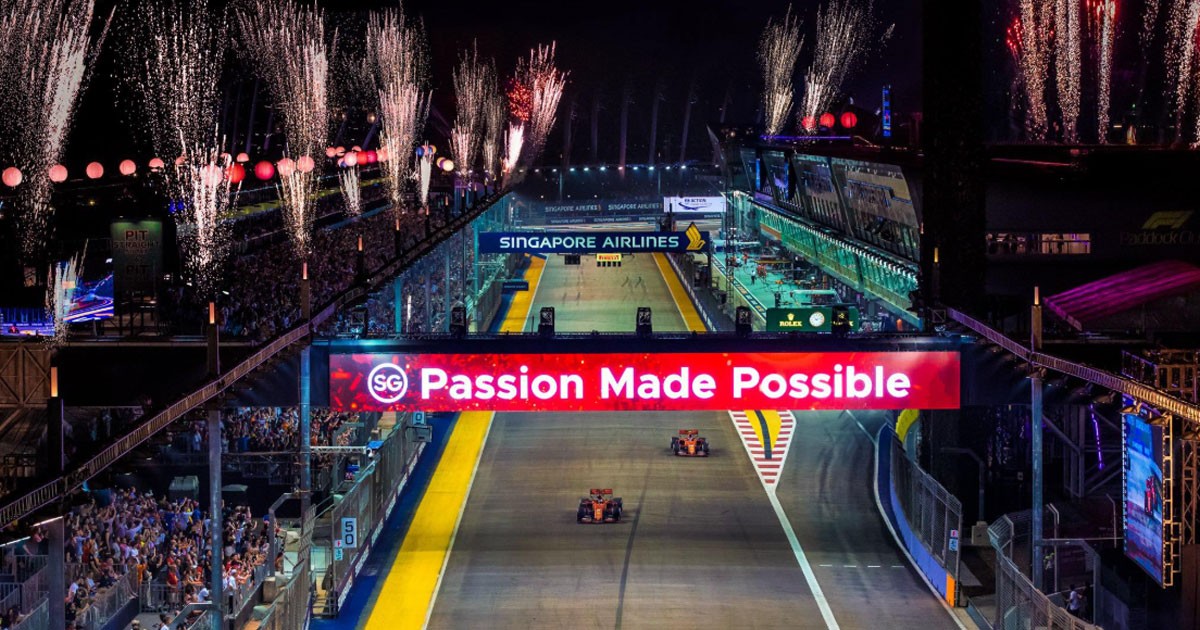
F1 to cancel S'pore night race, online report claims, but no official confirmation yet source: https://mothership.sg/2020/06/covid-19-f1-singapore/ The 2020 Formula One night race in Singapore is reportedly going to be cancelled by organisers, racing publication GPFans reported on June 11, 2020. This news circulated online comes even before organisers of Singapore's race has made any definitive announcement. So, pending official confirmation, the last definitive word from the authorities here was that discussions were still being held and the F1 night race could still take place with some conditions attached, but it was difficult to tell what will happen. Following that, the last major update about the status of Singapore's night race was reported on May 31 by The Straits Times. In the lengthy report, the possibility of a cancellation was mooted. ST wrote: This realistically leaves three options - delay the race; proceed with the original timeline and hope the outbreak would be contained sufficiently to stage the event with spectators in attendance; or, the most plausible scenario, cancel the race. The other writing on the wall is the lack of Singapore race dates on the revised calendar that has been leaked. ST also wrote: While the revised calendar has not been released officially, leaked versions of a provisional calendar show no feasible gaps in the final 11 weeks starting from October to squeeze in a Singapore leg. Delaying the Singapore Grand Prix till the end of the year also runs the risk of racing in the monsoon season, making conditions difficult and dangerous, particularly on the 23-turn track widely regarded as among the sport's most challenging. Minister for Trade and Industry Chan Chun Sing also said at a virtual press conference on May 30, that promoter Singapore GP is in talks with Formula One to see whether the race will go ahead. As discussions were ongoing then, Chan said the fate of the race will be announced in the coming week. Not only Singapore And it is not only Singapore that has been affected. The GPFans report said Formula 1 is set to officially cancel the Azerbaijan and Japanese Grands Prix as well, but there are a host of replacement options on the table. These options include rescheduling the races for a later date in the year -- if conditions permit. But the main reason for the cancellation is due to the obvious logistical and time frame challenges posed by the setting up of a street circuit. Not enough time Besides the urgent three-month time span left before the Singapore race, the short duration is further compounded by the ongoing effects being felt by the Covid-19 pandemic, which has made international travel an iffy proposition for fans, teams and performers. Scheduled to take place over the weekend on Sept. 18 to 20, the Singapore F1 night race days fall right smack in the Phase 2 or 3 of the reopening of Singapore's economy, throwing the viability of the race into doubt. Race organisers had already stressed in mid-May they were unwilling to hold their event without fans. The closed-door option will see the lack of ticket sales and attendant events such as concerts. Without these off-track highlights and international paying visitors, where tourists make up 40 per cent of audiences, the multiplier benefits to the economy and global publicity will not materialise. Top photo via Singapore Grand Prix Facebook

- 39 replies
-
- 11
-
-

-
.png)
-
10 F1 Drivers You Need To Watch In 2014 The 2014 Formula 1 season officially starts on last Sunday with the Australian Grand Prix. The year looks to be fraught with technical challenges that will reward teams who can adapt and punish those who can't. So who will step up to the plate? Take a look at our list of the drivers that you should watch closely this season. You can bet that this year's champion is among them. 10. Jenson Button Team: McLaren F1 Racing Debut: 2000 (Williams) Wins: 15 (2009 World Champion - Brawn) Podiums: 49 Races Entered: 249 9. Kevin Magnussen Team: McLaren F1 Racing Debut: 2014 Wins: 0 Podiums: 0 Races Entered: 0 8. Sebastian Vettel Team: Red Bull F1 Racing Debut: 2007 (Sauber then Toro Rosso) Wins: 39 (2010, 2011, 2012, 2013 World Champion - Red Bull) Podiums: 62 Races Entered: 120 7. Romain Grosjean Team: Lotus F1 Racing Debut: 2012 (Lotus) Wins: 0 Podiums: 9 Races Entered: 45 6. Nico Hulkenberg Team: Force India F1 Racing Debut: 2010 (Williams) Wins: 0 Podiums: 0 Races Entered: 58 5. Kimi Raikkonen Team: Ferrari F1 Racing Debut: 2001 (Sauber) Wins: 20 (2007 World Champion - Ferrari) Podiums: 77 Races Entered: 194 4. Felipe Massa Team: Williams F1 Racing Debut: 2002 (Sauber) Wins: 11 Podiums: 36 Races Entered: 192 3. Fernando Alonso Team: Ferrari F1 Racing Debut: 2001 (Minardi) Wins: 32 (2005, 2006 World Champion - Renault) Podiums: 95 Races Entered: 217 2. Lewis Hamilton Team: Mercedes F1 Racing Debut: 2007 (McLaren) Wins: 22 (2008 World Champion - McLaren) Podiums: 54 Races Entered: 129 1. Nico Rosberg Team: Mercedes F1 Racing Debut: 2006 (Williams) Wins: 3 Podiums: 11 Races Entered: 147
-
i think rubens drove really well, with precise driving. However i do not think he is as clean as hamilton or kimi
-
The FIA has announced the following changes for the 2003 season: - Placing cars in parc ferme between final qualifying and the race (teams will be unable to work on them, except under strict supervision) - Elimination of traction control, launch control and fully automatic gearboxes (possible derogation for all or part of 2003, to be followed by absolute enforcement in 2004, if necessary by standard ECUs) - Elimination of pit to car and car to pit telemetry - Elimination of all radio comminucation between car and driver - Allowing only two cars per team (ie: no spare cars) Besides making the sport more "affordable", do you think it would make races more exciting for us spectators?