Search the Community
Showing results for tags 'phev'.
Found 11 results
-
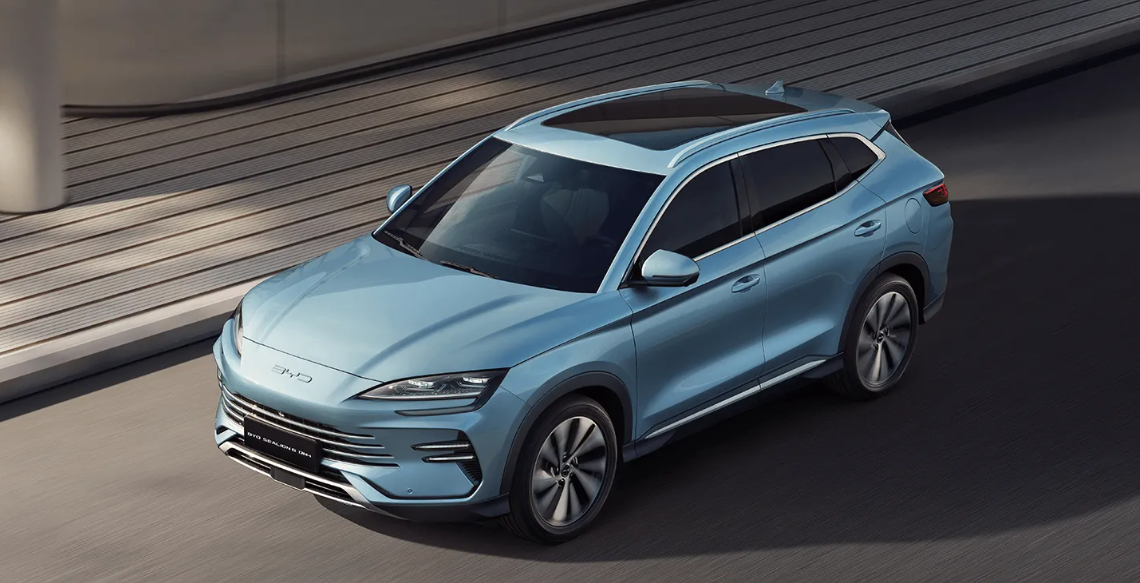
BYD's first hybrid model arriving on the shores of Singapore in 2025 is the re-badge Song Plus DM-i from mainland China. This PHEV compact crossover went on sale in the Chinese market in March 2021 and the the Song Plus is the best-selling BYD SUV in China. Global cumulative production of the model (excluding the ICE-powered variant) surpassed 1 million units by July 2024. The Song Plus was facelifted and an update was launched in June 2023 for the Chinese market, which includes the BEV and PHEV versions. Singapore just gets the PHEV version from mid-2023, so it's looking a bit outdated - particularly the interior. The 2023 Sealion 6 DM-i features a restyled front end and rear end design with headlamp units similar to the BYD Seal and Sealion 7. BYD also replaced the Song (宋) emblem with the standard BYD logo, aligning it with the vehicles from the Ocean series. The Sealion 6 DM-i's high voltage battery pack is sized at 18.3kWhr and supplied by BYD themselves via it's Blade battery format. When driving in pure EV mode, it can do about 80kms (WLTP) when the high voltage battery's State of Charge (SoC) is at 100% and down to 25%, before the petrol engine kicks in to re-charge the high voltage battery. The hybrid system provides four major control modes (EV, HEV series, HEV parallel, and engine direct drive). The Sealion 6 DM-i PHEV, features a 1.5L, 4-cylinder petrol engine producing 72 kW of power and 122Nm of torque. It's mated to an electric motor that produces 145 kW power and 300Nm of torque. The combined maximum power is 217kW, driving the front wheels. That's good enough to do the century sprint in 8.5 seconds. Unfortunately it also means the Sealion 6 DM-i goes into the expensive Cat B territory for CoE. With a 60L fuel tank, BYD's claimed range is around 1,100 kms. No more excuse on range anxiety for the durian run to Genting Highlands or fighting over a plug locally when the high voltage battery pack reaches a low value. Probably the best part for the petrol heads is avoiding the $700 annual sur-charge levied on the road tax as it burning dead dino juice. Fuel efficiency works out to be 5.45L per 100kms - assuming the high voltage battery is 100% and fuel tank is full. The numbers are okay for a hybrid, but not that great either due to the dead weight being carried around. Best to operate in EV mode as much as possible and top up charge the high voltage battery pack to minimize fuel use. Some selected specs of the Sealion 6 DM-i. Length: 4,775mm Width: 1,890mm Height: 1,670mm Wheelbase: 2,765mm Minimum turning radius: 5.5m Rear trunk capacity: 574L (expands to 1,700L with the rear seats folded down) Unladen kerb weight: 1,940kg Gross weight: 2,350kg Maximum carrying capacity: 410kg (seems a bit low) Battery capacity and type: 18.3kWhr (LFP BYD's proprietary Blade battery) Pure electric range: 80kms (WLTP from 100% down to 25%) AC charging capacity: 7kW (Type 2) will take around 8 hours to fully charge DC charging capacity: 18kW (CCS 2) will take 1.3 hours to fully charge VES band: A2 Electric drive train efficiency: 18.8 kWhr per 100km (not that great either) Electric motor: 145kW @ 300Nm of torque Petrol engine size: 1,498 cc Petrol engine power output: 72kW (98hp) @ 122Nm of torque Combined maximum power: 162.63kW (218hp) @ 300Nm of torque Fuel tank capacity: 60L Petrol drive train efficiency: 0.9L per 100km (claimed but not realistic) and more likely 5.45L per 100km assuming high voltage battery is 100% charged and fuel tank is full. Range (electric + petrol): 1,100km (claimed) in reality it'll be lower than this due to the dead weight of the vehicle - almost two tons! Top speed: 170 km/hr. In 2023, BYD unveiled the BYD Seal U, the export version of the Song Plus to the world. It debuted in Europe in September 2023 as part of the Seal family. In May 2024, the vehicle was introduced in Australia and other markets as the BYD Sealion 6. Singaporeans are late to the party only got Sealion 6 in July 2025 - almost two years late. Will see how sales go here as it competes in the increasingly crowded hybrid/PHEV market. Competitors to the Sealion 6 DM-i are: (1) Chery Jaecoo J7 PHEV; (2) Toyota Harrier hybrid; (3) Nissan X-Trail ePower; (4) Kia Sorento hybrid; (5) Hyundai Santa Fe hybrid; and (6) Mazda CX-60 PHEV. There are some conti PHEVs from the likes of Mecedes, BMW, Volvo, etc. but the conti price and maintenance are factors to take into consideration. Will do a follow up post on the interior of the Sealion 6 DM-i.


-
 Just when 99.999% of the car buyers are still trying to figure out which are the other 19 Chinese car brands (passenger car only) sold here, another one is joining our already crowded automotive scene soon. China’s most expensive car brand, Hongqi, debuts in Singapore with Eurokars as dealer The first cars from China luxury brand Hongqi will be launched in Singapore in the first half of 2026, with Eurokars Group having been appointed as its agent. Eurokars subsidiary Eurokars Elite became the brand’s official dealer and distributor in an agreement signed in June. Three models have been confirmed for Singapore, with two of them fully electric vehicles (EVs). The brand will also offer other drive trains, such as petrol-electric hybrids and plug-in hybrid EVs, in the future. Hongqi is part of the FAW Group, one of China’s “Big Four” state-owned automotive manufacturers alongside Changan Automobile, Dongfeng Motor Corp and SAIC Motor. Most of Hongqi’s cars target the mainstream luxury segment, where its competitors include the likes of Audi, BMW, Mercedes-Benz and Tesla. However, Hongqi is the only China marque that also has a full line-up of ultra-luxury models – though these are not widely exported yet. In this area, it competes with the likes of Bentley and Rolls-Royce in its home market. Like other China car brands, Hongqi is targeting export markets, including South-east Asia, to boost its overall sales figures. The brand’s showroom in Singapore will be at 19 Leng Kee Road, and is expected to open in 2026. The premises are currently occupied by SAIC-owned British brand MG. MG will move to a new location at 11 Leng Kee Road that will house it and sister brand IM Motors. Both brands are represented by Eurokars in Singapore. Three Hongqi models will be introduced: the E-HS9 large sport utility vehicle (SUV), a yet-unnamed model code-named G117, and the production version of the E-007 concept car. At 5.2 m long and priced around 590,000 yuan (S$105,680) in China, the fully electric E-HS9 is a competitor to the BMW X5 and Mercedes-Benz GLE. It will debut in Singapore in 2026. The G117 and E-007 are still under development, and so their launch dates are not confirmed. The full-electric E-007 is a mid-sized SUV that was displayed as a concept car at the Auto China motor show in Beijing last year. As the car is smaller and less expensive than the E-HS9, media reports say that it will also compete against German luxury models such as the BMW X3 and Mercedes-Benz GLC. The G117 will be a smaller SUV than the E-007, but there are few details known as it is in an even earlier stage of development. Hongqi’s full range includes EVs, petrol-electric hybrids, plug-in hybrid EVs and cars with internal combustion engines. Often dubbed “China’s Rolls-Royce”, it started in 1958 as a provider of cars to Chinese dignitaries, heads of state and VIPs. Its ultra-luxury models are offered under the Golden Sunflower series. This includes the Hongqi Guoli, a 6 m-long luxury limousine that costs 7.2 million yuan and is the most expensive China-made car. In comparison, its Rolls-Royce competitor, the Phantom, starts at 8.5 million yuan. Hongqi still provides vehicles to China’s dignitaries, including the N701 armoured limousine used by President Xi Jinping. Last year, China gave a Guoli to Malaysia’s Sultan Ibrahim Iskandar as a gift, making him the first in the world to privately own the Hongqi luxury sedan. In 2024, Hongqi’s sales increased 17.4 per cent year on year to about 412,000 cars, with around 44 per cent being EVs and hybrids. At the Auto Shanghai motor show in April this year, the brand announced plans to expand production capacity and establish a major presence in South-east Asia, Europe and Latin America. It aims to sell 500,000 vehicles in 2025 and produce 200,000 units overseas annually by 2030. In 2024, FAW Group exports increased 36.2 per cent to around 125,000 units, though specific figures for Hongqi were not provided. In June, Hongqi said that it will launch 20 new models globally in the next five years, including its Golden Sunflower models, with the ambition of becoming a global brand. In Singapore, automotive dealership Eurokars Group sells cars from BMW, Mazda, McLaren, Mini, Pagani and Rolls-Royce. It also has a presence in Australia, China and Indonesia.
 -
Volvo has revived the XC70 nameplate after a decade of hiatus. @Volvobrick from the teaser photos, it look like a crossbreed between wagon and SUV, which isn't as out of place as the new ES90. My cup of tea actually (without considering the selling price), as EREV (longer range than typical PHEV like the XC60 T8) bridges the gap between ICE and BEV, allowing one to enjoy road trips up north per normal. Coming soon: the new Volvo XC70, Volvo Cars’ first extended-range plug-in hybrid The new Volvo XC70 mid-size SUV is Volvo Cars’ first extended-range plug-in hybrid. It provides a pure electric range of up to 200 kilometres*, making it Volvo Cars’ longest-range plug-in hybrid to date. Built on the new SMA** platform, a premium extended-range plug-in hybrid architecture, the XC70 represents an important product addition for Volvo Cars. The new XC70 is designed to meet the demand for longer-range plug-in hybrids in China, where it will be available for order later this year. Volvo Cars is exploring potential additional markets at a later stage. “The XC70 marks our strategic entry into the extended-range plug-in hybrid segment, a perfect bridge to full electrification,” says Håkan Samuelsson, president and chief executive of Volvo Cars. “It enables us to maintain and develop a balanced product portfolio, while offering a highly attractive alternative to customers who are not yet ready for fully electric cars. This is also an example of regionalisation, where we adapt to the local market needs.” With its extended electric range and fast charging capabilities, the XC70 lets you handle most daily travel without tailpipe emissions and at a lower cost, while the efficient combustion engine provides freedom and flexibility for longer trips. This means you could travel longer distance without worrying about charging or refuelling. Combined with its versatility that offers space and comfort for all passengers, the XC70 is a car for every type of journey. Building on Volvo Cars’ tradition of solid and purposeful design, the new XC70 reflects a modern take on the company’s Scandinavian design heritage. Its commanding stance and distinct features express calm confidence and rational simplicity, with seamless lines flowing from front to rear. In combination with a sweeping roofline, the sculpted shoulder creates a robust yet dynamic silhouette. At the front, the shield-like closed grille – inspired by the company’s all-electric models – is paired with an active grille shutter that adjusts automatically to optimise aerodynamics, cabin climate and cooling. This feature contributes to improved energy efficiency, which in turn extends driving range. The signature Thor’s Hammer design has evolved to a bolder expression, and just below these daytime running lights, the XC70 features headlights with Matrix LED technology. It allows the headlights to adjust intelligently to road and traffic situations, which helps to improve both visibility and safety. Towards the rear, the vertical C-shaped taillights are seamlessly integrated into the rear glass, creating a flush, contemporary appearance that is both striking and functional. The new XC70 shares its name with one of Volvo’s most iconic cars. When the original XC70 was first introduced, it was an adventurous evolution from the more traditional V70 estate. The name reflects its character: a versatile family car, ready for all kinds of adventures. The new XC70 continues this legacy in a mid-size SUV format, slightly larger and more spacious than the Volvo XC60. More details about the new XC70 will be revealed in the coming months, so stay tuned. * The driving range is estimated based on testing done according to the CLTC standard and is only applicable to the China market. ** Scalable Modular Architecture.
-
The spec for the PHEV look mouth watering. Dimensions 4,745 mm (L) 1,890 mm (W) 1,680 mm (H) 2,870 mm (WB) Engine 2.5L e-SkyActiv-G IL4 PHEV (323HP, 500Nm, 5.8 sec, 200Kmh) 3.0L e-SkyActiv-X IL6 mild hybrid 3.3L e-SkyActiv-D IL6 mild hybrid
- 99 replies
-
- 16
-

-
Did i mention that the day is near and that if the rest are not careful, PRC cars coming into PHEV from full EVs are going to hit them hard. Expect more China brands coming into this segment with longer and longer ranges. Now i am excited. https://carnewschina.com/2024/03/28/geely-and-byd-claim-2000-km-range-for-phev-systems/ https://carnewschina.com/2024/03/29/live-chery-challenge-2000-km-range-in-a-phev/
-
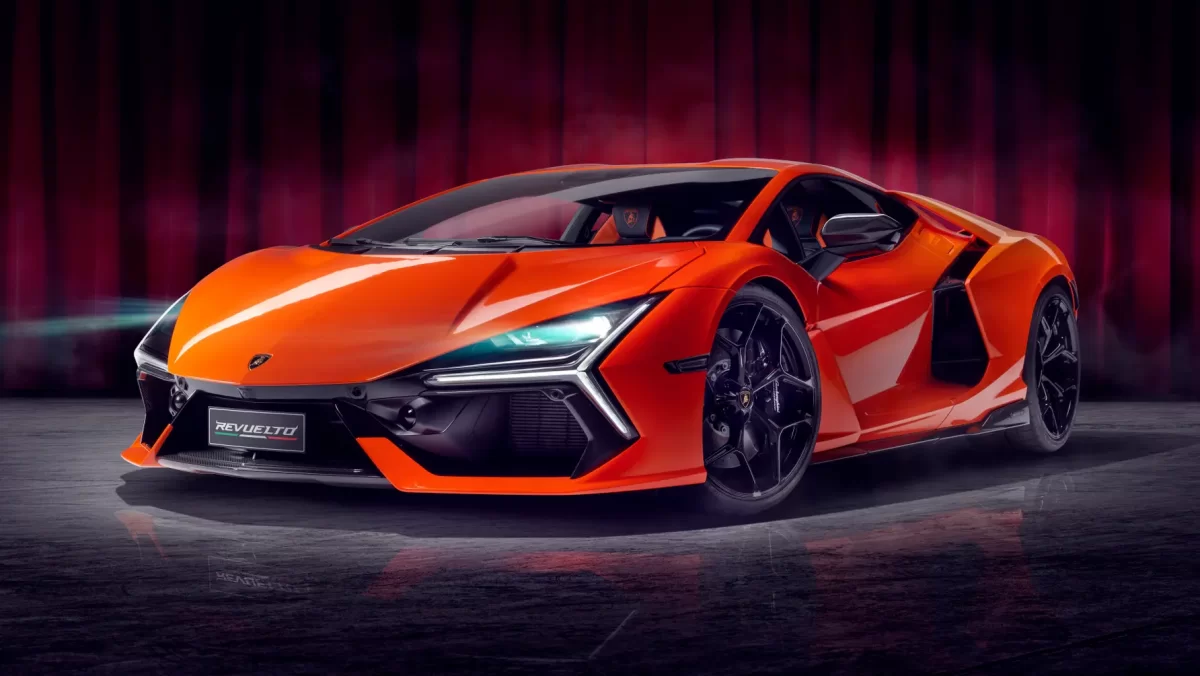
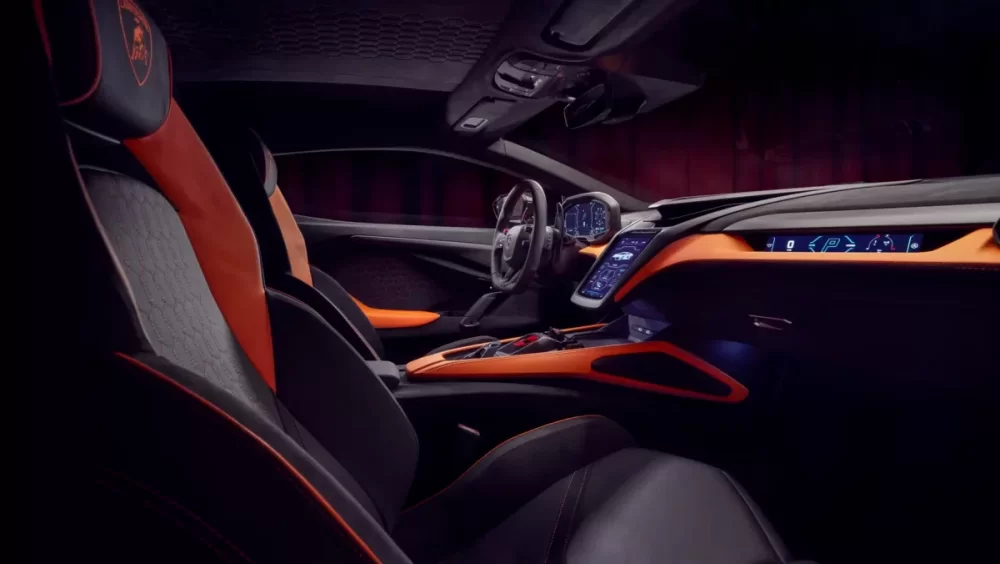
1st PHEV from Lambo


- 6 replies
-
- 3
-
-
- lamborgini
- revuelto
- (and 1 more)
-
The upcoming national car of Singapore, brought to you by Grab, Gojek, Ryde, Tada, GetGo, Tribecar, etc. 🙃 Toyota’s prototype for the upcoming new C-HR has been spied testing ahead of an expected launch in late 2023 https://www.autodaily.com.au/2024-toyota-c-hr-spied-for-the-first-time/ Due on sale by 2024, the Mk2 C-HR will be a close sibling to the new Toyota Prius, underpinned by the same TNGA platform and offered with the same mix of parallel-hybrid and plug-in hybrid powertrains. The latter will be a variation of the Prius’s PHEV set-up, pairing a 110kW 2.0-litre four-cylinder petrol engine with a 118kW electric motor on the front axle for a combined 165kW. That’s a 30kW boost over the current (2.0-litre parallel-hybrid) C-HR. Should the C-HR also borrow the Prius’s 13.6kWh battery (a likelihood to exploit economies of scale and cut costs), an 80km electric-only range may be within reach. Alongside the technical reinvention, the C-HR will be restyled with a focus on the new-look ‘Hammerhead’ front-end design being rolled out across the line-up to give Toyota cars a common identity. Camouflage hides just how closely related to the concept the production car will be, but clearly the distinctive C-shaped headlights and wraparound rear light bar will make it through to showrooms. The C-HR may also gain a battery-electric variant, placing it directly in competition with the triple-powertrain Niro. Spy photographer claimed this test car is a pure-EV proposition, suggesting Toyota’s Small SU EV concept from 2021 – itself almost identical to the more recent C-HR concept – is nearing fruition. Toyota hasn’t confirmed whether an electric C-HR is in the works and wasn’t available to comment on these latest images, but the fundamental similarities between the C-HR’s TNGA platform and the EV-only E-TNGA architecture mean it would no doubt be a technical feasibility. An electric version of the C-HR would be positioned below a larger electric coupé-SUV, known at concept stage as the bZ Compact Crossover concept, which will itself sit underneath today’s bZ4X in an expanded Toyota SUV line-up.
-

2024 Toyota C-HR Debuts With PHEV Making 223 Horsepower
kobayashiGT replied to SGCM928's topic in Japanese Talk
Source: https://www.motor1.com/news/673692/2024-toyota-c-hr-revealed/ It was December 2022 when Toyota previewed the second-generation C-HR by releasing the Prologue concept and now it's time to finally meet the subsequent production model. It adopts a substantially different design without losing the funkiness of its predecessor that has proven to be popular in the crowded small crossover segment. Its replacement has been developed and engineered in Europe where it's also going to be manufactured. We're being told the 2024 C-HR has a "super coupe" profile and gets 20-inch wheels as well as a two-tone paint job. Toyota went the extra mile to reduce the shut lines and better integrate the cameras, sensors, and headlight washers to give the body a smoother look for a cleaner design with improved aero. In terms of dimensions, the new model is 4360 millimeters (171.6 inches) long, 1830 mm (72 in) wide, and either 1558 mm (61.3 in) or 1564 mm (61.5 in) tall depending on the version. Step inside the cabin with its 2640 mm (104 in) wheelbase and you'll notice a 12.3-inch fully digital instrument cluster joined by a touchscreen of the same size. Fancier versions also get a head-up display, 64-color ambient lighting, a panoramic roof, and a JBL sound system. Unlike other brands, Toyota is not ready to give up on buttons for often-used functions, even though screens keep getting bigger with each generation of a new car. Red accents and a GR badge belong to a new GR Sport Premiere Edition with sporty touches inside and out. As expected, the new C-HR will be available in Europe exclusively with hybrid power. The 1.8-liter unit and the 2.0-liter plug-in hybrid setup come only in front-wheel-drive guise while the 2.0-liter hybrid can be had with optional AWD. In terms of power, the base 1.8-liter unit delivers a combined output of 140 hp (103 kW), followed by the 2.0-liter setup with 198 hp (145 kW), and the PHEV with 223 hp (164 kW). In terms of performance, the entry-level model with the 1.8-liter hybrid powertrain does 0 to 62 mph (100 km/h) in 9.9 seconds and tops out at 106 mph (170 km/h). The FWD 2.0-liter model takes 8.1 seconds to complete the sprint, or 7.9 seconds if you step up to the AWD variant. Both these 2.0-liter hybrid models can do 112 mph (180 km/h). As for the PHEV, it completes the sprint in 7.4 seconds and can do 112 mph (180 km/h). With the battery charged, you'll be able to cover 41 miles (66 kilometers) on electric power. Toyota is already taking online reservations in Europe where the GR Sport Premiere Edition we mentioned earlier is joined by a High Premiere Edition with its own subset of features typically found on the high-end versions. While the first-generation model was sold in the United States, its successor won't be offered there. -
I recently had a PHEV - the BMW 225 XE as a temporary replacement car. While the 225XE is not exactly a 100% electric car, but if you keep the battery charged up, you can technically run on full electric power for about 25km. Was eager to try out how it is like to be living with an EV in Singapore and here are my observations: Driving on pure electric power was weird (like driving around with your engine shut down) in the beginning. But i kinda enjoyed it after awhile, i guess. Biggest challenge with the short range is...eventually, it will fall back into petrol powered mode and it takes forever to charge the battery up again until you plug-in again. A domestic power point + the supplied cable is not enough, you'll need a wall box to be installed in order to safely charge the car. It's a big pain to find places to charge when you're out of the house and run out battery juice. While there are quite a number of charging points, but they're often operated by different service providers (each requires u to become a member + place deposit/min fee etc. etc. to use). When you eventually find it, you'll end up staring at the grass for the next 2-3 hours waiting for the car to charge up.🤣 The instant torque of the electric motor + engine is super addictive a total blast when overtaking with 385 Nm of near instant torque !!! No one will be willing to wait 2-3 hours for the battery to be fully charged. Not practical for anyone who does not have a charger at home. Oh ya... this short, fat and very family looking car does 0-100 in 6.7 sec 😈 ultimate sleeper car! Long term cost of maintenance is a big question mark. In conclusion, Singapore's infra is still far from being EV friendly. The most practical way for someone who does not have a home charger to drive an EV...go the PHEV way if you want to experience electric car and yet can fall back to the petrol engine for a decent drive if u run out of juice.
-
Let embrace the EV storm, from CHINA. To those that said China brand is dead in Singapore, think again. China is now leading the EV market, and several established auto manufacturers are actually trying to collaborate with these Chinese EV startup to gain entry into the EV segment. Denza X, an electrified crossover, is a product of the joint venture between Daimler and China’s BYD, but more importantly, the design child of the former. Thus Denza X has unashamedly incorporates Mercedes-Benz influences, from the seat designs, to the trimmings, air vents and everything in between. If you’ve driven any recent Benz’s, you’ll feel right at home here. Earlier this year, China’s EV brand Denza, a 50:50 joint venture between BYD and Daimler, presented the sleek Concept X designed by Mercedes-Benz. Since things move really fast in China’s auto industry, the company has already revealed the production model that’s called the Denza X. The midsize crossover stays remarkably close to the concept from a styling standpoint, although the pop-out door handles and rearview cameras haven’t made it to the production model. The bumpers have also been modified, as have the lights. Inside, the 4.89-meter (192.5-inch) long SUV offers seven seats and a dashboard dominated by a massive center display that can rotate, changing its orientation from portrait to landscape and back. The Denza X also features a fully digital instrument panel. Chinese customers will be able to choose from two powertrains, a plug-in hybrid and an all-electric. The PHEV combines a 192 PS (189 HP) 2.0-liter turbo-four gasoline engine, two electric motors, and a battery. The motor mounted on the front axle delivers 150 PS (148 HP) while the one at the back produces 245 PS (242 HP). It’s the same powertrain found on the BYD Tang, with which the Denza X shares its underpinnings. With a usable output of more than 400 PS (396 HP), the plug-in hybrid model is said to accelerate from 0 to 100 km/h (62 mph) in under 5 seconds. As for the all-electric version, it’s powered by a single electric motor delivering 245 PS (242 HP) and can cover around 500 km (311 miles) on a single charge according to the NEDC cycle. Denza will release more details about its new model at the November launch, with deliveries in China expected to start in early 2020.
-
2019 Honda Accord PHEV Specs, Price It goes without say that the 2019 Honda Accord PHEV is a force to reckon with in the world of hybrid motors. The Honda Accord PHEV 2019 is significantly superior to most hybrid models like; Nissan Altima and Toyota Camry. The newest member in the family boasts of immense engine developments, advanced technology capabilities and sweeping designs that will blow your mind. The new Honda Accord introduces a much improved Plug in hybrid that offers up to 3 times the last generation electric range (results in 39 miles EV range). The skin and body embrace a few changes as well as improved technology features that are designed to support its remote monitoring. 2019 Honda Accord PHEV – Interior and Exterior RedesignThe body and the interior of the Honda Accord is expected to embrace some improvements to support the changes on its power train and on its performance. To minimize on the weight while reinforcing the strength of its body, the car embraces; an aluminum hood and an aluminum sub-frame. More significant changes are on the cars lighting, it boasts of new daytime running lights, LED. Also, rear lights supposedly supported by its new super energy source. Interior:The interior of the 2019 Honda Accord PHEV is more spacious and roomy, the seats are super comfortable. The air management is improved and controlled to minimize on any noise that may reach the interior. The Accord has an advanced interface, an informative steering wheel with fully functional fingerprint technology. Also, it is fitted with; heated front-seats, touch screen multi -information display and audio systems, adjustable drivers’ seat with intelligent memory and a dual zone automatic climate control system. The 2019 Honda Accord PHEV also features additional technology features to convenience the driver and passengers. 2019 Honda Accord PHEV – Engine and PerformanceThe new Honda Accord is expected feed from either of these two power trains; the turbocharged 2.0-liter inline four and the turbocharged 1.5-liter inline four with a continuously variable automatic transmission (CVT). The latter is however projected to be the main engine in most cars. The base engine (with CVT) yields 192 hp with the alternative yielding 252 hp (turbo inline four with 10-speed automatic). The new Accord is an incredible power machine capable of accelerating to 60 mph in a mere7.3 seconds compared to its predecessors 7.6 seconds. The 2019 Honda Accord PHEV covers a quarter mile in 15.7 seconds at 91 mph. It offers 10:3:1 compression ratio, a variable valve timing system, a fast charging LI-ion battery 6.7 kWh capable of charging for approximately 3 hours and 1 hour in 120 volts and 220 volts sources respectively. Apart from improvements on the engine, the 2019 Accord is capable of supporting a remote control from a Honda link smart phone application. It achieves 29 mpg EPA rates in the city and 35 mpg on the highway. 2019 Honda Accord PHEV – Price and Release DateIn conclusion, the release dates of the 2019 Accord have not been made official. However, it might hit the major dealer rooms late 2018 or early 2019. http://honda2018.com/2019-honda-accord-phev/






.png)