Search the Community
Showing results for tags 'bev'.
-
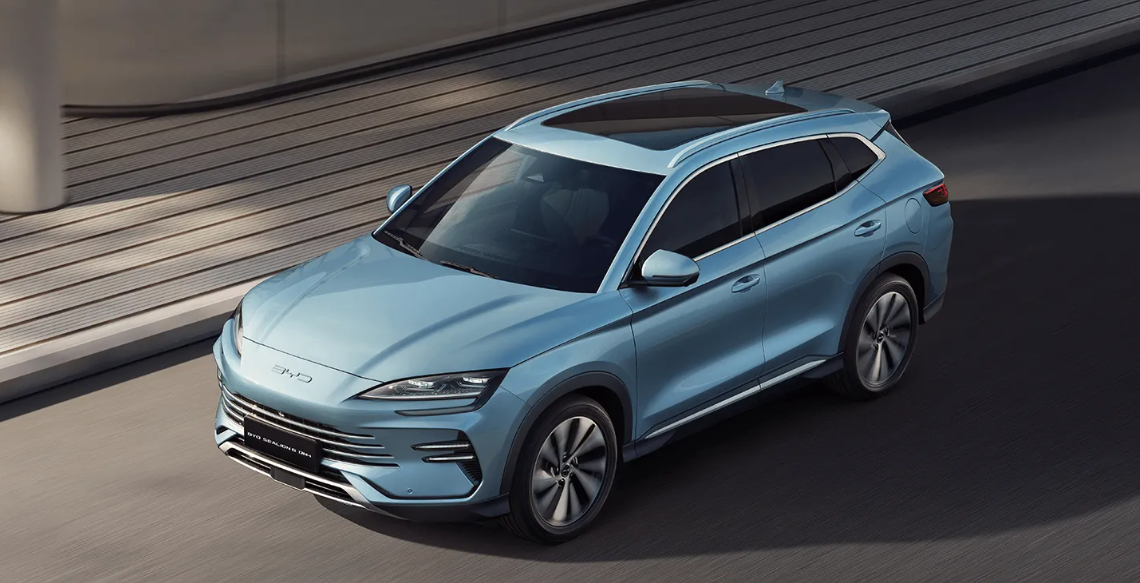
BYD's first hybrid model arriving on the shores of Singapore in 2025 is the re-badge Song Plus DM-i from mainland China. This PHEV compact crossover went on sale in the Chinese market in March 2021 and the the Song Plus is the best-selling BYD SUV in China. Global cumulative production of the model (excluding the ICE-powered variant) surpassed 1 million units by July 2024. The Song Plus was facelifted and an update was launched in June 2023 for the Chinese market, which includes the BEV and PHEV versions. Singapore just gets the PHEV version from mid-2023, so it's looking a bit outdated - particularly the interior. The 2023 Sealion 6 DM-i features a restyled front end and rear end design with headlamp units similar to the BYD Seal and Sealion 7. BYD also replaced the Song (宋) emblem with the standard BYD logo, aligning it with the vehicles from the Ocean series. The Sealion 6 DM-i's high voltage battery pack is sized at 18.3kWhr and supplied by BYD themselves via it's Blade battery format. When driving in pure EV mode, it can do about 80kms (WLTP) when the high voltage battery's State of Charge (SoC) is at 100% and down to 25%, before the petrol engine kicks in to re-charge the high voltage battery. The hybrid system provides four major control modes (EV, HEV series, HEV parallel, and engine direct drive). The Sealion 6 DM-i PHEV, features a 1.5L, 4-cylinder petrol engine producing 72 kW of power and 122Nm of torque. It's mated to an electric motor that produces 145 kW power and 300Nm of torque. The combined maximum power is 217kW, driving the front wheels. That's good enough to do the century sprint in 8.5 seconds. Unfortunately it also means the Sealion 6 DM-i goes into the expensive Cat B territory for CoE. With a 60L fuel tank, BYD's claimed range is around 1,100 kms. No more excuse on range anxiety for the durian run to Genting Highlands or fighting over a plug locally when the high voltage battery pack reaches a low value. Probably the best part for the petrol heads is avoiding the $700 annual sur-charge levied on the road tax as it burning dead dino juice. Fuel efficiency works out to be 5.45L per 100kms - assuming the high voltage battery is 100% and fuel tank is full. The numbers are okay for a hybrid, but not that great either due to the dead weight being carried around. Best to operate in EV mode as much as possible and top up charge the high voltage battery pack to minimize fuel use. Some selected specs of the Sealion 6 DM-i. Length: 4,775mm Width: 1,890mm Height: 1,670mm Wheelbase: 2,765mm Minimum turning radius: 5.5m Rear trunk capacity: 574L (expands to 1,700L with the rear seats folded down) Unladen kerb weight: 1,940kg Gross weight: 2,350kg Maximum carrying capacity: 410kg (seems a bit low) Battery capacity and type: 18.3kWhr (LFP BYD's proprietary Blade battery) Pure electric range: 80kms (WLTP from 100% down to 25%) AC charging capacity: 7kW (Type 2) will take around 8 hours to fully charge DC charging capacity: 18kW (CCS 2) will take 1.3 hours to fully charge VES band: A2 Electric drive train efficiency: 18.8 kWhr per 100km (not that great either) Electric motor: 145kW @ 300Nm of torque Petrol engine size: 1,498 cc Petrol engine power output: 72kW (98hp) @ 122Nm of torque Combined maximum power: 162.63kW (218hp) @ 300Nm of torque Fuel tank capacity: 60L Petrol drive train efficiency: 0.9L per 100km (claimed but not realistic) and more likely 5.45L per 100km assuming high voltage battery is 100% charged and fuel tank is full. Range (electric + petrol): 1,100km (claimed) in reality it'll be lower than this due to the dead weight of the vehicle - almost two tons! Top speed: 170 km/hr. In 2023, BYD unveiled the BYD Seal U, the export version of the Song Plus to the world. It debuted in Europe in September 2023 as part of the Seal family. In May 2024, the vehicle was introduced in Australia and other markets as the BYD Sealion 6. Singaporeans are late to the party only got Sealion 6 in July 2025 - almost two years late. Will see how sales go here as it competes in the increasingly crowded hybrid/PHEV market. Competitors to the Sealion 6 DM-i are: (1) Chery Jaecoo J7 PHEV; (2) Toyota Harrier hybrid; (3) Nissan X-Trail ePower; (4) Kia Sorento hybrid; (5) Hyundai Santa Fe hybrid; and (6) Mazda CX-60 PHEV. There are some conti PHEVs from the likes of Mecedes, BMW, Volvo, etc. but the conti price and maintenance are factors to take into consideration. Will do a follow up post on the interior of the Sealion 6 DM-i.


-
Launched in mainland China during Shanghai Auto show 2025, Nio's Firefly is making it's way to the shores of Singapore in Q1 of 2026 according to Straits Times (ST) article here: https://www.straitstimes.com/life/motoring/chinese-ev-brand-nio-to-be-launched-in-singapore-in-first-quarter-of-2026 The Firefly has unique signature lights consisting of three circles for the front as well as around the back. Tires are 215/50 with 18" alloy rims. According to ST's article, Singapore will be the first ASEAN country to get the Right Hand Drive (RHD) international version of the Firefly as Nio starts it's expansion outside of the ultra competitive mainland China market. Dimensions of the hatchback Firefly are as follows. Length: 4,003mm (relatively short) Width: 1,781mm (relatively narrow) Height: 1,557mm Wheelbase: 2,615mm Unique C-pillar (loop) design of the Firefly. Selected specification details known so far: Front suspension: MacPherson strut Rear suspension: 5 link multi-way Minimum turning radius: 4.7m (makes for a short turning circle of 9.4m) Unladen weight: 1,492kg Power train: 105kW Rear Wheel Drive (RWD) electric motor producing 200Nm of torque. Should be a fun car to drive. Would also qualify in Cat A territory here in Singapore without having to de-tune the power train! 🤙 Century sprint time: 8.2s (Will be one of the fastest Cat A rides in Singapore) Nio says that models exported to Europe will have a retuned suspension and steering system to suit local market tastes. Hopefully Singapore gets the Conti tuning to make the ride more premium feeling. High voltage battery details: LFP chemistry and sized at 42.1kWhr. High voltage battery supplier is Sunwoda. The interesting and unique feature of Nio high voltage battery pack is that it can be swapped out!🫡 See details further below. Driving range: 330km (WLTP) AC charging: 11kW (three-phase) DC charging: 100kW. 29 minutes to charge from 10% to 80%. Drive train efficiency: 14.5kWhr / 100 km (claimed under WLTP test conditions) The Firefly comes with a 92L front trunk. The rear cargo space is rate around 400L and with the back seats folded down - grows to 1,345L. Decent, but not that great either. Nio is famous for their battery swapping technology and the Firefly is designed for this. The Fireflys would use Nio's fifth-generation swap stations. The main question is if Nio and it's Authorized Distributor (Wearnes Automotive) can get their act together by placing a few battery swap stations in strategic locations around Singapore - it would remove any range anxiety and overcome the short driving range (330km) of the 42.1kWhr high voltage battery pack. The added bonus of not having to fight over the plug and a five minute swap makes life convenient for owners. The Firefly still has a plug, so if one wants to top up charge (either AC or DC), it's still possible. There is also the benefit of having a lower OMV when importing the Firefly with a small high voltage battery pack. Which means the high spec version with no cut down features can be on the road due to the VES and EEAI rebates currently in place. For future owners, this will reduce upfront costs and make it more competitive compared to those EVs that have the traditional fixed high voltage batteries. The risk is the high monthly fee that Nio and Wearnes Automotive will charge owners for using the swap stations. If the costs are the same as charging from a plug - it'll be a winner for all. Initially, the Firefly will come with the large high voltage battery pack. Competition for the Firefly will be: (1) Dongfeng Box; (2) BYD Atto 2; (3) BYD Dolphin; (4) Seres 3; (5) Hyundai Kona electric; (6) GWM Ora Good Cat; (7) Geely / Proton Emas 5 (should be coming around the same time as the Firefly). Will a follow up post on the interior of Nio Firefly.


-
Looks like Volvo is determined to conquer the mid size SUV segment with this new BEV. The spec is nothing but class leading... The new Volvo EX60: best-in-class 810km range and charging as fast as a stop for fuel and coffee Whether you plan to drive from Paris to Amsterdam, make a trip from LA to San Francisco, or travel from Stockholm to Oslo, the new, all-electric Volvo EX60 SUV has your back. With the ability to go up to a best-in-class 810 kilometres on a single charge* in an all-wheel drive configuration, beating even its most recently revealed competitors, the EX60 doesn’t just go further than any electric car that Volvo Cars has ever created. It turns range anxiety into range comfort, demonstrating that going electric is no longer a compromise. Volvo Cars engineers have optimised the car’s range for real-life driving and what customers experience in their daily drive. “The EX60 is designed to be a gamechanger,” says Anders Bell, Chief Technology Officer at Volvo Cars. “With our new electric vehicle architecture, we directly address the main worries that customers have when considering a switch to a fully electric car. The result is class-leading range and fast charging speeds, marking the end of range anxiety.” The EX60 does not only boast the longest range of any fully electric Volvo, it also charges faster than any electric Volvo before in all weather conditions. Instead of a full lunch break, a quick coffee stop is now enough to recharge the battery and hit the road again. Practically speaking, this means the EX60 can add up to 340km of range in just ten minutes when using a 400kW fast charger, making a charging stop nearly as fast as a fuel stop. And all EX60 customers can get a 10-year warranty on the battery. The key to the class-leading range is SPA3, Volvo Cars’ most advanced electric car architecture to date, which underpins the EX60. It unlocks maximum efficiency in key systems inside the car and allows the company to achieve an electric range that matches cars powered by petrol engines. Integrating the battery directly into the structure of the car with cell-to-body technology and developing e-motors in-house makes the EX60 more energy efficient and cuts excessive weight. The new cell design of the EX60’s battery carefully balances energy density and power delivery, further increasing driving range. The EX60 is the first Volvo car built with the help of mega casting, whereby hundreds of smaller parts are replaced with a single, high-precision casting in the production process. This reduces weight, which again improves range and lets you go further. The fast charging speeds are made possible by Volvo Cars’ new 800-volt electrical system and in-house developed software, which together move energy into the battery more efficiently. The use of lighter materials and less heat generation also support faster charging times, meaning the EX60 can add hundreds of kilometres of range in just a few minutes. Clever algorithms developed by Volvo Cars’ portfolio company Breathe Battery Technologies have also been incorporated in the EX60. These allow the car to constantly adjust how the battery takes in power, keeping it in its ideal operating zone at all times and in all weather conditions. Finally, because this is an electric car with less moving parts, it does not have to undergo conventional service as often. In short, the EX60 is a no-compromises electric car, designed to provide the freedom to move in a new, all-electric era. The Volvo EX60 will be revealed on 21 January 2026.


-
New EVs from Honda, targeted to hit the market next year. The look of the 0 SUV look less radical than the sedan. Production versions of the 0 Saloon and 0 SUV will be made at Honda's Ohio-based EV hub, starting in 2026. These cars will use an all-new centralized e/e architecture (electrical/electronic) running a new SoC done by Renesas Electronics Corporation. Honda also claims that these cars will also be able to do Level 3 autonomous driving. Honda’s back at CES with another iteration of the 0-series Saloon concept, and a new follow-up – called the 0 SUV. It’s not entirely clear how close either car is to its final production body, but we shouldn’t discount how outlandish modern manufacturers can be, especially since they’ve got to compete with increasingly wild Chinese EV designs. Honda 0 Saloon Honda 0 SUV
-
This compact electric SUV will be even smaller than the XC40, with an estimated dimensions of 4.2m (L) x 1.8m (W) x 1.6m (H). Design wise, the line between products from Volvo and Polestar is getting blurry, and can see that the rear windscreen is very narrow (by SUV standard), again compromising practicality for aesthetic appeal...
-
Have been reading a lot about this new compact EV from Kia and finally see it in metal while in Korea. A well built and right sized EV for our market. Acceptance and sales volume will depends heavily on its pricing when landed on our shore.
- 27 replies
-
- 10
-

-
Much less futuristic as compared to its cousin (EV9). Using the same E-GMP electric platform as its Kia cousin, the new Ioniq 9 promises loads of space, lavish amenities, and lots of range - over 480 km on every trim. Powering the Ioniq 9 is a 110.3-kilowatt-hour (net) battery pack. The base Long Range model gets a single electric motor powering the rear wheels, while Hyundai offers a dual-motor Long Range variant and a dual-motor Performance model. The Long Range single-motor model makes 215 horsepower and 350 Nm of torque. The dual-motor Long Range version makes 310 hp and 603 Nm, while the Performance model packs an impressive 430 hp and 698 Nm. The quickest Ioniq 9 gets to 100 km per hour in 4.9 seconds and has a top speed of 193 km per hour. Hyundai doesn't have range figures for the dual-motor models yet, but the company says every version of the Ioniq 9 will have over 480 km of range. The base single-motor model is estimated to get 539 km per charge. Plug into a 350-kilowatt-capable DC fast charger and it’ll recharge the Ioniq from 10 to 80% in just 24 minutes. The Ioniq 9 even has a maximum towing capacity of 2,268 kg. With enough space for six or seven people inside, depending on the configuration, passengers in the second row will be able to experience Hyundai's new Relaxation Seats, which have a Dynamic Touch Massage function. The first and second rows also lay completely flat, and the second row swivels so you can come face-to-face with passengers in the third row (but only when the vehicle is stationary). Eco-friendly upholstery covers the seats and interior panels. The materials range from sustainably sourced leather to recycled polyethylene terephthalate fabric, and even wool. The driver and front passenger have access to dual 12.0-inch screens—one central touchscreen and a secondary digital instrument cluster. And an eight-speaker audio system comes standard while a Bose 14-speaker system is available as an option. With a 3,129 mm wheelbase and a total length of 5,060 mm, the Ioniq 9 is plenty roomy. It has 1,900 mm of headroom and 2,050 mm of legroom with the second and third rows combined. The battery configuration also means that the Ioniq 9 has a completely flat floor all the way to the third row. The rear cargo hold has 617 liters of space. Fold the third row flat and that number grows to 1,322 liters. The Ioniq 9 also has a frunk—or front trunk—that can carry 88 liters worth of cargo on the rear-wheel drive model or 51 liters on all-wheel-drive models. The ‘aerosthetic' exterior design combines futuristic elements like eight-bit headlights and taillights with aerodynamic efficiency. That yields a drag coefficient of just 0.259 Cd with the optional digital side mirrors (which likely aren't available in the US). By comparison, the Tesla Model X has a drag coefficient of 0.24 Cd. In keeping with the eco-friendly theme, the Ioniq 9 uses a new paint compound made from recycled tire waste. Buyers can choose from 16 different colors, with a few new hues made specifically for the Ioniq 9: Celadon Gray Matte, Celadon, Gray Metallic, Ionosphere Green Pearl, Sunset Brown Pearl, and Cosmic Blue Pearl.
- 17 replies
-
- 11
-
-
The famous (or is it infamous) maker of the Chery QQ is back with a new sub-brand called Omoda. The B&B brand of China's automotive giant - Chery Automobile. For Singapore, Chery has assigned Vertex Automobiles as the Authorized Distributor (AD) of the Omoda brand and only one model is currently available - the Omoda E5. First released back in April 2024 in the Cat B territory with 150kW of power. Unfortunately for Chery and Vertex, sales were lackluster for the first six months (April 2024 to September 2024) with only 51 units being sold. With sales going no where, both decided to wise up and offer the 99kW power front drive motor Cat A version of the Omoda E5 around early October 2024 and sales have kicked into high gear. In the last six month period (from December 2024 to May 2025), a total of 154 units have been sold. A solid 200% improvement in sales simply by offering the Cat A version of the E5 and an annual run rate of over 300 units. Three cheers for consumers and the market in showing what Chery/Vertex should have done in the first place. Hip-hip-hooray...! Details above on the Omoda E5. With five passengers and cargo, the maximum total load is 536kg. A unique feature is the front side charging port of the Omoda E5. Which means you'll have to get used to front parking into the charger (which is normally located at the rear of MSC) rather than the reverse parking. The Omoda E5 also comes with a small (19L) front truck - can store a few packets of smelly durian there. A full size spare tire s available underneath the boot! Not many BEV's have this feature and will come in handy one day when travelling up north. Cargo space for the boot is a bit small, about 300L and with the back seats folded down - increases to 1,079L. Some additional data on the E5. Battery type: LFP Blade battery (think it comes from BYD) Battery capacity: 61kWhr Charging time: 8 hours on [email protected] (three phase) from 0 to 100% and around 45 minutes on DC@80kW from 10% to 80%. The DC charging rate is low powered and thus slow. Driving range: 430 km (WLTP cycle) Claimed coefficient of drag: 0.281 Energy consumption: 15.5 kWhr / 100 km Drive unit: 99kW for Cat A and 150kW for Cat B. Maximum torque: 340Nm Top speed: 172 km/hr. The century sprint is a pokey 11.1 seconds for Cat A version. The interior starts with fake food and fake leather materials. Lots of soft touches where contact points are to make it feel better than Toyota/Honda/Nissan/Hyundai/Kia which have hard plastics. Close enough to some conti brands for the price paid on a B&B ride. Whilst Chery/Vertex will claim a 24.6" wide front screen, it's actually split into two 12.3" screens. There is the 12.3" infotainment touch screen that supports wireless Apple Carplay and Android Auto. Next to it is the 12.3" digital instrument cluster behind the wheel for the driver. The drive mode selector is located at the steering wheel (freeing up space in the center console) with buttons nearby for those who prefer some physical contact rather than going through the center infotainment touchscreen. More physical buttons on the center console. The 50W wireless charger with cooling and is hidden beneath the front hatch. Apparently the front arm rest comes with a cooling system. Unfortunately no panoramic roof to get the feeling of open space while drive - only the standard sunroof for the front passengers. The front seats are ventilated - good for the hot weather of Singapore. Driver's seat is six adjustable while the front passenger is only four way. Processor powering the display is the older Qualcomm 8155. There's a 360 deg surround view camera available to help with parking at MSC. The Advanced Driving Assistant Systems (ADAS) is at least Level 2, Chery claims to be 2.5. There's been some over the air software updates that allow settings to be remembered when the vehicle is switched OFF and then back ON again - will save some frustrations in getting those annoying bings/bongs silenced every time one gets into the car. With high CoE costs (Cat A at $101.1k) the current price of $159.9k seems a good deal. Will do a follow up post on cost breakdown on the Omoda E5.


-
A rebadged Deepal S07? Mazda is fast-tracking its EV expansion by leaning on its Chinese partner. After launching the EZ-6 last year, the sedan’s SUV counterpart has now been revealed on the Weibo social media platform. The EZ-60 is also coming alive courtesy of a tie-up with Changan, a state-owned automaker. Their 50:50 joint venture, founded over a decade ago, helped Mazda launch the 6e in Europe. Similarly, this new model should be sold outside China as the CX-6e. Essentially, we’re dealing with a production version of the Arata concept. It’s an attempt at making another electric SUV with the hope that it’ll be more successful than the slow-selling MX-30. It looks sharp, and we’re pleasantly surprised to see flying buttresses, which are uncommon in this body style. In case you're wondering, mirror-replacing side cameras have been legal on production vehicles in China for about two years. The Tesla Model Y competitor is likely a Deepal S07 underneath the skin, implying a fully electric drivetrain and a range-extending variant with a 1.5-liter gas engine. However, whether the latter powertrain will be available in Europe is unclear. Mazda only offers the Model 3-fighting EZ-6 sedan as a pure EV for now. If you're unfamiliar with Deepal, it's the electric subsidiary brand of Changan. Mazda is considering a third and fourth model from its JV with Changan. If approved, the additional vehicles will be released between 2028 and 2030. In the meantime, the Zoom-Zoom company is working on its own platform for EVs. The first model is scheduled to come out in 2027, with derivatives to follow by the decade's end.
- 23 replies
-
- 10
-
-
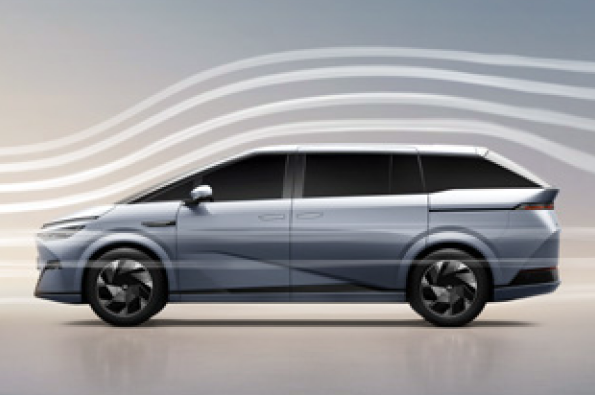
Performance Automobiles Pte Ltd (the Audi dealer in Singapore) has branched out to include a few electric brands. One of the brands In it's stable is the exclusive Authorized Dealership (AD) in Singapore for Xpeng via it's subsidiary XPremium BEV Pte Ltd. There are two Battery Electric Vehicles (BEVs) (currently) from Xpeng available in Singapore. One is in the shape of an SUV and referred to as the G6. The other one and detailed in this thread is the luxury 7 seat people mover - called the X9. Styled unlike other MPVs on the road, the X9 is inspired from starships with the windshield being highly sloped at a 21-degree angled to the A-pillar. The X9's height is low enough to comfortably into all MSC in Singapore - without the worry of scratching the roof. Length : 5,293mm Width : 1,988mm Height: 1,785mm Wheelbase: 3,160mm The X9 is only available in Front Wheel Drive (FWD) in Singapore with a 235kW motor producing 450Nm of torque. Can do the century sprint in 7.7 seconds and has a top speed of 200 km/hr. AC charging is capped at 11kW and time to re-charge will depend on the battery capacity of the two trims available. Uses a 800V architecture for rapid DC charging. Standard range. Battery: 84.5kWh lithium iron phosphate (LFP) from Eve Energy. Range (WLTP): 500 km WLTP energy consumption: 16.9 kWhr/100km AC charging: 5% to 100% in 9.5 hours DC charging: 283 kW; 10-80% in 20 minutes Curb weight: 2,640 kg Gross vehicle mass: 3,220 kg Net carrying weight: 580 kg Long range. Battery: 101.5kWh nickel manganese cobalt (NMC) from CALB Range (WLTP): 590 km WLTP energy consumption: 17.2 kWhr/100km AC charging: 5% to 100% in 11 hours DC charging: 317 kW; 10-80% in 20 minute Curb weight: 2,590 kg Gross vehicle mass: 3,170 kg Net carrying weight: 580 kg The exterior design has a low coefficient of drag number of 0.236. This is reflected in class leading WLTP energy consumption number of around 17.2kWhr / 100km. The best there is now. The back is sloped 23-degree at the rear window. This is to reduce drag/wind turbulence and has the side benefit of less space required behind the vehicle to open the boot. With all seven seats up, the boot is a large 755 L of space. Enough to fit a few luggage's to the airport. When the 3rd row seats are folded down (can go completely into the floor) the available volume increases to 2,554L. Large enough to fit a road bike in the back. It's a very practical vehicle for the family. Underneath the skin, Xpeng has implemented front and rear mega (die) casting - similar to what Tesla uses to improve rigidity, stiffness and integrating with the structural battery pack makes the X9 a very strong and stable vehicle. Should get five star safety rating in Euro NCAP once tests are done. The side benefit of die-casts are reduced complexity in the manufacturing process, improving quality and cost savings in eliminating welds/stamping of multiple parts. The X9 also has a double wishbone front suspension and multilink independent rear suspension, both using dual-chamber air springs capable of 90 mm (3.5") of ride height adjustment as standard, allowing for a 37 mm (1.5") floor entry height. The air suspension can be adjusted up 40 mm and down 50 mm. Great for an aging population with easy ingress and egress inside. Xpeng claims that the suspension automatically adjusts the height based on speed, reducing wind resistance at higher speeds (higher efficiency) and thus improving range. Competition in the MPV space are: Zeekr 009 : 5,207 (L) x 2,024 (W) x 1,856 (H) mm. Wheelbase 3,205 mm. The 009 is also sold by Performance Automobiles under its AD relationship with Zeekr. BYD DENZA D9 : 5,250 (L) x 1,960 (W) x 1,920 (H) mm. Wheelbase 3,110 mm. MG Maxus 9 : 5,270 (L) x 2,000 (W) x 1,840 (H) mm. Wheelbase 3,200 mm. Toyota Alphard : 5,100 (L) x 1,850 (W) x 1,950 (H) mm. Wheelbase 3,000 mm. Hyundai Staria : 5,253 (L) x 1,997 (W) x 1,990 (H) mm. Wheelbase 3,273 mm. KIA Carnival : 5,155 (L) x 1,995 (W) x 1,740 (H) mm. Wheelbase 3,090 mm. Will do a follow up post on interior design as well as a cost breakdown for the X9.



-
This will be the 16th China EV brand (passenger vehicle only) to hit our shore in the past 3 years. Consumers are supposedly spoilt for choice, but it will be carried by Premium Automobiles, which is known for charging a premium... Premium Automobiles to distribute Changan, Huawei, CATL-backed luxury EV brand Avatr in Singapore China luxury electric vehicle (EV) brand Avatr will be distributed and sold by Premium Automobiles in Singapore. Lee Hoe Lone, Premium Automobiles’ managing director, told The Business Times that the brand will be officially launched in the Republic in late July or early August. The brand’s first model, the Avatr 11 sport utility vehicle (SUV), will debut at the same time, with another SUV, the Avatr 07, to follow in 2025. More about Avatr 11 mid size SUV. The rear opening is unconventional... Dimensions: 4,895mm (L) x 1,970mm (W) x 1,601mm (H) x 2,975mm (WB) Power (tentative): 237KW Torque: 396Nm Drive: RWD Weight: 2,310Kg 0 - 100Km/h: 6.5sec Top Speed: 200Km/h Battery: Ternary Lithium Capacity: 116.79KWh Range: 815Km (CLTC Standard) 0 - 80%: 35 min
-
Expect more China EV brand to hit our shore in the next 2 years, as the big wave have just started. Ultimately, only the fittest will survive on our tiny island (since we have a fixed quota for new car registration each month/year). Another point to ponder: Is PA changing their game plan (betting heavily on Chinese EVs) with the declining market share of Audi? Chinese EV brand Xpeng to be launched in Singapore by second half of 2024 Xpeng, a Chinese electric vehicle (EV) brand backed by German carmaker Volkswagen, will be launched in Singapore by the second half of 2024. Sources with close knowledge of the negotiations said the EV maker appointed Premium Automobiles as its distributor recently. This will be the second Chinese EV brand that Premium is representing, after Zeekr from Geely. The first Xpeng model to retail in Singapore is expected to be the G6, a sport utility vehicle that is about the same size as the Tesla Model Y. This is likely to include a single motor version capable of covering 580km on a single charge. Premium Automobiles did not respond to queries on Xpeng when approached for comment. The dealership, which is also the retail partner of German car brand Audi, would say only that Zeekr remains on track to be launched here by the third quarter of 2024. The Straits Times has also contacted Xpeng for comment. Xpeng’s impending foray into Singapore comes as the EV adoption rate here rises. In 2023, EVs made up 18.1 per cent of total car registrations, up from 11.7 per cent in 2022 and 3.8 per cent in 2021. The Chinese brand is regarded by industry experts as among the strongest contenders against Tesla, although it delivered just 141,600 units in 2023 – a fraction of the 1.08 million units managed by the American EV brand. It sells left-hand drive models in China, Denmark, the Netherlands, Norway and Sweden. On March 11, the South China Morning Post reported that Xpeng plans to launch right-hand drive models in the second half of 2024 as part of its global expansion strategy. Volkswagen holds a 5 per cent stake in the company from Guangzhou, China, and the companies are working to develop two VW-branded models for the Chinese market. Automotive consultant Say Kwee Neng said Xpeng is one of three Chinese EV brands – the other two being Nio and Li Auto – that are well regarded for their products’ technology, design and level of sophistication. “There is a lot of hype behind these three brands, but ultimately, it will be down to the representative in Singapore to bring in the right model mix and be relevant. We have already seen how BYD has broken down walls to make Chinese EVs desirable to consumers here,” Mr Say added. Chinese EV brand BYD was the fourth-biggest selling brand in Singapore in 2023, outselling the likes of Nissan (fifth), Hyundai (seventh) and Tesla (ninth). Xpeng joins at least five other Chinese brands that are slated to enter the Singapore market, including GAC Aion, which will be launched in April by Vincar. Their addition will more than double the number of Chinese car brands from the four in 2023 – BYD, MG, Maxus and Ora. Mr Say believes that Chinese EV brands are hastening their move into Singapore to build up global credibility as they try to break into European markets. Automotive analysts expect EV sales in China to grow at a slower pace in 2024, even as domestic EV brands and Tesla have been cutting prices to boost demand. This slowdown in demand is pushing Chinese EV brands to look abroad for sales, some industry insiders believe. The other Chinese EV brands slated to launch here are Smart, which Cycle & Carriage will roll out in the first half of 2024; Chery, which is represented by Vertex Automobile; Seres, which is imported by Hong Seh; and Neta, which Vincar has the rights to distribute.
- 148 replies
-
- 15
-
-
In October 2023, Stellantis took at 20% stake in Leapmotor China by injecting EUR 1.5 billion and forming a partnership to sell vehicles outside of China. Mainly because Stellantis was doing a lousy job themselves. The first Leapmotor model to go international is the C10 Sports Utility Vehicle (SUV). Leapmotor makes value for money rides and the C10 is no exception. It's a B&B focused mid-size (C-segment) electric SUV with an roomy and spacious interior (almost feels like D-segment). It comes with high standard equipment levels and tech. Check out the lidar on the roof. Europe was the first market to get the C10 and it became available in September 2024, together with the small hatchback T03. Closer to home, the C10 became available over the causeway in October 2024. In Malaysia, Stellantis and Leapmotor have signed a deal to assemble Leapmotor vehicles at Stellantis plant in Gurun, Kedah from the end of 2025. Which means it'll be coming to Singapore and the rest of the ASEAN markets in 2026. Kerb weight : 1,940 kg The exterior dimensions of the C10 are a good size and practical. This is a family friendly ride. Powertrain for the Leapmotor C10 is a single rear-axle motor (RWD!) that outputs 160kW and 320 Nm of torque. This is good enough to do the century sprint in 7.5 seconds and a top speed of 170 km/h. If imported directly from Malaysia into Singapore, it'll be a Cat B ride. Hoping to see a de-tuned 110kW version to follow soon after - just like what Tesla did on the Model Y, BYD did for the Sealion 7, SAIC did on the MG S5EV and Chery did on the Omoda E5 / Jaecoo J6. The current 2025 model year has a 11kW AC onboard charger with a weak DC charging rate of 84kW to recharge its 69.9 kWh LFP (by CALB) battery from 30-80% in 30 minutes. C10's range is 424 km (WLTP). The interior like most China designed and made is bare bones. Inspired by Tesla, there are no physical buttons (boo-hooh!) to adjust for AC temperature and fan controls. Everything as to go through the large 14.6" infotainment screen - which is at least snappy and high resolution. Navigating it will get some getting used to and Leapmotor has some ways to go to improve the user interface. Infotainment on the Leapmotor C10 includes a 10.25" instrument panel displaying at 1920 x 720 resolution, along with a 14.6", high-definition central display offering 2560 x 1440 resolution. For audio, an 840W, 12-speaker system provides the music in surround sound. The deal breaker for most is the lack of Apple CarPlay and Android Auto due to the current Leap 3.0 platform. The C10 will require the next generation Leap 3.5 platform to have CarPlay and Android Auto. An NFC card provides access to the vehicle, unlocking is accomplished by tapping it on the top part of the driver’s side mirror. Additionally, the card has to be placed on the center console for the vehicle to be started. There's been reviewer complaints on this arrangement and the lack of mobile app support for locking/unlocking the ride. The ADAS system is quite poor with lots of bings and bongs to annoy one senseless. The generous exterior dimensions are carried over internally with a high efficiency layout. The interior is made of Leapmotor's Oeko-Tex silicone textile (i.e. fake leather) that's meant to be quite plush and supportive. It's also liquid resistant and baby friendly - so it's easy to clean. Can see this would appeal to those with young families. Back seats can easily accommodate two child seats with room in the middle for a small to medium adult. Rear seat dimensions are also quite generous - close to limousine size. The C10 comes with the obligatory panoramic sun roof and unlike some (looking at you Tesla) has a motorized sunshade to keep the hot Singapore sun out of the cabin. And the front seats can be folded flat - all due to the generous leg room at the back. At the boot is 435L of cargo space available with the rear seats in place, or up to 1,410L with the seats folded. In front, the frunk adds a further 32L of luggage capacity. Expecting Cycle and Carriage (C&C) to be the Authorized Dealer (AD) for Stallentis and will try to flog off the C10 here in Singapore. Will see what C&C price the upcoming C10 to be - hopefully not long to wait.


-
Xiaomi coming soon, no joke. Xiaomi to invest $10bn in electric vehicle race Chinese phone maker Xiaomi is wading into electric vehicles with a $10bn (£7.3bn) investment over ten years. The company will be entering a fiercely competitive electric car market that also includes rivals Apple and Huawei. Xiaomi will set up a wholly-owned subsidiary with an initial investment of about $1.5bn, with the company's chief executive Lei Jun heading up the new venture. "The decision was made after numerous rounds of deliberation among all our partners, and this will be the final major entrepreneurial project of my life," he said in a statement. So far, the company has given no indication about whether it will produce budget models or target the top end of the market. There are already hundreds of companies in China jostling for a share of the world's leading market for electric cars. Xiaomi founder Lei Jun says his company’s first electric car will be an SUV or a sedan, priced between US$15,000 to US$45,000 Xiaomi’s first vehicle will be either a sedan or an SUV costing between 100,000 yuan and 300,000 yuan (US$15,300 to US$45,900), said the Chinese smartphone giant’s co-founder and CEO Lei Jun on Tuesday, shedding light on the new Tesla challenger’s multibillion-dollar venture into electric vehicles (EV). Lei revealed the details during a live-streamed video session on Douyin, the Chinese sibling app of TikTok, to promote Xiaomi products, which came a week after he announced the company’s foray into smart cars. “The first car will definitely not be a sports car or a motorhome; it’d be either a sedan or an SUV,” Lei said, adding that the plans are still at an early stage and the details are still being worked out.
-
Is it just me, but the front look like borrowed from an Opel SUV... BMW will kick off a new chapter of its electrification strategy in 2025 with the launch of a new platform for electric vehicles. The Neue Klasse (New Class) architecture will underpin at least six new zero-emissions SUVs and today, these spy photos provide an early look at one of those electric models in prototype form. Our spies in Germany sent us a batch of spy shots with what is currently known as the NA5 project, which is expected to arrive in the summer of 2025. The high-riding EV here is believed to be roughly the same size as today’s X3. However, smarter packaging combined with longer overhangs should result in a bigger storage area behind the rear seats, as well as a roomier cabin. In August last year, BMW confirmed the first product to be based on the Neue Klasse platform will be an electric sedan. It will be followed by this SUV here and some sources even claim it will arrive first. We won’t speculate on that topic but we’ll mention production of the electric family hauler is expected to begin in July 2025 in Hungary. “By the end of the decade, the Neue Klasse is expected to account for more than half of our sales,” BMW’s CEO Oliver Zipse said last year.
-
 Just when 99.999% of the car buyers are still trying to figure out which are the other 19 Chinese car brands (passenger car only) sold here, another one is joining our already crowded automotive scene soon. China’s most expensive car brand, Hongqi, debuts in Singapore with Eurokars as dealer The first cars from China luxury brand Hongqi will be launched in Singapore in the first half of 2026, with Eurokars Group having been appointed as its agent. Eurokars subsidiary Eurokars Elite became the brand’s official dealer and distributor in an agreement signed in June. Three models have been confirmed for Singapore, with two of them fully electric vehicles (EVs). The brand will also offer other drive trains, such as petrol-electric hybrids and plug-in hybrid EVs, in the future. Hongqi is part of the FAW Group, one of China’s “Big Four” state-owned automotive manufacturers alongside Changan Automobile, Dongfeng Motor Corp and SAIC Motor. Most of Hongqi’s cars target the mainstream luxury segment, where its competitors include the likes of Audi, BMW, Mercedes-Benz and Tesla. However, Hongqi is the only China marque that also has a full line-up of ultra-luxury models – though these are not widely exported yet. In this area, it competes with the likes of Bentley and Rolls-Royce in its home market. Like other China car brands, Hongqi is targeting export markets, including South-east Asia, to boost its overall sales figures. The brand’s showroom in Singapore will be at 19 Leng Kee Road, and is expected to open in 2026. The premises are currently occupied by SAIC-owned British brand MG. MG will move to a new location at 11 Leng Kee Road that will house it and sister brand IM Motors. Both brands are represented by Eurokars in Singapore. Three Hongqi models will be introduced: the E-HS9 large sport utility vehicle (SUV), a yet-unnamed model code-named G117, and the production version of the E-007 concept car. At 5.2 m long and priced around 590,000 yuan (S$105,680) in China, the fully electric E-HS9 is a competitor to the BMW X5 and Mercedes-Benz GLE. It will debut in Singapore in 2026. The G117 and E-007 are still under development, and so their launch dates are not confirmed. The full-electric E-007 is a mid-sized SUV that was displayed as a concept car at the Auto China motor show in Beijing last year. As the car is smaller and less expensive than the E-HS9, media reports say that it will also compete against German luxury models such as the BMW X3 and Mercedes-Benz GLC. The G117 will be a smaller SUV than the E-007, but there are few details known as it is in an even earlier stage of development. Hongqi’s full range includes EVs, petrol-electric hybrids, plug-in hybrid EVs and cars with internal combustion engines. Often dubbed “China’s Rolls-Royce”, it started in 1958 as a provider of cars to Chinese dignitaries, heads of state and VIPs. Its ultra-luxury models are offered under the Golden Sunflower series. This includes the Hongqi Guoli, a 6 m-long luxury limousine that costs 7.2 million yuan and is the most expensive China-made car. In comparison, its Rolls-Royce competitor, the Phantom, starts at 8.5 million yuan. Hongqi still provides vehicles to China’s dignitaries, including the N701 armoured limousine used by President Xi Jinping. Last year, China gave a Guoli to Malaysia’s Sultan Ibrahim Iskandar as a gift, making him the first in the world to privately own the Hongqi luxury sedan. In 2024, Hongqi’s sales increased 17.4 per cent year on year to about 412,000 cars, with around 44 per cent being EVs and hybrids. At the Auto Shanghai motor show in April this year, the brand announced plans to expand production capacity and establish a major presence in South-east Asia, Europe and Latin America. It aims to sell 500,000 vehicles in 2025 and produce 200,000 units overseas annually by 2030. In 2024, FAW Group exports increased 36.2 per cent to around 125,000 units, though specific figures for Hongqi were not provided. In June, Hongqi said that it will launch 20 new models globally in the next five years, including its Golden Sunflower models, with the ambition of becoming a global brand. In Singapore, automotive dealership Eurokars Group sells cars from BMW, Mazda, McLaren, Mini, Pagani and Rolls-Royce. It also has a presence in Australia, China and Indonesia.
 -
The New Energy Vehicle (NEV) market hasn't been kind to legacy automakers like Nissan. In 2024, Nissan China's vehicle sales have on the decline for six consecutive years. In 2024, Nissan China sold 697,000 vehicles, down 12.2% year-on-year. In the first quarter of 2025, 121,000 vehicles were sold, a year-on-year decline of 27.47%. Since 2019, Nissan vehicle sales in China have declined by a whooping 49% - hence the financial problems that the Japanese automaker is facing. There's a ray of hope for Nissan in China with the recent launch of the N7 sedan on 27-April-2025. The Nissan N7 is underpinned by a new electric architecture jointly developed by Nissan and Dongfeng called . However, this vehicle stays close to the Dongfeng eπ 007 sedan in terms of specs and overall look. Claimed drag coefficient of 0.208 Cd. Positioned as a medium-to-large sedan, the Dongfeng-Nissan N7 has dimensions of Length: 4,930mm Width: 1,895mm Height: 1,487mm Wheelbase: 2,915mm There are two curb weights of 1949 kg and 1962 kg. Guessing due to the LFP battery sizes of 58kWh or 73kWh and motor sizes of 160kW or 200kW with 305Nm of torque. Claimed century sprint of 6.9s. Range is between 510km based on CLTC (under 400km on WLTP) for the smaller battery and up to 635km again based on CLTC (or under 500km on WLTP). Enough to drive up to KL on 100% charge. The high voltage batteries are from Sunwoda support “3C” fast charging, meaning they can accept up to three times their capacity in DC fast charging power – around 170 kW for the base battery and 220 kW for the larger pack. Charging from 10 to 80% therefore takes around 19 minutes for all of them. There’s also a 6.6 kW vehicle-to-load (V2L) function. According to Car News China article the N7's batteries meets new GB 38031-2025 standard issued in April 2025 (the no fire / no smoke high voltage battery standard) which makes it safer overall. The N7’s trunk has a decent 504 liters of space. The interior includes a 10" digital instrument display in front of the driver, a 15.6-inch infotainment touchscreen with 2.5K screen resolution. 14 speakers sound system with rising dash speakers. The seating offers a one-touch recline function, heating, ventilation and 12-point massage. A mid-sized sedan with lots of interior room for the family. There are two phone holders – one of which also houses a 50-watt Qi wireless charger. Comes with a fridge for the center console! With heating and cooling features. Powering the cockpit is the Qualcomm Snapdragon 8295P chip, with 32GB memory and 256GB storage space. It’s claimed the car will have the industry’s first adaptive posture AI core algorithm. This will keep the body in the most comfortable driving position through continuous learning and OTAs. Enabling this is an AI zero-pressure cloud blanket seat. Using 49 sensors, it claims to accurately identify changes in body pressure and automatically adjust the seat back, waist support, and leg support in real-time. This will be a luxury feature on a B&B ride. The most amazing part is the pricing. The Nissan N7 is available in five trim levels. Prices are as follows: Nissan N7 510 Air – 119,900 yuan (16,450 USD) Nissan N7 510 Pro – 129,900 yuan (17,830 USD) Nissan N7 625 Pro – 139,900 yuan (19,200 USD) Nissan N7 510 Max – 139,900 yuan (19,200 USD) Nissan N7 625 Max – 149,900 yuan (20,570 USD)


-
new lexus es


-

Vincar to distribute Proton’s first electric vehicle in Singapore
steveting99 replied to kobayashiGT's topic in Electric Cars
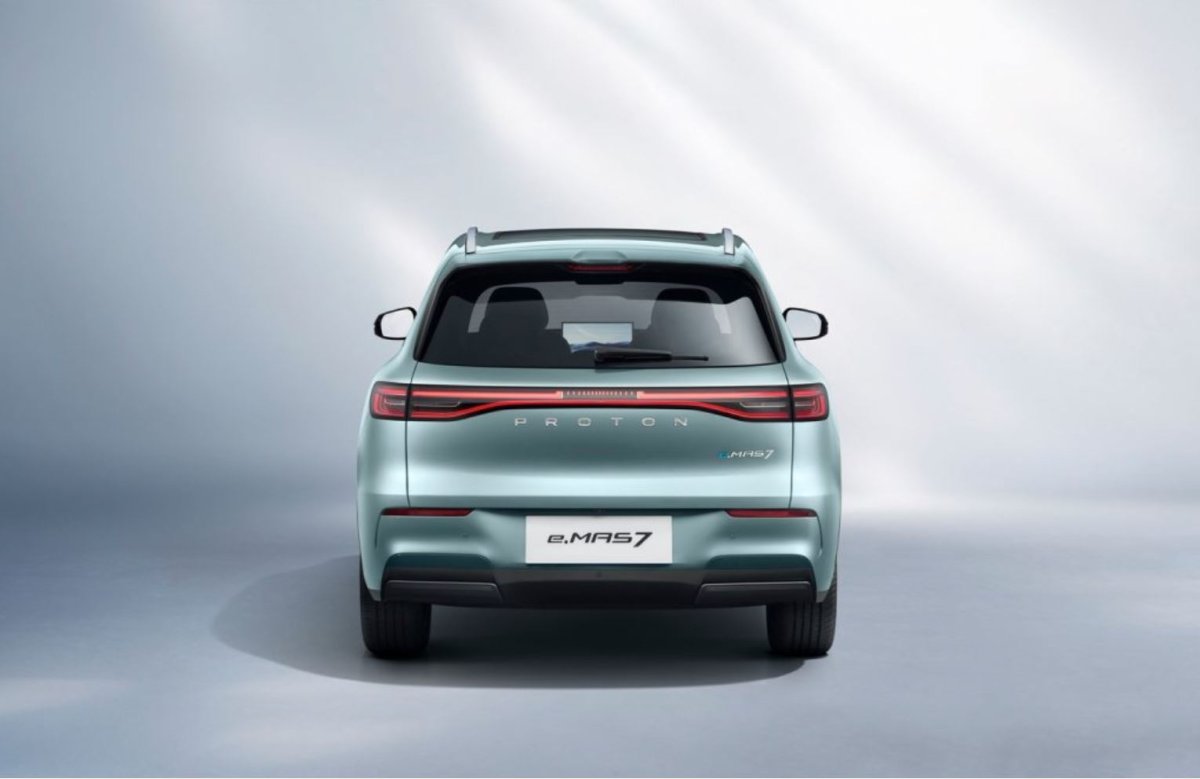
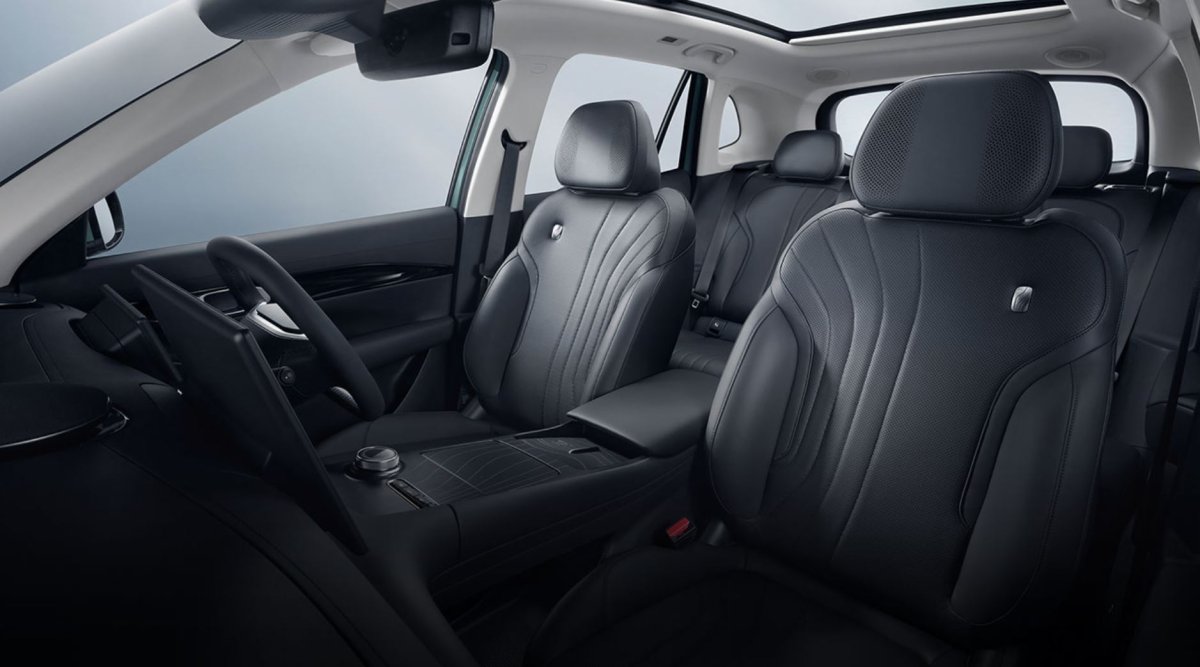
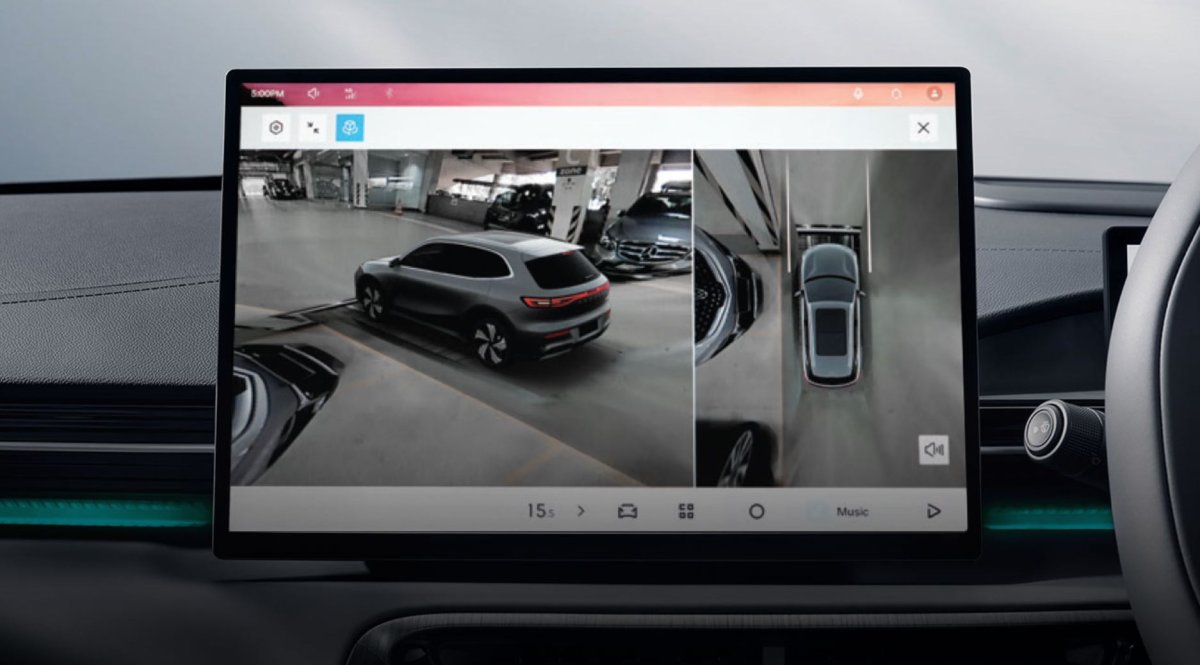
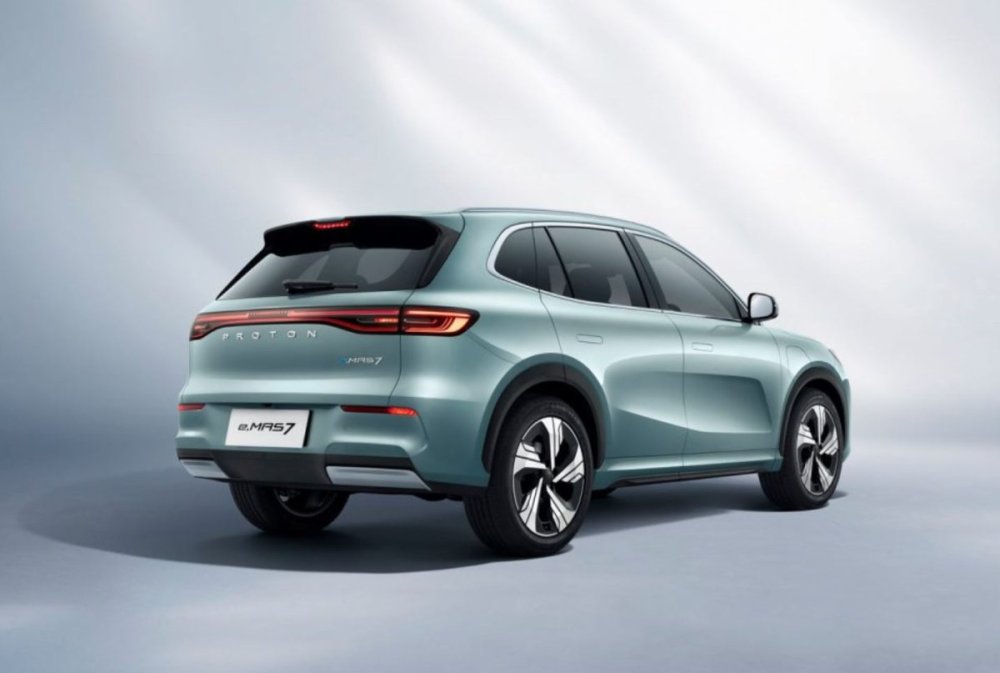
China's Geely Galaxy E5 is finally arriving in the shores of Singapore over this weekend curtesy of Proton via its twin called the eMas 7 through the Authorised Distributor - VinCar, under the dealership of Kinetic Auto. Looks to be a similar setup of distributor (VinCar) + dealer (EV Hub) on the GAC Aion series. The SUV's dimension in mm are (L x W x H) : 4,615 x 1,901 x 1,670 with a wheelbase of 2,730mm. Ground clearance of 173mm. Weight of 1,765kg for the Premium version. The Premium comes with 19" wheels with 235/50 R19 Goodyear tires. It's a front wheel drive unit with Malaysian version having 160kW of power and will do the venture sprint in a little over 6 seconds. But that means it'll be Cat B here in Singapore, hoping a Cat A version comes out that's rated at 110kW and will do the century sprint under 10 seconds. With 320Nm of torque, the software is programmed to give smooth acceleration rather than kick in the backside torque slam. Boot capacity of around 460L with rear seats up and over 1,800L with rear seats folded. Will be competing against rivals such as BYD Atto 3, Cherry Omoda E5 and SAIC MGS5. Believe the Premium version of the eMas 7 will be on sale here in Singapore which is priced at RM124k over the causeway - less RM4k for the first 6,000 units + some freebies. Waiting for the official price from Kinetic Auto and will post a follow up once the OMV is known. Interior looks to be well appointed for a five seat B&B SUV. Front seats are ventilated and great to beat the Singapore heat. Driver's side has 6 way power adjustments and passenger side has 4 way power adjustments. Missing from the China version is the powered ottoman on the passenger side. A 10.2" driver's display is completed by a high resolution 15.4" 2.5K infotainment touchscreen. Back up camera has high resolution details. Geely has it's own internal software development team (bought out Chinese mobile phone maker Meizu) and makes is its own custom System on Chip (SoC) hardware to operate the infotainment. Expect the high resolution screen to be response and snappy as well as the user interface to be intuitive. Comes with a Heads Up Display (HUD)! For a B&B vehicle this is an outstanding feature. A retractable panoramic sunroof with a retractable shade to help protect against the hot Singaporean sun during the day is a welcome feature. The front seats can be folded flat. Might be useful if glamping is something one is looking for. Interior colour is called indigo blue (even though it looks black in the pics) and its more recognisable under sunlight. Other interior colour options (white and brown) are available in China and remains to be seen if Proton will offer these options on the eMas 7. There is a large hidden storage well underneath the boot and there's another hidden drawer below the rear seats. These are great storage features offered on the eMas 7. Proton has tuned the driving, suspension and handling of the eMas 7 to be suitable for Malaysian roads - nice for those planning to go across the causeway on a regular basis to makan and shopping. So the driving dynamics should be a bit better than the softly tuned units of Geely's international version of the EX5. Driving range is rated 410km under WTLP test cycle with a 60.2kWhr battery. Geely makes its own battery called Aegis short blade or golden battery that uses LFP chemistry. Means there's less risk of catching fire compared to NMC/NCA battery chemistries and can be regularly charged up to 100%. AC charging accepts 11kW and take a little over 6 hours to go from 10% to 80%. DC fast charging is a bit disappointing at a low 100kW. Will take around 30 minutes to DC fast charge from 10% to 80%. Reviewers have commented on the remarkable efficiency of 13kWhr per 100 km on the eMas 7. Has the full suite of safety features with Level 2 Advanced Driving Assistance System (ADAS). The eMas 7 has been crashed test under ASEAN NCAP and got five star safety rating. Also received Euro NCAP five star safety rating for the equivalent Geely EX5. Lots of great features for a B&B and awaiting what VinCar + Kinetic Auto is going to price for. Currently there's a promotion at May 2025 Car Expo. Who's interested in getting one?


-
AUDI E Concept Noticed something unusual with this new concept from Audi? The grill (or rather the lack of one), it headlights, taillights on the rear bumper, or yah you get it, the missing 4 rings. If I tell you this is NOT an Audi, I believe one of the very first thing that pops up in your mind is that this a copycat from China, am I correct? Well the car IS from China, but just NOT copycat. This isn’t an Audi but an AUDI. Confused? So am I. Audi Is Launching a New Car Company Called… AUDI tl;dr: This a new sub brand by Audi and China SAIC, for the Chinese. With many new sub-brand formed in China every other weeks, they decided to go with AUDI and call it a day. To prevent confusion (what an irony), its logo is a 4 letter words in capital, instead of the 4 rings on the parent Audi. These AUDIs will peacefully coexist with the regular crop of Audis featuring the historic logo harkening back to the Auto Union era. And you have guess, the brand new AUDI will only be carrying EVs, no gasoline model in its lineup of 3 model (in 2025). On a side note, if one day you see a CARBON82 in MCF, it is not me but maybe a new account of Carbon82 for posting some nonsense here. @kobayashiGT boleh / KYM?
- 11 replies
-
- 21
-
.png)
-
-
The ES90 will be revealed to the world on March 5. Follow the livestream via es90event.volvocars.com The new Volvo ES90 is powered by 800-volt technology, helping to create a car that goes further and charges faster than any electric Volvo before The ES90 can add up to 300 kilometres of range in just 10 minutes of charging and offers a driving range of up to 700 kilometres The ES90 also brings new progress in efficiency and sustainability, thanks to recycled and natural materials, and more
- 38 replies
-
- 10
-
-
Am I the only one to think that almost all the face of modern EV look the same? The #3 comes with 268 horsepower (200 kilowatts) out of the box courtesy of a single electric motor, while the more powerful Smart #3 Brabus produces a feistier 422 hp (315 kW) via two electric motors, one on each axle. It takes 5.8 seconds for the standard Smart #3 to hit 100 kilometers per hour, and just 3.7 seconds for the Brabus model to do the same. The most efficient, single-motor Smart #3 has 455 kilometers of range on WLTP while the dual-motor model sees that figure drop slightly to 435 km. DC fast charging is listed at 150 kilowatts, which allows for a recharge from 10 to 80 percent in just 30 minutes.
-
Nice outlook, BUT there is NO rear windscreen! A big NO for me. And I find Polestar's naming convention rather confusing. This PS4 actually sit between PS2 (compact sedan) and PS3 (mid-size crossover), Swapping the name with PS3 make more sense imo. The Polestar 4 is the brand’s latest addition to the electric automaker’s growing lineup, with the new SUV slotting between the Polestar 2 sedan and the larger 3 in terms of size and price. The compact crossover adopts a stylish design showcasing key features from the Polestar Precept concept car. The Polestar 4 will be available in both single- and dual-motor layouts. The long-range, dual-motor version produces 544 horsepower and 686 Nm of torque. The crossover can hit 100 kilometers per hour in 3.8 seconds, making it the brand’s fastest production car ever. Even though the Polestar 1 had more power, the Polestar 4 will complete century sprint 60 quicker. The long-range, single-motor version, which powers the rear wheels, makes 272 hp and 343 Nm of torque. Polestar gives the long-range, single-motor variant a preliminary range target of over 483 kilometers based on the US EPA’s test procedure. The automaker fits both long-range models with the same 102.0-kilowatt-hour battery capable of 200-kilowatt DC charging and 22-kW AC. The 4 has bi-directional charging with vehicle-to-load capability and a heat pump as standard equipment. The Polestar 4 debuts with a new drive optimization function that allows drivers to select between range and performance driving modes. Range prioritizes efficiency, with the crossover capable of disengaging the front electric motor to save energy via a disconnect clutch. Performance mode sharpens the 4’s responsiveness and engages both motors at full power at all times. The dual-motor version has a semi-active suspension, while Polestar offers the model lineup with a range of 20- to 22-inch wheel choices wrapped in either Pirelli or Michelin rubber. The crossover features a low aerodynamic nose, retractable door handles, and frameless windows. It has no rear window glass, with the standard glass roof extending behind the heads of the rear-seat passengers. The Polestar 4 crossover is 4,839 millimeters long, 2,139 mm wide, and 1,544 mm tall. It has a 2,999 mm wheelbase, which makes it as big as the Audi Q7 between the front and rear wheels while being shorter overall. Safety is front and center with the Polestar 4. It has nine airbags, 12 cameras, one radar system, and 12 ultrasonic sensors. Drivers glean information from a 10.2-inch display ahead of the steering column, but a 14.7-inch head-up display is available to reduce distractions. It features a nifty “snow mode” that switches the HUD’s text color from white to yellow. A 15.4-inch landscape-oriented infotainment display runs Android Automotive OS. It has built-in Android features like Google Maps, Google Assistant, and the Google Play store. Apple CarPlay is included, and customers can upgrade to a 12-speaker Harmon Kardon sound system. However, those who upgrade to the Nappa Pack get two additional speakers in each front headrest for 16 total. Polestar will offer the sleek crossover with several upgrade packs. The Plus Pack focuses on improving the model’s tech and comfort kit. The Plus Pro Pack adds color-coded body bits, an electrochromic glass roof, and extra interior illumination. The previously mentioned Nappa Pack, which customers can select with the Plus Pack, also adds massaging seats and Nappa leather upholstery with ventilation. The long-range, dual-motor version is available with a Performance Package that includes Polestar Engineered chassis tuning. The pack also comes with 22-inch wheels, four-piston Brembo brakes, and gold details for the brakes, seat belts, and valve caps. The Polestar 4 will begin production this November in China, where it’ll launch first. The company will release more specific details for other markets in 2024, with the vehicle arriving later that same year. Polestar indicates the crossover will have a launch price of US$60,000 to start.
- 42 replies
-
- 11
-
-
-
Supposedly the electric version of Karoq, but based on an all new platform for BEV. 3 power variants available at launch: ● Elroq 50 – rear-wheel drive, 55 kWh battery capacity, 170 PS power, 160 Km/h top speed, 9.2 sec century sprint, 350 Km range, 14.9 kWh/100km ● Elroq 60 – rear-wheel drive, 63 kWh battery capacity, 204 PS power, 160 Km/h top speed, 7.8 sec century sprint, 390 Km range, 15.1 kWh/100km ● Elroq 85 – rear-wheel drive, 82 kWh battery capacity, 286 PS power, 177 Km/h top speed, 6.6 sec century sprint, 560 Km range, 13.8 kWh/100km Dimensions: 4,488 mm (L) x 1,884 mm (W) x 1,625 mm (H) x 2,765 mm (WB) Škoda Elroq 85 Škoda Elroq 85 "First Edition" Škoda Elroq Sportline
-
The new Audi Q6 e-tron (not to be confused with the larger 7 seater version for Chinese market) marks the start of a new generation of electrically powered vehicles at Audi. With a new platform, electronics architecture, charging and battery technology, as well as a pioneering design for Audi, the Q6 e-tron paves the way to Audi's all-electric future. It is the first production model based on the Premium Platform Electric (PPE). This makes the all-electric SUV with its new E3 1.2 electronic architecture the new reference for Vorsprung durch Technik. With the Q6 e-tron series, e-mobility is coming from the Ingolstadt plant for the first time. The Q6 e-tron will compete directly with BMW upcoming iX3, which is built on a dedicated platform for Vision Neue Klasse X. Audi Q6 e-tron Quattro S Line Audi SQ6 e-tron