Search the Community
Showing results for tags 'cinema'.
Found 23 results
-
What is it about nostalgia that’s got Gen Z by the throat? As a self-identified Zillenial (someone born between 1997 and 2001, straddling the ever-changing lines between a Millennial and a Gen Z), I see younger people going for devices once declared dead, like music players for various mediums (vinyl, cassette, CDs, or even just digital) or compact point-and-shoot cameras. I for one would very much like to return to using digital audio players, having used the 7th Gen iPod Nano in secondary school, and later the Sony NW-A25 Walkman that I used throughout polytechnic and National Service. Alas, the AI-induced memory shortage has made microSD cards and other forms of digital storage unreasonably overpriced, and thus even as I plan to buy some CDs during my first-ever solo trip next year (to Japan, 11 years after my last visit) I do not think I’ll be able to completely wean myself off Spotify in the near future. Going back to the topic at hand, what I’m not so sure about is that the benefits of having a separate device for entertainment is something Zoomers realised from the get-go, and so the idea that they do so out of FOMO (fear of missing out) is plausible, especially when there have been arguments that this wave is performative and not out of a genuine interest in the past. In any case, All About Lily Chou-Chou has sort of taken on a new form in the 2020s as part of the “canon” for understanding Gen Z culture. With all this in mind, I started watching. Light spoilers ahead. With All About Lily Chou-Chou, director Shunji Iwai became the first Japanese director to use the Sony HDW-F900 digital video camera for a production. The point of interest about this choice is not so much the fact that this was during the transition from film to digital, or that Iwai may have been influenced by his friend Hideaki Anno (most well-known for a little cartoon called Evangelion) who used digital cameras for Love & Pop, but the resultant look of the film. The blown-out highlights, chromatic aberration and camera shake are by modern standards undesirable, which is why they have largely been eliminated in modern cameras. For this film, however, this look when rendered by digital cameras (sharpening already detailed images) becomes a way of solidifying the story’s Y2K setting as perhaps ethereal, even dreamy. Before social media, the way that people interacted online to discuss things was through message boards or fansites like blogs. I never got to experience most of these, having only been allowed to use my family PC on a more regular basis when I was in Primary 4. The remainder of my childhood spent on the internet was either playing games like Pet Society on Facebook, watching music videos on YouTube or playing Flash games on Y8.com like Boxhead (god what a throwback). This film then was quite the eye-opening experience, seeing how a fansite became a safe haven for fans of the titular Lily Chou-Chou, an anonymous singer who is heard more than seen in the film, but also something that keeps them from truly connecting. Our protagonist Yuichi is the administrator of the fansite Lilyphilia (different from the real website used in the marketing and production of the film), and throughout the film we see messages from various users of the site. As I would find out later, the world is a small place, and the fansite becomes a layer that distances Yuichi from the very people around him, culminating in a series of tragedies. This realisation that the internet was not a utopia even back in the “good ol’ days” should have been sufficient in breaking the spell of nostalgia, yet today the soundtrack, especially the song Glide, is used to soundtrack TikToks, often with the iconic shot of Yuichi listening to Lily Chou-Chou on his CD player amid the seemingly endless fields of grass being used or replicated by users. Many researchers have studied the alienation brought about by social media, and All About Lily Chou-Chou draws upon that feeling in its depiction of youth who feel disenfranchised. It’s probably why Gen Z resonates so much with it, and their love for it is perhaps a desire for escapism. More concerning is the nihilism that hangs in the air, or should I say ether (though Lily Chou-Chou’s fans would say the Ether where she draws her creative energies from should not be tainted by such negative thoughts). Death is a recurring motif, a major cause for a character’s change in personality, and accompanied by violence. I was genuinely upset at a certain shot that turned out to be a fake out, but the emotional damage was already done. In addition, the way that characters, Yuichi in particular, are mostly passive against the injustices they bear as adults try helplessly to maintain and enforce the status quo is reminiscent of Gen Z attitudes, from tǎngpíng (“lying flat”) in China to the “Gen Z stare” that seems to have arisen after COVID-19 lockdowns. The Internet being the common safe haven and Lily Chou-Chou fans having parasocial relationships with her only add to the parallels. There is reason for Gen Z to be nihilistic - between having their life trajectories disrupted by various world events (COVID-19 in particular) and inheriting a world broken by the very people who brought them up with ideals of making the world a better place, it’s not hard to see how they are similar to the characters who are products of Japan’s first “Lost Decade”. I have been (and in some ways still am) on that road myself, and I can only hope that if any impressionable youth watches All About Lily Chou-Chou, they do not take away the wrong lesson from it lest they be seduced by Thanatos. ~ Wei Feng Cover image: Genery.io Images: Sabukaru, Medium, Film Movement
-

Dear You: Cliches Reflect Us, and so They're Beautiful
hollowataraxia posted a blog entry in MyAutoBlog
The 2026 Teochew film Dear You has made quite the stir in Chinese circles, from becoming a massive hit in China to accidentally starting a debate in Singapore on dialects and culture at large, and also caused a rush for tickets to watch the Teochew version of the film. After being unable to access the Golden Village website for the first round of extended screenings, my mum managed to snag some tickets for the second round, and so we (sans my dad) went to GV Vivocity on a Sunday to watch it. Spoilers ahead. Since I watched the Teochew version, I’ll be spelling names as such. The film covers various perspectives: a man (Den Bhagseng) who leaves China in search of a better future for himself and his family, the wife (Iap Sogriu) and kids he leaves behind, the people he leaves an impact on during his time in Malaya and later Siam, and his grandson (Hiou-ui) who unintentionally kickstarts this whole journey of uncovering the truth. Very much a typical Asian family drama on paper, so why exactly did it blow up? One must consider that Teochew is not a language spoken frequently, not just in Singapore and other Chinese diasporas but also in China outside of the Chaoshan region in eastern Guangdong. In addition, the Teochew spoken in the film apparently is different enough that elderly Singaporean Teochew speakers themselves could not fully understand the dialogue without subtitles. This reminds me of my first (and so far only) trip to my late paternal grandfather’s hometown in Hainan Island as a teen, where I distinctly remember my dad talking about bread using the word “roti”, only to learn that it was not a word our distant relatives used (fairly obvious in hindsight). Not quite the same in my case, but all these should help illustrate the odds a film like Dear You should have faced in trying to garner mass appeal in China, which is more ethnically diverse than it appears on the surface, let alone overseas to the point of sparking discussions on culture. Getting back on track, the Singapore government’s Speak Mandarin Campaign caused films in other “dialects”, particularly Cantonese films from Hong Kong, to be released only in Mandarin, so what about Dear You prompted Singaporeans (including myself) to clamour for the film to be screened with the original Teochew audio? I’d say it’s mainly out of nostalgia, particularly for elderly Singaporean Chinese who may themselves have had to make the perilous boat trip down from their hometowns. I appreciated the efforts taken to preserve what is essentially the heritage of not just Teochew immigrants but Chinese immigrants in Southeast Asia, but I didn’t find myself particularly attached to the characters. The struggles that our elders went through is something that we learn about throughout schooling, and the forced assimilation of Chinese people in Thailand as shown was not a foreign concept as I’d read about similar government regulations in other Southeast Asian countries like Indonesia and the Philippines. What I gravitated towards (perhaps because letters remind me of the very tear-jerking Violet Evergarden) was the qiáopī. Letters like those had to be really precious considering that they not only contained money sent by overseas Chinese to their families back home, but the words themselves brought joy, relief, comfort or closure to the recipients who might have held on to hope of seeing their loved ones again. This becomes the central plot device that sparks Hiou-ui’s search for his grandfather Bhagseng, whose passionate (if at times lewd) letters to his wife Sogriu demonstrate his unwavering desire to return home, and which are continued in secret for decades after his unfortunate death by Zia Lamgi, a Thai Chinese innkeeper who first meets Bhagseng shortly after his arrival in Siam. No wonder the Mandarin title 给阿嬷的情书 literally translates to “Love Letters for Grandma”. This then culminates in the now elderly Sogriu learning the truth from Lamgi’s adopted son Zeghua (who Hiou-ui ends up finding instead of his grandfather), and flying over to Bangkok to meet Lamgi who unfortunately suffers from dementia. Their conversation when Lamgi recalls Sogriu again was the closest I was to tearing up watching the film. Coming back to the question of what made Dear You so different to achieve this level of success, I’d like to make a callback to my thoughts on Wong Kar-Wai's Chungking Express and say that beyond the nostalgia-baiting, Dear You is well-executed (though rough around the edges - I was not a fan of the early shots of Hiou-ui in Bangkok that may have been shot on a phone). Director Lan Hongchun and his team have made the most of a supposedly shoestring budget (it’s no blockbuster, but SGD$2.67 million is still no joke) to tell an authentic tale of love and sacrifice, cliched as it might be. And there's nothing wrong with that. I’ve come to realise something in recent years - perhaps cliches exist because they reflect universal human truths, because enough people from various places and eras have come to the same conclusions. And perhaps embodying these truths is what might be needed to ensure, among many things, the preservation of culture and humanity in a world gradually becoming bereft of them. ~ Wei Feng Cover image: Tatler Asia Images: The Straits Times, China Explorer Tour -
I recall my family meeting up somewhat regularly at Suntec City in my teens to watch films in a Golden Village theatre, and it was almost always the blockbuster of the season (I particularly remember walking out after watching The Martian). Arthouse or indie films were not something I explored all that much (I didn’t make it through half of Anthony Chen’s Ilo Ilo soon after its release), and as I grew older I fell into the otaku rabbit hole, so my live-action film-watching was reduced almost entirely. It’s a wonder then how I became aware of Wong Kar-Wai as an auteur of Hong Kong cinema, through cultural osmosis perhaps. After my slumbering desire to explore his works was reignited by a recommendation from a fan of the movie, I got around to watching Chungking Express towards the end of 2025, kick-starting a personal journey to watch more live-action films, particularly non-blockbusters. Spoiler alert of course. Going into the film, I learnt from a quick skim of the Wikipedia page that Chungking in the title did not refer to the Postal romanisation of the city of Chongqing, but instead the Chungking Mansions in Tsim Sha Tsui, Hong Kong. But that only left me more confused - what exactly was Chungking Express about then, if not about Chongqing and/or trains? While I watched Cop 223 (played by Takeshi Kaneshiro who I first saw in Red Cliff as a kid) lost in thought as he went through 30 cans of pineapple, I too was deep in my own head. Sure, I could see that he'd just broken up and was going through heartbreak, and that he sought to fill that void with a woman in a blonde wig, but again what was Wong Kar-Wai trying to tell me with all this? Was there a reason she was involved in drug trafficking and he was a cop? Did pineapples have some literary meaning I was unaware of as compared to other canned fruits like peaches or longans? The second part didn’t help either, especially now that the only link between these parts was the presence of food store worker Faye (and the first part only introduces her at the end). Tony Leung Chiu-wai’s Cop 663 is also going through some heartbreak of his own and Faye decides to… steal his house keys (to be fair Cop 663 entrusts them to the store) and show her interest in him by playing interior designer? And when Cop 663 catches on and invites her out on a date, she not only ghosts him but straight up leaves Hong Kong, only to return and now ex-Cop 663 has taken over the food store? I came out of Chungking Express underwhelmed, but over time I’ve found myself rethinking my preconceived notions about storytelling because of it. The stories that typically resonate most with me, regardless of medium, all have something to say about the various aspects of life and humanity that can often be summed up in a single sentence. One of my favourite live-action films, Ben Stiller’s 2013 adaptation of The Secret Life of Walter Mitty, could be read as “It’s never too late to pursue your dreams”, while Damien Chazelle’s Whiplash is to me a cautionary tale of the damage that unchecked obsession leaves behind in the pursuit of dreams. Similarly, Gundam as a franchise examines humanity’s capacity for death and destruction and infinite potential for good, and Evangelion across its various iterations explores living with depression. However, there are also media that have stuck solely because of the emotions they evoke in me. Haruki Murakami’s Colourless Tsukuru Tazaki and His Years of Pilgrimage as I’ve previously written about gave me some closure, and the music video for 乾杯 by Taiwanese band Mayday always gets me choked up thinking about what a life well-lived can mean. Heck, sometimes all one needs is good execution to get hooked. The recent collaboration between Wuthering Waves and Cyberpunk: Edgerunners has been hailed as one of the best in gacha game history, mostly due to the story quest which expands upon both IPs in sensible and respectful ways, and the way the 2026 video game 007 First Light showcased a new side of James Bond with developer IO Interactive’s brilliant execution has brought it critical acclaim. This is all to say that my introduction to the world of Wong Kar-Wai was in all likelihood a case of plunging into the deep end with mismatched expectations. The late film critic Roger Ebert considered Chungking Express to be more “cerebral”, depending on a knowledge of and love for cinema to fully appreciate it. Coupled with my initial attitude towards storytelling, it was obvious in hindsight I was not going to get much out of it as I was back then. Perhaps at some point I’ll revisit Chungking Express, and hopefully with more understanding of cinema to better understand the intent behind it. In the meantime, it’ll live in my head as an unanswered question of what storytelling can be, wrapped in pretty visuals. ~ Wei Feng Cover Image: Cinéma Public Images: The Criterion Collection, South China Morning Post, IMDb
-
- 1
-

-
- wong kar-wai
- cinema
- (and 6 more)
-
interesting .... anyone visited the new cinema ? http://thepoppingpost.com/golden-village-opens-first-all-laser-cinema-in-paya-lebar/
- 57 replies
-
- 2
-
-
- golden village
- cinema
- (and 7 more)
-
-
This thread is purely based on historical version of 3 Kingdoms, and not the novel part. After liu bei passed away in 222AD, he handed shu kingdom to his son liu shan and also zhuge liang and Li Yan. But Zhuge liang still holds most power and authority. during his tenure, he advocated military confrontation against wei for at least 5 major times. And all his military expedition was failures. Was Zhuge liang correct in embarking on offensive military campaigns against a much strong opponents? Or could he have just employed a more inward growing and adopted a wait and see kinda approach? Would that have resulted in Shu lasting longer or grew stronger in the long run?
-

23 years on, Infernal Affairs remains the best gangster movie I've watched
jeresinex posted a blog entry in MyAutoBlog
TL;DR It's over two decades old, but Infernal Affairs remains THE gangster trilogy. *SPOILERS AHEAD* *SPOILERS AHEAD* *SPOILERS AHEAD* The Hong Kong Police and a triad have placed moles in each other's ranks. Tony Leung is Chan Wing Yan, an undercover cop desperate to leave his assignment. The antagonist is Senior Inspector Lau Kin Ming (Andy Lau), a decorated policeman who is actually a mole for Hon Sam (Eric Tsang), a triad boss. It's a game of cat-and-mouse, with policemen and gangsters trying to uncover the moles before their opponents do. Setting the stage Infernal Affairs is a trilogy. To me, it requires three movies to finish telling the story. Infernal Affairs is the main story, but it needs Infernal Affairs 2 for context. It explains the characters' history and the events that shaped them. Others complain that Infernal Affairs 3 is "bad". It is not. It brings closure to the tale. Without it, the villain never gets his comeuppance. In this context, Infernal Affairs 3 is neither short on emotionality nor poignant moments. I have watched the trilogy at least five times, and after each viewing, I still learn something new. There are nuances and subtleties that can only be gleaned with each viewing. That is a hallmark of a well-told story. It's too much to cover all three movies in one post, so instead, I'm highlighting seven moments from the first film that I found unforgettable. 1) An unending assignment Wing Yan is ordered to undergo psychiatry sessions to deal with his anger-management issues or face jail time. Exasperated, he yells at SP Wong (Anthony Wong), reminding him that this assignment was originally three years, but it's been almost 10. Wing Yan lives a double life: As a gangster, the police chase him. As a mole, gangsters are after him. It's unending psychological and emotional torture. Sam smashes open Wing Yan's cast 2) Tap... tap-tap... tap-tap-tap... During operations, Wing Yan and SP Wong communicate using morse code to avoid bugs and circumvent the fact that they can't call or text each other. As the deal between Sam and the Thai traffickers goes down, SP Wong stands with his eyes closed. At the triad hideout, Wing Yan stares pensively out the window. Our eyes are drawn to the cast on his arm. At the scene's climax, the police ambush Keung (Chapman To), one of Sam's henchmen, as he carries bags of cocaine ashore. Sam yells at him over the phone to dump them. The deal falls through. Sam glares at his men, his seething gaze an attempt to uncover the traitor. As Wing Yan begins to speak, Sam grabs his injured arm and smashes it on a table to shatter the cast, suspecting that it contains a bug. It's empty; Wing Yan's cover is intact. Later, we see the mic taped outside the grubby window he'd been staring out of. Nobody suspected his finger-tapping to be morse code. Kin Ming executes his boss 3) Betraying his boss One of the most brutal scenes in Infernal Affairs is when Kin Ming betrays Sam. The police ambush Sam in a multi-storey carpark and Sam flees on foot, desperation on his face. Sam calls Kin Ming. The sound of a ringing handphone pierces the silence, echoing off the concrete walls. Kin Ming appears and shoots Sam dead, revealing him as a two-faced, cold-blooded and remorseless killer who stops at nothing to get what he wants. Sam was a criminal, but he was also a father figure. But Kin Ming executed him without a second thought. 4) Keung was undercover, too Keung was shot and mortally wounded during the gun battle between the cops and the triads. He and Wing Yan flee. Behind the wheel, Keung grows visibly weaker. He loses control and crashes the car. Dying, he tells Wing Yan that Sam said, "Whoever didn't show up today was the mole. I didn't tell him you went for a massage." Keung was a loud and sometimes naive character. But the surprise is that he was a police mole, as confirmed by the news report in a subsequent scene. Mary makes a painful allusion to Kin Ming 5) Mary learns the truth Mary (Sammi Cheng) is Kin Ming's fiancé and a writer. Kin Ming comes home and sees Mary sitting on the steps, visibly upset. The sampler CD plays Forgotten Time by Tsai Chin. Suddenly, a recording of a conversation between Sam and King Ming plays. Mary says she can't finish her novel because she can't decide whether the main character is good or bad. Tearfully alluding to her fiancé, she says, "I think only he knows." 6) SP Wong dies Wing Yan's expression is priceless. In that moment, his whole world came crashing down – SP Wong is the last and only person in the department who knows Wing Yan's true identity as an undercover cop. It is a look of despondent horror. For the first time, his character knows not what to do. The iconic rooftop scene between the villain and the hero 7) Wing Yan dies Wing Yan arrested and handcuffed Kin Ming following their rooftop meeting, but suddenly, another policeman confronts them, gun drawn. Using Kin Ming as a shield, Wing Yan backs into the lift. But as he turns his head, he provides a small opening to the cop, who shoots him. It turns out the other cop is also a triad mole. The lift descends as gunshots ring out. The doors open to a bloody scene: The other mole also lies dead; Kin Ming shows his warrant card to the waiting policemen. There are many other moments in Infernal Affairs that are equally memorable, from the revelation that Wing Yan has a daughter to confessing to the psychiatrist that he's actually a policeman (it was painfully obvious he was serious but he pretended it was a joke) to Wing Yan's funeral. But these seven struck me the most and are ultimately the ones that made me eager to watch the next instalment. -
I just went watch Reunion Dinner n AGGA and was shocked there were less than 10 people each time i went. Moreover its on a weekend. Is it because of the expensive ticket prices, covid, not good local production that has lead to poor ticket sales at the cinemas?

-
-
Just a week after announcing a possible spin off separate listing of its cinema business, entertainment company mm2 Asia is in talks to merge this business, operating mainly under the Cathay brand, with competitor Golden Village. As part of the deal, the parties aim to bring in new investors to help beef up the combined entity, which is going to be the largest cinema operator in town.Mm2 Asia now runs 8 Cathay cinemas in Singapore, and 14 in Malaysia. The potential merger partner, Hong Kong listed Orange Sky Golden Harvest Entertainment (Holdings), runs another 14 cinemas under the Golden Village brand in Singapore. The Hong Kong company, previously known as "Golden Harvest" runs a total of 35 cinemas with 285 screens in Hong Kong, Taiwan and Singapore. The deal will need to jump through several hoops: approvals from both mm2 Asia and OSGH shareholders; approval of SGX and Hong Kong Exchange, as well as relevant government authorities, including the Competition and Consumer Commission of Singapore in relation to anti-trust issues.Under the initial heads of agreement, the parties are still negotiating the financial terms. According to mm2 Asia, the merger terms will be discussed based on the FY2019 operating figures, subjected to mutually agreed adjustments.For FY2019 ended Dec 2019, OSGH's Singapore cinema business generated a turnover of HK$810.3 million, down slightly from HK$822.1 million in the year earlier. Operating profit in the same period was HK$139.8 million, down from HK$150 million. Unsurprisingly, Covid-19 has hit the cinema business hard. For the six months ended June 30 this year, Golden Village's Singapore revenue was just HK$137.4 million, due to the circuit breaker measures. It made a loss of HK$16.9 million. For the six months ended June 30 2019, it generated revenue of HK$401 million for its Singapore cinema business, and operating profit of HK$70.6 million. If the merger is completed, the combined entity will be able to enjoy advantageous economies of scale, and provide more financial and operating stability. The company also notes that there has been general disruption to the movie and cinema business, with the advent of content streaming apps and the growth of video content on social media. The merger would result in a stronger platform for the operation of the cinema business. The funds from new investors will also provide the additional working capital for the combined business to cope with operating costs, and strengthen the balance sheet of the combined business.
- 41 replies
-
- 3
-
-
- cathay
- golden village
- (and 2 more)
-
popcorn and coke time.
-
Captain Marvel and Abenjers. https://www.youtube.com/watch?v=0LHxvxdRnYc https://www.youtube.com/watch?v=hA6hldpSTF8
-
Anyone knows if the non-couple seat armrests in Cathay cinemas can be lifted? Asking because all the couple seats taken up liao
-
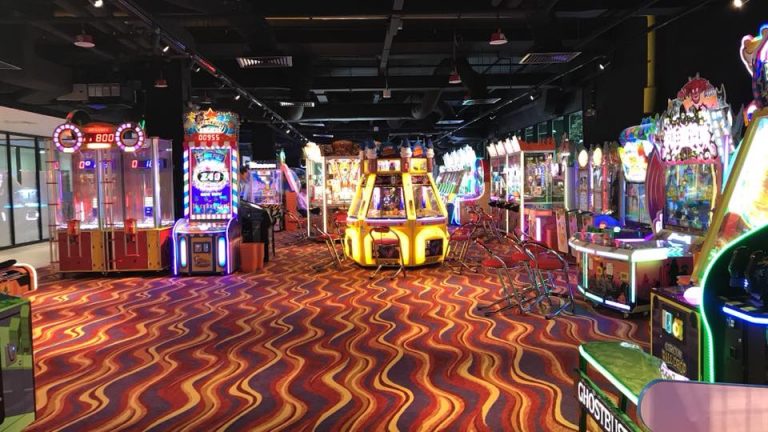
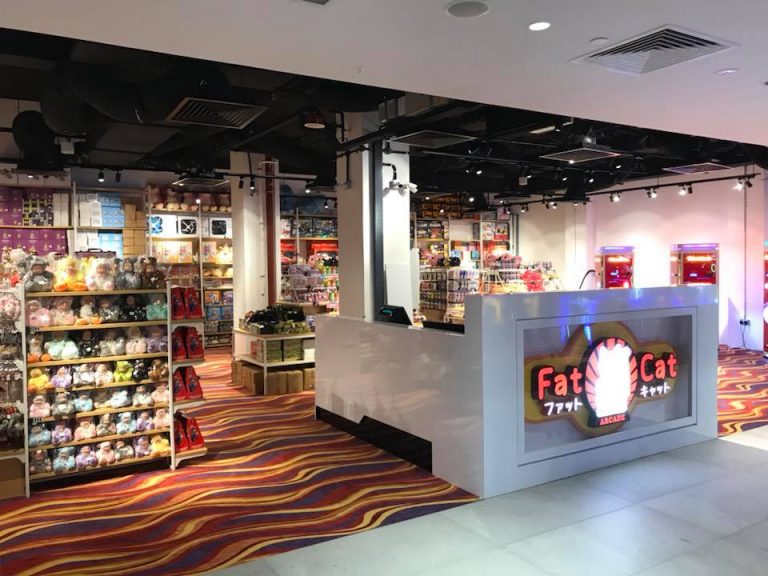
I'm a bit slow but wow Bedok has a spanking new mall - Djitsun Mall (AGAIN) and cinema (Golden Village) after not having any for the last 10 years since Princess closed down? The nearest would be Tampines, Katong, and now Paya Lebar. 6 theatres with a capacity of 576. It is now opened. https://weekender.com.sg/w/do/golden-village-launches-new-cineplex-in-bedok/ And then there's the Fat Cat Arcade, touted as the biggest arcade in the east of Singapore. I somehow don't see the kinda arcade games that we are all accustomed to playing when we were younger though. Games like Streetfighter, Time Crisis. The arcades of today consists of virtual fishing games and toy catchers. https://mothership.sg/2018/06/fat-cat-arcade-bedok/ This new mall looks to me like just another Bedok Point. Do we really need that many Malls? And for old times sake...




- 67 replies
-
- 9
-
-
- djitsun mall
- golden village
- (and 7 more)
-
2016 is almost over, and we still have one or two more blockbusters, but next year, we have quite a few sequels, a few new shows in store.. Are there any shows that you are looking out for in the coming year?
-
the post 80s generation didn't get a chance to watch movie in this theatre, still remember the big sculpture on both side of the screen i watched the 3 hours long 'The ten commandments' in this theatre on the hard wooden chair, kar chng pain after the show even though they have interval in between.
-
Anyone watched? To those havent watch, you shouldnt To those hve watched, you must have a good sleep First time in my life i walk out of cinema halfway the movie
-
Coming very Soon. This movie is suppose to be like "Groundhog Day meets Starship Trooper". It is based on a Japanese novel named "All You need is Kill". The novel is currently being translated to Manga. You can read the manga from here (spoiler alerts though): http://www.mangahere.co/manga/all_you_need_is_kill/c001/3.html The mecha in the manga is very high-tech like Halo suits. The mecha in Tom Cruise's rendition is somewhat more realistic and raw. The movie seemed to be more serious than the manga. Either way, the main plot in the Manga and Movie should not sway too much but we can/may expect some twists in the movie version. Early reviews of the movie were surprisely good.
-
Check your movies here before venturing up north for a more affordable widescreen experience. www.cinemaonline.com.my Notable mentions is the TGV branch at Tebrau City. Please note that censureship is a little harsh. Kissing and scenes of sex are cut out. Best bet will be children's movies to be worth watching because the kids go in at lower prices compared to Singapore. In Singapore kids pay the full ticket price. No ifs no buts. As usual, be careful.
-
I went to watch a movie at Vivocity this afternoon. The movie was assigned a small cinema and the back rows are filled up. 15 mins into the show, this two stupid young men sitting on my left start opening a large packet of dried cuttlefish and started to eat. Dried CUTTLEFISH.... Smelly SOTONG. See bei smelly.Can you imagine how bad it smelled inside the enclosed space of the cinema. My friends on my right started covering their noses and someone in the row in front of me stiffled a retch. After 2 mins I also cannot tahan...looked angrily at him, said "hoi...that damm thing is very smelly. Have some consideration can?" He is lucky that he and his friend immediately kept back the plastic bag of smelly stuff...if he has protested I might just give him a punch for being so inconsiderate. I think maybe because i look so guailan and ready to whack people. Throughout the show I can still smell some whiffs of the dried sotong smell from their mouth. ccb. :angry: No ugly endings here and lucky things did not escalate further. Any bros or sis here with bad encounters inside the cinemas?
-
The Electric New Paper : Movie violence He's punched in cinema, but frustrated with attacker's no-show for mediation Just follow law, and Mr Jiang Yanlong did exactly that. By Geraldine Yeo 18 November 2010 Just follow law, and Mr Jiang Yanlong did exactly that. While watching a movie with his girlfriend on April 25, another moviegoer punched him in the head because Mr Jiang had told him to be quiet. What followed was Mr Jiang's frustrating journey in making sure his attacker didn't get off scot-free. For seven months, he went from police statements to filing a magistrate's complaint and two court dates in which his attacker did not turn up. Mr Jiang told The New Paper later: "I thought the matter would have just been settled and that I would get compensation. I didn't expect this to drag on." He said he was looking for monetary compensation as well as an apology. Here's his biggest frustration? there's not much else he can do.