Search the Community
Showing results for tags 'Generation'.
-
Motorola’s RAZR is returning as a $1,500 folding smartphone The legendary Motorola RAZR might be making a comeback as a $1,500 foldable screen smartphone, and it could launch as early as February, according to a new report from TheWall Street Journal. The original RAZR was one of the most iconic cellphones ever made, and it seems that Motorola’s parent company Lenovo is looking to cash in on that branding with an updated foldable phone (similar to the one that Samsung has teased for later this year). Per the WSJ, the new RAZR will be exclusive to Verizon in the US with a planned February launch, although the device is still in testing and details have yet to be finalized. Also unknown is nearly any concrete information about the phone. There’s no word yet on things like screen size, specifications, or even form factor. Will the revived RAZR just borrow the name but use a more traditional landscape folding display? Will Lenovo follow the original RAZR design and have some sort of super long vertically folding screen? This isn’t the first time that the RAZR brand has seen an attempted resurrection, either: in 2011 and 2012, Motorola also teamed up with Verizon (it seems to really like the RAZR name) for a series of Droid RAZR devices, which tried to cash in on the goodwill of RAZR devices, albeit without any of the flip phone design that was part of the original charm. That said, dragging old smartphone designs to the present in updated forms is starting to become a trend. The HMD-owned iteration of Nokia has practically made a cottage industry of it with rereleases of the Nokia 3310 and Nokia 8110, but those devices were meant to be fun, nostalgic novelties, not flagship competitors. According to the WSJ report, Lenovo is hoping to manufacture over 200,000 of the new RAZRs, which may seem optimistic for a $1,500 luxury smartphone. But considering that the (admittedly much cheaper) RAZR V3 model sold 130 million units over its lifespan, if lightning does manage to strike twice, that goal might not be so hard to hit. Samsung might have confirmed the launch date for its first foldable smartphone https://bgr.com/2019/01/14/samsung-galaxy-fold-release-date-reveal-billboards/ Following months of leaks and speculation, Samsung finally announced last week that it will hold its latest Unpacked event on Wednesday, February 20th in San Francisco, California. The presence of the number 10 on the invitation all but confirmed that the Galaxy S10 will make its debut on the 20th, but we still weren’t totally confident that Samsung would bring its foldable phone to the event as well. But Samsung might have just removed all doubt. In a post on its Newsroom site over the weekend, Samsung shared a series of photographs taken at the Place de la Concorde in Paris of several new billboards the company recently installed. The Hanegul text reads “미래를 펼치다” and “이월 이십일,” which translates to “The future unfolds” and “February twentieth.” Although we already expected the Galaxy Fold (or whatever Samsung ends up calling it) to make an appearance at the event, the message on the billboard — plus Samsung’s decision to dedicate an entire Newsroom post to it — certainly takes some of the guesswork out of the process. In all likelihood, the device that we saw momentarily at Samsung’s developer conference late last year will be unveiled in full on February 20th: Samsung has reiterated on numerous occasions that it plans to launch its foldable smartphone in the first half of the year. If the phone is indeed going to be shown off alongside the Galaxy S10, there’s a chance that it will be available on store shelves at the same time as well — presumably in April. According to recent reports, Samsung is still trying to settle on a name for the device: Galaxy F, Fold, or Flex. Whatever it’s called, it’s going to be pricey. Royole could be the first company to release a foldable smartphone https://www.theverge.com/circuitbreaker/2018/10/31/18048252/rouyu-flexipai-foldable-smartphone-folding-screen-china Phones with foldable screens have felt like they’re on the cusp of arriving for years, but outside of a couple of concept designs and trailers, we have yet to see one receive a proper release. However, Royole Corporation could be about to win the race with the FlexPai, a tablet-sized phone that can be bent into a shape the size of a small paperback book. Before you get your hopes up that the era of foldable smartphones is finally upon us, you should watch the below video featuring the device. It looks early, to say the very least. For one thing, the phone doesn’t fold flat, so it ends up pretty bulky when packed away. The software also appears to get confused when the phone’s screen is bent, with the display flashing a couple of times before picking an orientation. Internally, the device features a Snapdragon 8-series chipset, and ITHome (via GizmoChina) suggests prices will start at ¥8,999 (around $1,290) for a model equipped with 6GB of RAM. Pre-orders will open on October 31st, with orders planning to ship in December. Royole’s FlexPai is due to have some pretty serious competition very soon. Samsung’s foldable smartphone is set to be making an appearance next week at its yearly developer conference, and both LG and Huawei are reportedly developing foldable handsets of their own. It really feels like we’re on the cusp of these devices actually releasing, but then, it’s felt like that for a while. Move over bezel-less displays: Samsung, LG set sights on foldable smartphones for 2019https://www.moneycontrol.com/news/business/move-over-bezel-less-displays-samsung-lg-set-sights-on-foldable-smartphones-for-2019-3353291.html Smartphones these days don full screen, almost bezel-less displays with multiple cameras, powerful processors and bigger batteries. Though the innovation may be at its peak, individual components aren’t available to their full capabilities in smartphones as of now. Companies are working on making faster processors that do not heat the device, bigger batteries which have a thin form factor, etc. What seems to be an upgrade in order to achieve these requirements is introduction of foldable smartphones. Multiple Original Equipment Manufacturers (OEMs) are in works to introduce foldable smartphones and consumers may be able to buy the new tech this year. Samsung confirmed that it will launch a foldable smartphone in 2019. In its launch event last year in November, the company showcased a tablet-sized screen which can be folded into a smartphone. Samsung called it ‘Infinity Flex Display’. No details were given during the event except that the main screen is a 7.3-inch display which can be folded to a candy-bar sized smartphone with a screen on 4.6-inches. The phone is tipped to be called as the Samsung Galaxy X or Galaxy F and the rumour mill states that it will be priced around $1400. LG, that doesn't like to be behind innovation and has been competing with Samsung in the display department, had also teased a foldable smartphone last year. The company filed a patent showing a “mobile phone with a flexible display which can be folded in half” . LG Mobile CEO, Hwang Jeong-hwan told Korean news site Yonhap: “We are working hard with our partners on various obstacles that can occur while folding and unfolding.” On being asked about the launch date, he said the company will launch the device when they can provide enough customer value rather than being the first in the world. A legendary smartphone manufacturer once upon a time, Nokia had filed a patent in December 2013, which was granted last year. The patent hints that Nokia will launch a foldable display smartphone this year. No details are available on the size of the display or any other specifications. Huawei CEO, Richard Yu, confirmed in 2017 that the company will launch a foldable smartphone this year. He had said that the company is working on a flexible smartphone prototype and similar patent diagrams appeared online in March 2018. The patent document reads a device simply as “foldable smartphone”, but show a book-like phone that can be opened up to create a larger tablet with a hinge connecting each of the two screens. Is this what Apple’s first foldable phone will look like?https://sg.news.yahoo.com/apple-first-foldable-phone-look-230451667.html Samsung has a huge year ahead when it comes to new smartphone launches, as the company is expected to unveil the Galaxy S10 and Galaxy F on February 20th. The Galaxy S10 series will be the main moneymaker for the company this year, but the foldable phone is also essential for the company, considering all the hype around it right now. We’ve got billboards in Paris, as well as reports from Korea driving home the same point, that the Galaxy F — commercial name pending — is a breakthrough device, one that signals Samsung isn’t done innovating in the mobile landscape. Samsung, of course, wants to set the tone when it comes to new smartphone form factors, just as it did with the Note series years ago. But this time around, competitors will be quick to launch foldable devices of their own, with Apple, Microsoft, Huawei, LG, and Xiaomi being a few of the companies rumored to be developing such devices. Apple is the most secretive of the bunch, and we have no idea when a foldable iPhone will be ready for mass consumption. 2019 iPhones are largely expected to resemble last year’s models when it comes to overall design, and a new iPhone design isn’t expected until 2020. A report did say that the first foldable iPhone will launch next year… but we may already have an idea of what Apple’s foldable phone could look like. All the way back in 2013, more than a year before Apple launched the bigger iPhones that fans had been craving, an Apple patent came to light showing a strange iPhone design, one that heralded several changes that were in the works for Apple’s flagship smartphone. Known as Apple’s “wraparound iPhone,” the phone in the following image shows several design features that Apple has already adopted. The phone has an edge-to-edge display (iPhone X), no home button (iPhone X), no headphone jack (iPhone 7), and a set of virtual volume buttons (iPhone 6s’s 3D Touch, but also iPhone X’s home button). The one thing that’s missing is the actual wraparound screen, a display that wraps around the back of the phone. Apple’s wraparound iPhone surfaces now and then, but I always thought the patent was more about the technologies that such a device would require, like in-display buttons, than the actual wraparound screen. I don’t think that a wraparound display would be useful, even though a rear-facing screen might have some uses. Apple certainly thinks the back of a phone should be put to good use — from the patent: In the last few years the functionality of portable electronic devices has increased exponentially. Further improvements be realized by investigating ways to maximize the utility of unused portions of these devices. Form factor is an interesting area for development given that a large majority of portable electronic devices have settled into a standard form factor; namely a flat planar form factor with a display on one side and an opaque housing which contains the electrical components covering the rear surface of the device. Unfortunately, this popular form factor, leaves the sides and rear surfaces of the device unused or at best configured with buttons and switches with fixed location and functionality. Since many of these buttons and switches have fixed functionality they cannot always be incorporated into third-party applications. But recent developments made me reconsider this patent. Perhaps Apple hid the foldable iPhone design in plain sight all along. Since I did mention Samsung’s hype about its foldable handset, I’ll point out a quote from a Korea Herald report about Samsung’s foldable phones endeavors: Compared to the wrap-around display phone — which Apple seems to be looking into as one possible design for its foldable model — [samsung Design Innovation Center head Federico Casalegno] said Samsung’s in-folding display phone could provide better experiences for users in terms of design. The report relays statements made by Casalegno at a press event last week, but what’s curious is that Samsung seems to know what design Apple has chosen for its foldable iPhone. It’s unclear where Samsung got its information from. A few years ago, we learned that Apple teamed up with LG to create a secret smartphone design, one that Samsung could not copy. At the time, it was believed that Apple was developing foldable screens with LG’s display arm. LG, of course, is rumored to be working on foldable phones of its own. In addition to this remark from Samsung, we also have one other interesting development that’s worth revisiting. A few weeks ago, well-known leaker Evan Blass posted the following video: Can't speak to the authenticity of this video or device, but it's allegedly made by Xiaomi, I'm told. Hot new phone, or gadget porn deepfake? pic.twitter.com/qwFogWiE2F — Evan Blass (@evleaks) January 3, 2019 At the time, I said the foldable smartphone in the video looks a lot better than the Galaxy F. The interface seemed quite responsive, and the UI was quick to transition between tablet and smartphone mode. But the second I saw the person in the video folding the left and right sides of the display behind the middle part, which stayed active, I immediately thought about Apple’s wraparound iPhone patent. Considering all the iPhone technologies Apple has unveiled since 2013, such a design for a foldable iPhone would make plenty of sense. The phone would have an all-screen design, with or without a notch. The display would extend from corner to corner, and the phone would not have any physical home button or headphone jack. A variation of 3D Touch could help Apple place volume controls on the sides that would adapt depending on whether the phone is used in tablet or phone form. That said, this is just speculation at this point, and there are plenty of things to iron out before any smartphone maker launches such a device. Durability is one thing to take into account, for example. A foldable phone with a wraparound design would have all sides of the screen exposed at all times. Blass wasn’t able to confirm whether Xiaomi is making a phone like the one in the clip above. But if someone made that foldable phone prototype, it means that we might see such devices in stores in the coming months or years — assuming, of course, the phone in the video is an actual gadget, not a digital render. Xiaomi is already rumored to be working on foldable devices of its own, and Chinese display giant BOE may be the company that will provide bendable displays to local device makers. Reports said last year that Huawei would work with BOE on its first ever foldable handset, a device that may be introduced as soon as late February, at MWC. If it sounds familiar to Apple fans, BOE is also a company that has been vying for iPhone X display orders, according to recent reports. In other words, Apple is likely aware of all the display prototypes BOE may be developing, including foldable screens, in addition to display prototypes from other big names in the industry, including Samsung Display, LG Display, and others.
-
Quick Fact / Details - Production begins November 2018 - Uses B47 and B58 engines - 330e come with 48V electrical system - Model availabe for new launch (other models possible, but unlikely by end 2019): • 318d, B47, 148hp, manual and automatic, RWD • 320d, B47, 188hp, manual RWD, automatic RWD and xDrive • 330d, B57, 262hp, automatic RWD and xDrive • 320i, B48 168hp 1.6L or 181hp 2.0L depending on the market, automatic RWD and xDrive • 330i, B48, 255hp, automatic RWD and xDrive • M340i, B58, 385hp, automatic RWD (US only) and xDrive • 330e, B48 + electic motor, 248hp, automatic RWD and xDrive (xDrive US only)
-
After its introduction of its current form in 1998, all new Jimny coming next year, after 20 years. Next-gen Suzuki Jimny 4×4 undisguised images leakedhttps://paultan.org/2017/08/25/next-gen-suzuki-jimny-4x4-undisguised-images-leaked/ The Suzuki Jimny has been around in its current third-generation form for almost a decade now, but the tiny off-roader is set to get a reboot at the 2017 Tokyo Motor Show that happens in October. Images of the next-generation Suzuki Jimny have now been leaked ahead of its Tokyo debut, and it shows the new car undisguised. The images you see here are likely to be from official presentation slides. They show a very square cut 4×4 that recalls the second-generation Jimny’s more basic design. Tall sides, big glass areas and vertical slats on the grille provide the link to Jimnys past, but the toy-like face is also modern and fits in well with Suzuki’s cool range of small cars – the Alto, Hustler and Ignis are all cute little things. The Jimny is no modern crossover, and will likely retain all of its famous off-road capabilities. A tailgate-mounted spare wheel keeps it real and chunky overfenders and black bumpers hint at its purpose. There’s also a look at the new Jimny’s interior. The dashboard is typically shallow and upright, and while there are similarities with the Ignis, it’s clear that Suzuki went for a ‘tough’ look with overtly rugged cues – see the instrument binnacle and exposed “bolts”. There’s a big infotainment screen in the middle. No specs leaked along with the pics, but possible engines could include Suzuki’s 1.0 litre three-cylinder “Boosterjet” turbo and a naturally-aspirated 1.2 litre four-cylinder unit from the Ignis. As a kei-car in Japan, a 660cc turbo triple is regulation. Suzuki Jimny Replacement Spotted On Public Roads For The First Timehttp://www.carscoops.com/2017/08/suzuki-jimny-replacement-spotted-on.html
-
Kia has only begun putting its next-generation Sorento SUV on the road last month, when a heavily camouflaged prototype was spotted testing alongside a BMW X5 – not a bad benchmark vehicle at all. Today, we can show you a considerably less shy prototype, roaming the Nurburgring Nordschleife wearing Recaro racing seats and tighter-fitting foil, allowing us to better gauge its design language and overall dimensions. Less fussy design The 2019 Sorento isn’t exactly the cleanest-looking SUV in its segment. It has a lot of curvy design elements that seem to be squeezed together tightly in order to create a somewhat modern aesthetic. So what does Kia have planned for an encore? Apparently something with a sharper yet simpler design, featuring a more boxy front end plus a very ProCeed-like window line that curves upwards toward the tailgate. As for the rear end, the cutout on this prototype only tells half the story, as the taillights don’t appear to be horizontal anymore. Instead, it almost looks like they feature a boomerang design that extends onto the fenders. Of course, whether or not that’s the case, we still can’t say for certain. Also read: 2020 Kia Seltos Unveiled As The Company’s New Small SUV For Global Markets Meanwhile, we’re still not ready to give up on this render from last month, especially since there are a lot of common front fascia (thin headlights, grille design) and shoulder line features to speak of. As for what the new Sorento will be like to drive, we expect more efficient powertrains and better dynamics, while improved driver assistance and convenience technologies remain a given. Kia will probably launch its next-generation Sorento sometime next year as a 2021 model.
-
Will be unveiled officially on 25 July in Europe. The latest gen Q3 look less feminine to me, and just like a smaller brother of Q5, Q7...
- 475 replies
-
- 11
-

-
-
- 753 replies
-
- 7
-
-
- volkswagen
- touran
- (and 7 more)
-
Standard Version Sport Version (Spada)
-
 https://www.channelnewsasia.com/singapore/millennials-gen-z-work-younger-companies-big-read-2846841 The attitudes of millennial and Gen Z workers towards work have emerged as a perennial sticking point among employers, with some saying that the younger generation is not motivated to work hard and is too "choosy". SINGAPORE: Since about a year ago, as the economy started to bounce back with the loosening of COVID-19 restrictions, business owner Adam Piperdy has noticed a change in attitudes among younger job interviewees at his firm. “Right now, it is kind of the employee interviewing the employer,” said Mr Piperdy, the founder of events company Unearthed Productions, referring to the youngsters’ tendency to question what the company can offer them, instead of the other way round. Mr Piperdy believes that the pandemic - which gave young and old plenty of time to reflect on careers, relationships, health and other life issues amid intermittent lockdowns - has changed the “idea of work”, with younger workers having a more “aspirational” outlook. “The idea of a fixed contract, a fixed nine-to-six job, it really doesn’t exist anymore. People want to have a lot more freedom … that kind of flexibility to work anywhere, when they want,” he added. For instance, many of his new employees stated in their job interviews that they wanted to do freelance work during weekends, something that was “unheard” of until recently. “Five, six years ago, if somebody came to you to say, ‘Hey boss, I want to take (time) off to do some side projects’, you of course will say no and say that your work comes first, your clients come first. But (today), that would turn away a lot of these talents," he said. “That has forced us to rethink the entire landscape and how can we bridge this gap of them wanting to aspire something for themselves and at the same time, try to meet our business goals." Echoing some of Mr Piperdy’s sentiments was business owner Delane Lim, who noticed that young job seekers have become more “choosy” when deciding on which offers to accept. Mr Lim, co-founder of FutuReady Asia, a social enterprise focusing on youth and leadership development, noted that in particular, many small- and medium-size enterprises (SMEs) have been struggling to hire young talents. “Some (SMEs) have said that (some) young people are a bit more entitled, they expect a higher salary but they expect a balanced job in the sense of working hours," he said. “If you are good as an employee, then I think employers will be able to accept and find a way to repay you. But if they have not been proven on the ground that they can (deliver) without supervision, then I think having that demand is too early.” However, Mr Lim stressed that not all young people are like this. “There are still a significant number of youths who will still work hard, who want to learn, and are realistic about their expectations.” Indeed, the attitudes of millennial and Gen Z workers have emerged as an employer’s bugbear in recent years, with words such as “entitled”, “picky” and “watch-the-clock” being bandied around to describe the younger generation's approach to work. And the pandemic appears to have encouraged such attitudes even further. Some bosses have even taken to social media to voice out their concerns. American think tank Pew Research Center defines millennials as those born between 1981 and 1996, and Gen Zers as those born from 1997 onwards. Earlier this month, public relations firm founder Tjin Lee received flak for stating in a social media post that it is increasingly hard to find motivated young people to work. She also noted in the post, among other things, that potential hires in their 20s had asked about “work-life balance” and “flexi-working options” as their first questions during their job interviews, and that there is a “worrying” trend of people expressing on social media that they would “rather be on holiday than in the office”. Speaking to TODAY, Ms Lee later said she has learnt to "see both sides" of the issue and was glad to have sparked a conversation about work ethics. She also felt that her post had been "greatly misunderstood" to mean that she was promoting hard work at the expense of work-life balance, though she said she could have been clearer about her intentions and meaning behind the post. This is not the first time a business owner has been lambasted online for his or her comments on young people’s work ethic. In 2020, Mr Lim himself posted on Facebook about how several young graduates that he had interviewed for a job did not seem “hungry” for the role. Like Ms Lee, Mr Lim also noticed back then that applicants had made a range of requests - including not wishing to work on weekends, asking for transport allowances and a team of junior co-workers to assist in tasks as well as more annual leave and higher salaries. Human resource experts and sociologists told TODAY that the apparent negative impressions that some employers may have of younger workers can be explained by the different circumstances that the millennials and Gen Zers grew up in. Mr Adrian Choo, founder of career consulting company Career Agility International, said that older generations were more focused on the rat race and getting ahead in their careers, during a time when Singapore was less affluent. “The younger generation, a lot of them are still living with their parents … so their immediate priorities may not be about getting married and starting a family, they are focused more on self-actualisation,” he said. This “self-actualisation” involves learning new skills and gaining new experiences as opposed to being preoccupied with climbing the corporate ladder, for instance. TODAY also previously found that the pandemic caused younger workers to reshuffle their priorities, with some seeing the turbulent times as an opportunity to pursue their passions. Negative labels aside, some experts pointed out that it is not often easy for young people to make sense of what they are doing, or feel motivated, when they are faced with the current state of the world, with its litany of woes ranging from health crises, armed conflicts to severe heatwaves. National University of Singapore (NUS) sociologist Tan Ern Ser said: “(Young people) desire to do well in their career or business and live the Singapore Dream. However, the path ahead they confront isn’t always easy: High cost of living, income and employment insecurity, stiff competition at work, and, in some cases, being part of the sandwiched generation." He added: “These may combine to produce disillusionment and, in some cases, a lack of motivation.” So, what do younger people in Singapore feel about work and more specifically, traditionally celebrated values at the workplace - such as hard work and loyalty - that may or may not require a rethink? And where, in the grand scheme of things, does work fit into their lives today? TODAY interviewed youths aged between 23 and 35 to find out. WORK HARD? NAH, WE RATHER WORK SMART While claims that the younger generation eschews hard work may not be totally baseless, those interviewed also said that youngsters may not feel motivated to work hard due to good reason. They also do not believe working hard in itself is the key to doing well at work. The idea of hard work has changed for the younger generation, said Mr Isaac Neo, who works in the security risk industry, where he monitors risks facing his clients when they travel overseas. “We grew up in more comfortable times … Our nature of work is very different and we deal mostly with technology, where so-called ‘hard work’ is less visible,” said the 28-year-old. “In the past, hard work meant that you put in the hours to churn out output, and if you stayed in the office for long hours, it meant you were working hard, but that’s not the case anymore.” Mr Neo said that it is up to companies to adapt to these new definitions of "hard work", something he feels that his company has done well. “I’ve been lucky to have bosses who just leave me alone to complete the work, and as long as it’s done, they don’t really care if you’re in the office or how many hours you clock a day,” he said. “And I think that should be the way that hard work is viewed - not about the amount of hours you put in, but how good the final product is.” Some younger workers also said that they often feel exasperated when there are no clear rewards for their hard work. One 32-year-old employee, who works in the corporate secretarial services industry, felt that among her peers, there is a consensus that their hard work is not often appreciated. “We still value hard work, but it’s just that a lot of the time we don’t feel like there’s reciprocation,” said the woman who wanted to be known only as Ms Kuan. “The way the older generation perceived hard work, they don’t really do the kind of obvious rewarding that the younger generation expects." Associate Professor Kang Soon-Hock, the vice dean and head of the Behavioural Science Core at the Singapore University of Social Sciences (SUSS), said that younger workers are not necessarily averse to hard work, but its definition for them may differ from their seniors. “This cohort is more accustomed to using technology to multitask as well as to shorten work processes that may traditionally have taken more time to complete,” said Assoc Prof Kang. “However, their actions may not be viewed positively if it goes against the existing norms or practices at their workplaces and in the process, they may be perceived to be more inclined to take shortcuts or have short attention spans.” Agreeing, Mr Piperdy from Unearthed Productions said that the traditional idea of hard work as staying more hours in the office is no longer as applicable in today’s world, where there are many “productivity applications” such as work chatting application Slack and work management software Asana that have made work more efficient. “Honestly, if an (employee) works for 10 hours but produces only two hours’ worth of good work, it doesn’t matter because it’s only two hours’ worth of work,” he said. YOU WANT LOYALTY? SHOW US THE TANGIBLE RETURNS Loyalty to a company is a two-way street and has to be earned by the company in tangible ways - such as offering employees a clear career progression or increased remuneration in the short to medium term, say the younger workers interviewed. Mr Neo, who has been with his security company for almost two years, said that he is happy there as his bosses allowed him to change roles when he felt that he was “stagnating”. He started working in 2020 as a security specialist, which involved working 12-hour shifts, often at irregular hours. While he didn’t mind slogging it out at the start, he told his bosses that he would want to eventually switch to more regular working hours, as the previous arrangement was not the best for his health and social life. “They were very flexible, they allowed me to go into a new role, and in fact they encouraged it,” he said. A new employee at a local bank, who wanted to be known only as Ms Wong, said that like many other young workers, she is in pursuit of a “growth” mindset and will not hesitate to leave her company if better opportunities arise elsewhere. The 23-year-old, who is a month into her first job since graduation, said that a company that she joins could “easily fire" her, so she should think twice about being loyal to it. “If the company is treating me well and I feel like I can grow from it, I will probably be loyal to the company. But if I find that there is another opportunity out there that can make me grow even more … loyalty is out of the window,” she said. Her view resonated with Ms Kuan, who said that in general, a job should be perceived for the objective benefits that a person can get out of it - such as long-term promotion prospects and fair remuneration. “(Loyalty) has to have substance … It cannot just be touchy-feely words such as ‘we are family, friends’ - none of those, I don’t think the younger generation will buy into that,” said Ms Kuan. Employers, too, agreed that the definition of loyalty has less of an emotive meaning these days, where tangible returns to the employee have to be more readily considered. Mr Jimmy Lim, an inventory logistics manager at a data company, leads a team of 10 employees with up to a third of them being millennials at any one time. He said that these younger workers have fewer financial commitments since they are less likely to have children or large loans to pay off. “It could be very reasonable for someone to just throw in their (resignation) letter and say that 'enough is enough',” he said. While firms can bow to the pressure and promote these workers or raise their salaries in a bid to keep them happy, some employers felt that it may not be a good long-term solution when it comes to retaining them in their respective industries - especially those such as law and engineering, where attrition rates are high. “We can adhere and listen and agree to their demands, but it can only take them so far,” said Mr Lim. “At the end of the day, if they don’t have a good footing in their career, there is a good chance that they may just (quit or be retrenched by their company)." WORK-LIFE BALANCE IS NOT JUST ABOUT ENTITLEMENT Most young workers whom TODAY spoke to prioritised a healthy work-life balance and many said that they would raise this during their job interviews. Ms Wong, the bank employee, said that from the very beginning of her working life, she decided that she wanted to actively pursue her passions outside of work. “I am going to be spending about 40 hours a week on this job, so I want to have time to do other things like travel, experience new things … I would really value a company that can give me a good work-life balance,” she added. However, she would not mind working longer hours should she enjoy her job, or if it is of meaning to her. Indeed, some young workers are willing to put work-life balance aside to pursue causes that they strongly believe in. Ms Esther David, 26, said that she started her own tuition business three years ago because she enjoys helping people through teaching. However, to ensure the success of her nascent business, she had to put work-life balance on the back burner. At the start, Ms David would often work from early in the morning until near midnight, to ensure that she was teaching as many students as she could. This was all in the name of making a name for her fledgling business. “No one gave me any guidance, and I felt that I worked very crazy hours," she said. Ms David’s business, still a “one-person show”, is due for an expansion soon as she is looking to hire more tutors. She has about 30 students from secondary schools and junior colleges. She said that her business is now stable due to the hard work she had put in. Still, she would not advise others to follow in her footsteps as it was “not great for mental health”. Some young workers who are fortunate enough to be in jobs that they enjoy said that having a work-life balance is still integral to such enjoyment. One social worker, who wanted to be known only as Mr Yeo, said that he entered the profession about eight years ago because, like Ms David, he enjoyed helping others and felt that social work was the best avenue to do so. The 35-year-old said that while he finds great meaning in his job, he is very clear about the boundaries between his work and his personal time, and tries his best not to engage with the families whom he is tagged to after his working hours. “I’m strict with my boundaries, because you need to understand your role - as a social worker you are not a saviour, but are there to facilitate their growth and progress,” he said. “You’re not there to say, ‘if you’re in trouble at night, I’ll come and save you’.” He believes that this is not an uncaring approach, but rather one that is healthy and will sustain him in this line of work. “I know of workers who … cross a lot of boundaries and instead of thinking analytically, a lot of them are very emotional, and this is very dangerous,” he said. Some employers are beginning to adapt to the changing demands of employees, such as offering more flexible work arrangements. Mr Lim from FutuReady Asia said that he has had to put aside some “cognitive biases” when it comes to setting expectations for working hours and arrangements. For instance, while he used to be opposed to people not reporting to the office pre-pandemic, he now acknowledges that a lot of young workers have a “gig-economy mentality” and would rather be working towards key performance indicators (KPIs) rather than meeting the required working hours. “They want to have KPIs given to them, but they do not want to report to work,” he said. “In the past, this was quite difficult to accept, but it is the norm now, so we have to negotiate (this) arrangement with them.” He added: “If they are more upfront with us on what motivates them, then I think (this arrangement) is fine." Weighing in on the issue, Assoc Prof Kang from SUSS said that questions from young job seekers at interviews about “work-life balance” and “flexi-work options” should not be trivialised or seen as a weakness in the younger generation. “These are important questions … Employers should also be sensitive to the fact that, more often than not, they have a multigenerational workforce and they need to manage both their own expectations and their employees’ to stay ahead of the curve,” he said. Indeed, young employees say that even small gestures from their employers can go a long way in making them feel like the firm is serious about a healthy work-life balance. Ms May Phyu Sin, 30, who holds a marketing and social media role at a fintech firm, said that her firm set the right tone from the beginning of her time there. “I was told on my first day of work that I might see some messages after working hours but I can always reply the next working day and I am not expected to respond immediately," she said. "This goes a long way to show the company cares for their employees." HOW IMPORTANT IS WORK TO THE YOUNGER GENERATION? In the past, one’s life would typically revolve so much around the job that the person’s identity at times ended up being tied to his or her career. But this is less likely the case for younger workers today. Some, such as Mr Yeo the social worker, are eager to keep their work and identity separate. Mr Yeo reiterated that asking questions about work-life balance during job interviews is not about self-entitlement, but because youngsters care about boundaries and about having a life outside work. "It shows that the younger generation doesn’t put their whole self-identity in work, which is a dangerous thing,” he said. “If your whole identity is on work, and if you lose your job, your whole world crumbles.” Nevertheless, some youths recognise work as a big part of their lives and seek at least some meaning from it. Mr Neo, the security services employee, said that his attitude towards work is that it should be fulfilling enough for him to “not mind doing”. “(Work) should be something that you wake up to every day and you don’t feel like it’s a drag,” he said. He added that as he moves on in the next stages of life such as marriage and starting a family, he will look out for jobs that fit into his longer-term plans. At the other end of the spectrum are “older” young workers saddled with responsibilities such as raising children. Unlike their younger counterparts, they are focused on staying in their current jobs, which provide them with financial stability - which is a priority for them. One video producer at a media company, who wanted to be known only as Mr Tan, said that having a five-year-old son meant that the goals for his career have shifted. “As a parent, I think work is like a way to have money to pay the bills and it’s a bonus for me that I like what I’m doing,” said the 34-year-old. When he was younger, Mr Tan said that he had aspirations to become a “bigger name” in the media scene, but then as the years went by, he learnt that he was also content with being recognised by a smaller group of people who work with him. He added that he negotiated for favourable working hours so that he could spend more time with his family, but this also meant that he was committed to working harder within those hours. “Having a child made me respect my work-life balance more,” he said. “Let’s say if I work from nine to five, by five o’clock, I’m out, but from nine to five, I will work as hard as you need me to.” WILL YOUNGER WORKERS GROW OUT OF THEIR CURRENT MINDSET? There is an argument to be made, however, that the younger generations will in time grow out of their current ideals about work, or re-evaluate their priorities at different life stages. Some of the attitudes could also be ephemeral. For example, some experts felt that the clamour for more work-life balance could very well be just a phase brought about by current conditions, with the recovering Singapore economy coinciding with a severe labour shortage in some sectors. Mr Choo from Agility International said that the years of feeling “stifled” by the pandemic, along with the lack of travel and social time with friends, may have led youths to put their wellness and short-term gratification as their immediate priorities. The improved economic situation has also given these young workers more career opportunities, which may have led to their perceived “choosiness” from the employers’ vantage point. “Because of the shortage of talent in the market now, the younger generation has choices, and that’s why they are able to be more in control of their career decisions," he said. However, these conditions currently favourable to employees will not last. And hence, these attitudes, though justified now, may not be sustainable. In addition, just like the older millennials whom TODAY spoke to, the younger workers may soon have to accept that their future responsibilities in life will require them to revisit the issue of work-life balance. “The Gen Zers that have decided to focus now on their non-financial goals will ultimately have to wake up and smell the coffee,” said Mr Choo. “Because of the increasing home prices, increasing cost of living, someday they will have to refocus on building their financial security, and a life of short-term gains may not be sustainable … they may come to regret it down the road.” POTENTIAL RAMIFICATIONS FOR YOUNGER WORKERS, EMPLOYERS AND SINGAPORE If the “choosiness” that embodies the current employees’ market - at least from the employer’s perspective - persists, it could inadvertently dampen the competitiveness of the local workforce, some employers said. Mr Lim, the business owner, said that it is still not clear whether the current attitudes among young workers will “be a new trendsetter for employment in Singapore”. He noted that amid the current labour shortage, it will be no surprise for firms unable to hire local employees to turn to foreign talent - be it bringing them in from other countries or having them work remotely overseas. “For the employees … once they see that jobs are now being taken up by other labour sources like foreign workers or more mature workers willing to take the job, then I think (by then), their options will be quite limited,” he said. Agreeing, Ms Carmen Wee, founder and chief executive officer of HR advisory services firm Carmen Wee & Associates, cautioned that some younger workers could be left behind if they are unable to compete against their peers in Singapore as well as their counterparts from other countries. “If (the younger generation) continues to be average and mediocre, and other people upgrade their skills and have more to offer in their resumes, then obviously they may not be as competitive when they go for job interviews, and promotion prospects will be affected," she said. "There could come a time where there is a recession, and retrenchment is on the way, then they could be on the chopping board.” She added: “These are the inevitable realities if one chooses to not pay attention to one’s career longevity and employability.” However, employers and experts both agree that the younger generation of workers has their own strengths. Ms Geraldine Kor, country managing director of telecommunications firm Telstra's Singapore office, said that what she has seen from the younger workers at her firm is that they are willing to learn new skills as long as it is in their areas of interest. To channel the workers' interests, her firm provides, for example, training opportunities in different fields ranging from coding to business analytics. By doing so, the firm hopes to match young workers to new skillsets that they are passionate about. "The organisation benefits because workers come away more motivated, and also more skillful, and as long as they feel engaged, the company gets the retention ... because once they have the passion, their potential really gets manifested," she said. Agreeing, Ms Wee said that due to access to social media, the younger generation has developed more diverse interests. “There are a lot of global and social issues that they are interested in, because they want to make an impact," she said. She added: "They are the ones who have very firm beliefs around how society should be run, and how society should treat the more marginalised." The challenge ahead is not so much about how to deal with the work attitudes of the younger generation, but how mentors and employers can harness the energy and passion that many of these workers have, she said. “These are good causes and we need the young people to have passion to articulate their point of view,” she said. “Because they are the ones who are going to live on this planet in the coming decades, and they will have to deal with some of these issues. If they have begun to get involved, it is a very good sign.” This story was originally published in TODAY.
- 41 replies
-
- 3
-
-
- millennials
- gen z
- (and 10 more)
-
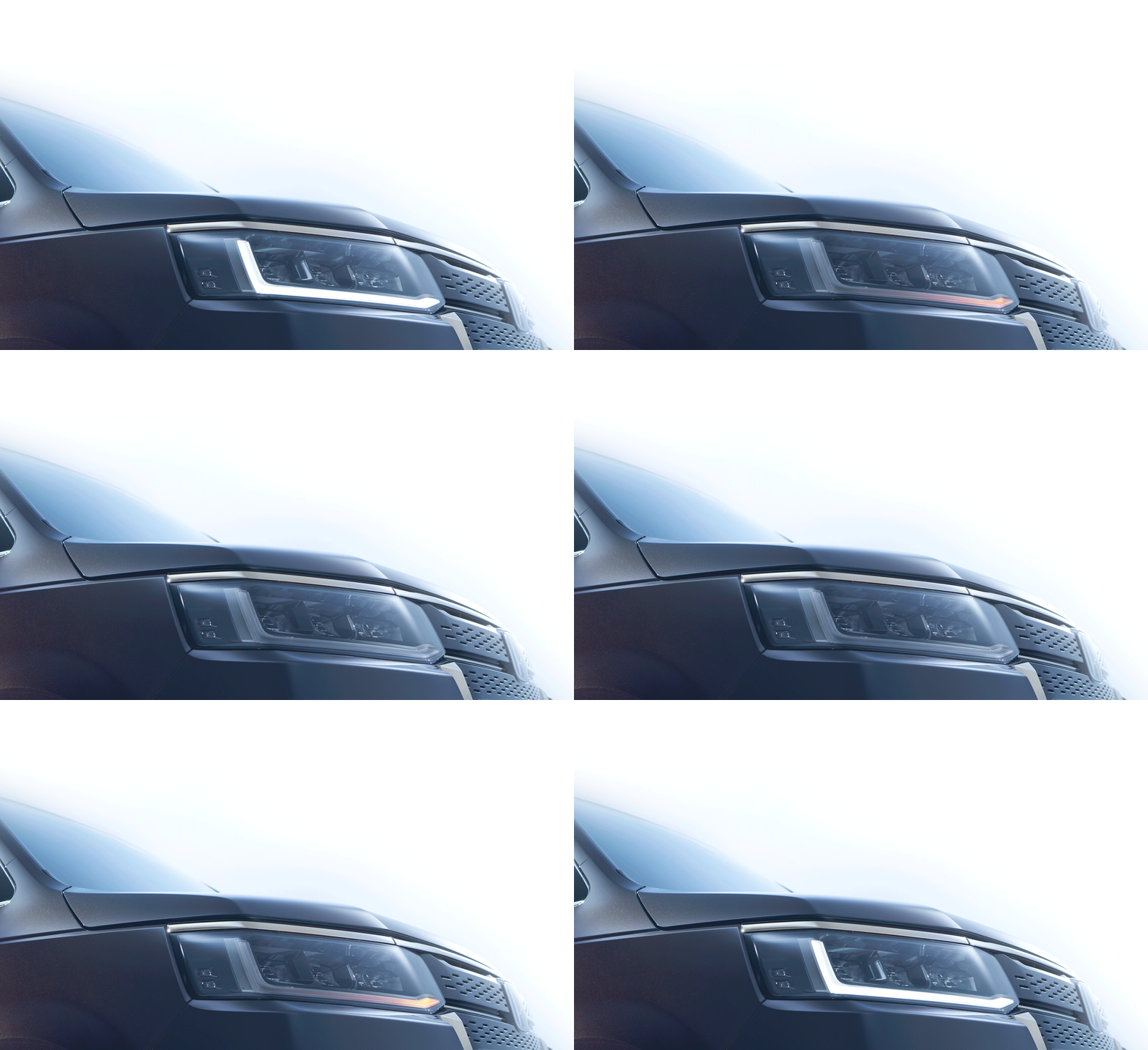
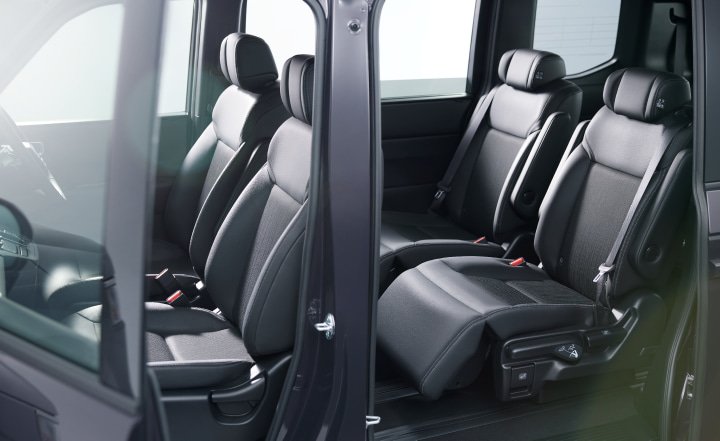
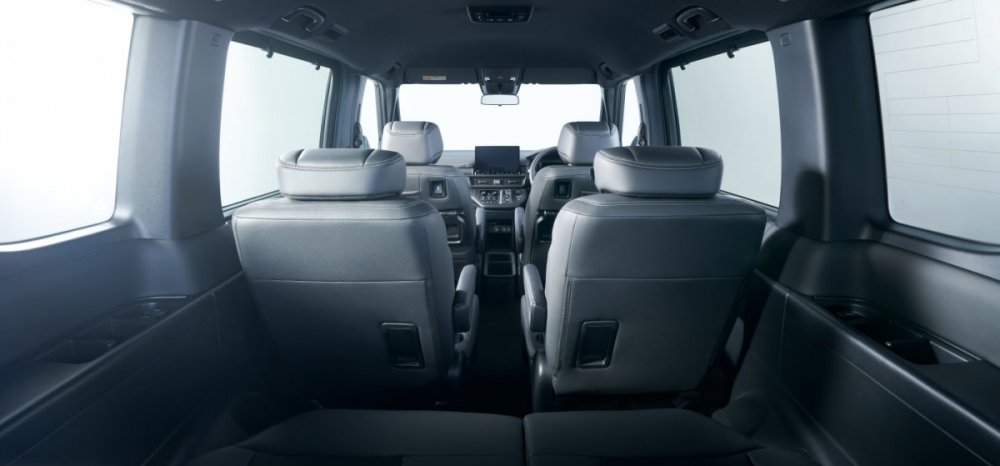
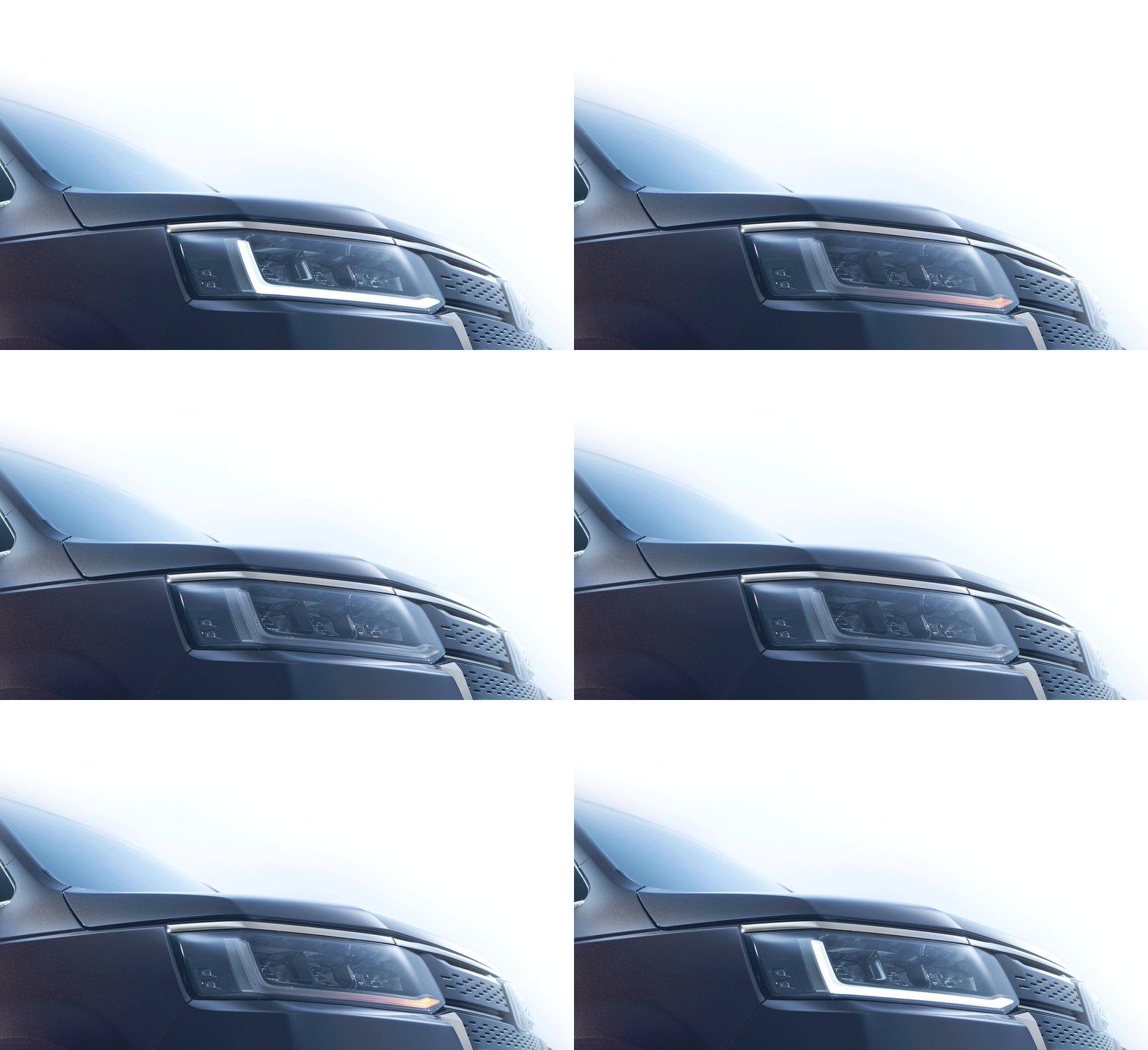
New Stepwagon will be launched in 2022 https://www.honda.co.jp/STEPWGN/new/?from=newslink_text&fbclid=IwAR3zhjuUb2FP8V1MhdCuTFhRuy-EIHT7v7DnpcTSEzdcZP5hT5ZX5xRvkTg
-
- 134 replies
-
- 7
-
-
- mercedes-benz
- mercedes
- (and 9 more)
-
- 211 replies
-
- 4
-
-
- volkswagen
- tiguan
- (and 6 more)
-
- 35 replies
-
- 8
-
-
- mercedes-benz
- mercedes
- (and 8 more)
-
Honestly, I can't tell that it is a new gen Cayenne with just a quick glance at the photos, too evolutionary imo. Like many I am guessing that Dieselgate is hitting hard on VAG and budget cut on the development of newer Porsche model are evident... The new SUV will be officially unveiled tonight / tomorrow morning. Stay tune for more updates.
-
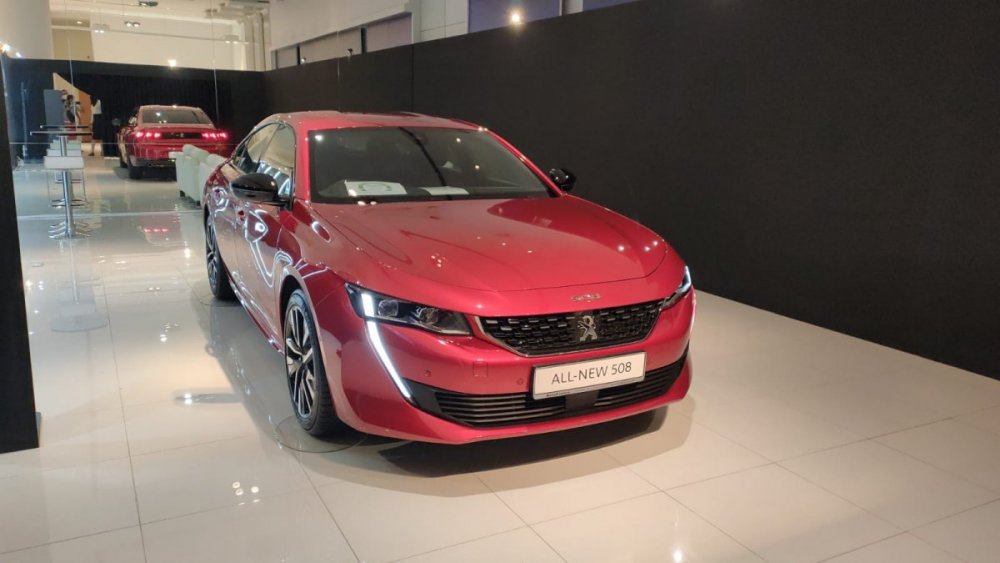
GT Version http://i.wheelsage.org/image/format/picture/picture-gallery/p/peugeot/508_gt/peugeot_508_gt_14.jpg http://i.wheelsage.org/image/format/picture/picture-gallery/p/peugeot/508_gt/peugeot_508_gt_9.jpg http://i.wheelsage.org/image/format/picture/picture-gallery/p/peugeot/508_gt/peugeot_508_gt_94.jpg http://i.wheelsage.org/image/format/picture/picture-gallery/p/peugeot/508_gt/peugeot_508_gt_940.jpg http://i.wheelsage.org/image/format/picture/picture-gallery/p/peugeot/508_gt/peugeot_508_gt_77.jpg http://i.wheelsage.org/image/format/picture/picture-gallery/p/peugeot/508_gt/peugeot_508_gt_46.jpg http://i.wheelsage.org/image/format/picture/picture-gallery/p/peugeot/508_gt/peugeot_508_gt_21.jpg http://i.wheelsage.org/image/format/picture/picture-gallery/p/peugeot/508_gt/peugeot_508_gt_48.jpg http://i.wheelsage.org/image/format/picture/picture-gallery-full/p/peugeot/508_gt/peugeot_508_gt_25.jpg http://i.wheelsage.org/image/format/picture/picture-gallery-full/p/peugeot/508_gt/peugeot_508_gt_8.jpg http://i.wheelsage.org/image/format/picture/picture-gallery-full/p/peugeot/508_gt/peugeot_508_gt_18.jpg Standard Version http://i.wheelsage.org/image/format/picture/picture-gallery/p/peugeot/508/peugeot_508_56.jpg http://i.wheelsage.org/image/format/picture/picture-gallery/p/peugeot/508/peugeot_508_86.jpg http://i.wheelsage.org/image/format/picture/picture-gallery/p/peugeot/508/peugeot_508_971.jpg http://i.wheelsage.org/image/format/picture/picture-gallery/p/peugeot/508/peugeot_508_55.jpg http://i.wheelsage.org/image/format/picture/picture-gallery/p/peugeot/508/peugeot_508_71.jpg GT Line http://i.wheelsage.org/image/format/picture/picture-gallery/p/peugeot/508_gt_line/peugeot_508_gt_line.jpg http://i.wheelsage.org/image/format/picture/picture-gallery/p/peugeot/508_gt_line/peugeot_508_gt_line_6.jpg http://i.wheelsage.org/image/format/picture/picture-gallery/p/peugeot/508_gt_line/peugeot_508_gt_line_9.jpg http://i.wheelsage.org/image/format/picture/picture-gallery/p/peugeot/508_gt_line/peugeot_508_gt_line_2.jpg http://i.wheelsage.org/image/format/picture/picture-gallery/p/peugeot/508_gt_line/peugeot_508_gt_line_88.jpg Quick Facts: - Targeting VW Arteon and Audi A5 - Lenght of 4.75m, height of 1.4m, wheelbase of 2.79m - Boot space of 487L expandable to 1,537L - 1.6L PureTech petrol engine with 180ps & 225ps (GT) - 1.5L BlueHDi diesel engine with 130ps - 2.0L BlueHDi diesel with 160ps & 180ps - All except entry 1.5L diesel will be using EAT8 (8 speed auto)
-
About 160

- 78 replies
-
- 10
-
-
.png)
-
BMWs typically have a shelf life of seven years but that won’t be the case for the current X5 whose successor is nearing the end of its development. One of the reasons for the speedy arrival of the redesigned X5 is to streamline the production process. The CLAR-based SUVs will all be built at BMW’s plant in Spartanburg, South Carolina. Another being the current X5 is facing stiff competition from newer rivals like the Audi Q7 and Volvo XC90. The current (third-gen) X5 was introduced for the 2014 model year but its underpinnings are shared with the second-gen X5 on sale since 2007. This fourth-gen model, which we’re currently expecting to arrive in showrooms in mid-2018, as a 2019 model, won’t have anything in common with its predecessors. It will ride on the SUV version of BMW’s modular platform that debuted in the 2016 7-Series and has since appeared in the 2017 5-Series. Referred to internally as a CLAR, short for Cluster Architecture, the platform combines lightweight materials such as aluminum and magnesium—and carbon fiber in the case of the 7-Series—with conventional steel to save weight while increasing rigidity and strength. The SUV version of the CLAR platform made its debut in the 2018 X3. The platform is also pegged for an X7 full-size SUV that BMW has confirmed for launch in 2018. It look like the fully redesigned forth-gen X5 will grow in size compared to the third-generation model currently on sale, which should lead to more interior space.
- 28 replies
-
- 13
-
-
https://asia.nikkei.com/Spotlight/Caixin/The-double-squeeze-on-China-s-sandwich-generation The double squeeze on China's 'sandwich generation' 'Little emperors' grow up to be overburdened caregivers to parents and children Yin Fan is a single mom in her late 30s. When she was pregnant with her daughter, her father living in another city was diagnosed with the nervous system disorder multiple system atrophy and quickly lost his ability to walk. As the family's only child, she had to take care of her baby and her father alone. Yin belongs to China's first generation under the old one-child policy, those born between 1976 and 1985, also known as the "sandwich generation." Now they are trapped with the obligations of caring for their children and aging parents, putting them in financial and emotional binds. China has more than 170 million such sandwich generation families, according to Feng Xiaotian, a demographic sociology professor at Nanjing University. Growing up in the 1980s, they were often called "little emperors" as they got all the attention at home. But now they have become the most burdened generation, said Mu Guangzong, a professor at the Institute of Population Research of Peking University. In the past three decades as this generation grew up to have their own families, China has experienced a profound shift into an aging society with fewer children. From 1990 to 2021, Chinese people's average life expectancy increased from 68.6 years to 78.2. The proportion of people over 65 more than doubled to 13.5% from 5.3%. China's birthrate dropped below 1% in 2020, and the country is expected to enter a period of negative population growth by 2025. With parents living longer and with couples having their own children at an older age, the challenges facing sandwich generation families affect not only their own lives but also have ramifications for the rest of society. A family of three generations in Tianjin on July 6, 2016. Because of high housing costs, many Chinese urbanites cannot afford to bring their aging parents to the city they now call home. Expensive child care China implemented the one-child policy in 1980 to put a brake on population growth and facilitate economic expansion in a planned economy that faced severe shortages of capital, natural resources and consumer goods. The authorities eased the limit in 2016 to allow each family to have two children. Last year, after a new census showed the birthrate had stalled, China raised the cap to three children. Money, time and energy deficits are the most common worries sandwich generation families face. Childbirth, especially of a second child, is often the starting point of such crises. "This is the most stressful time for me," said Liu Li, a 37-year-old employee of a state-owned enterprise. With his wife working at a bank, they take home 20,000 yuan to 30,000 yuan ($2,900 to $4,300) each month, a decent middle-class income in a small town. But since the birth of their second child, they live paycheck to paycheck. In today's China, more and more families with stable jobs and reasonable savings are trapped in financial problems, time crunches or health difficulties due to the burden of raising children, said Zang Qisheng, a professor at Soochow University. The average cost of rearing a child until the age of 18 was 485,000 yuan in China in 2019, which was 6.9 times China's per capita GDP, much higher than in many developed countries including the U.S., France, Germany and Japan, according to a report by the YuWa Population Research Institute. The think tank was established by a group of demographers and economists, including economics professor Liang Jianzhang at Peking University. Child-rearing costs are even higher in large cities, reaching more than 1 million yuan in Shanghai and 969,000 yuan in Beijing. The pressure of raising children is mainly an economic matter, while caring for the elderly is more of a time and energy issue, said Wang Guangzhou, a researcher at the Institute of Population and Labor Economics at the Chinese Academy of Social Sciences. In the next decade, as the parents of the first generation of single-child families enter their 70s and 80s, the elder-care pressure will grow more prominent, he said. People walk by a big housing ad in Nanjing, Jiangsu province, on May 8, 2014. With the trend of late marriage and late childbearing, the double pressure of caring for the elderly while raising young children is more likely to come at the same time. According to the 2019 China General Social Survey, 27% of urban families in China include members who are 60 or older as well as children who are 14 or younger, meaning that one in four families faces this double pressure. Children first As it cares for young children and elderly parents, how will the sandwich generation allocate the family's money, time and human resources? "Children first" was the conclusion in a study based on a telephone survey of 2,439 urban families in the provinces of Guangdong, Jiangsu and Shaanxi by Sun Yat-sen University and Guangzhou University. The sandwich generation usually shows a strong sense of responsibility and urgency for its children, said Zhong Xiaohui, a professor at Sun Yat-sen University. However, in terms of elder care, most families lack clear planning and often have to respond on the fly when a parent falls seriously ill. There is a sharp contrast between their rich knowledge of childhood development and their relative ignorance of the elderly, the survey found. Children become the center of families, and parenting styles tend to be intensive or even excessive, said Yang Juhua, a professor of ethnology and sociology at Minzu University of China. As family resources are limited, it is often the elderly who make concessions, Yang said. Not only parents but also grandparents often actively shift resources to the children. To cope with the high costs of child care, the sandwich generation normally needs help from parents. Yang Mo, 61, came to Beijing from her hometown in Anhui province after retirement to help her daughter take care of her newborn. She spends 12 hours a day from 7 a.m. to 7 p.m. feeding, bathing and playing with the baby as well as cooking and cleaning before handing the child off to her daughter after work, Yang told Caixin. "I dare not get sick," she said. "Who would take care of the baby?" There were about 42 million infants under the age of 3 in China in 2021, and the nursery enrollment rate was only about 5.5%, according to the National Health Commission. The big gap means most families with infants have to rely on grandparents for child care. Child care costs account for nearly 50% of the average Chinese family's income, and 80% of children under the age of 3 are cared for by grandparents, said Yang Wenzhuang, director of the commission's Department of Population Surveillance and Family Development. As China encourages people to have more children to counter the lowest birthrate since the 1950s, this child care model of relying on grandparents might no longer work. Several studies have found that grandparents are less involved in the care of their second grandchild than the first. More and more elderly people have their own plans for retirement and are not willing to devote themselves to caring for grandchildren, said Yang at Minzu University of China. Even if they want to, aging makes them unable to, the professor said. Without grandparents' help, the burden on the sandwich generation increases, which in turn makes these families unwilling to have more children. In a 2016 survey, 60.7% of mothers who already had one child said they didn't plan to have a second because of a lack of child care. From caregivers to care receivers The more serious challenge is what happens when grandparents are not only unable to help but transition from caregivers to needing care. For the sandwich generation, the worst scenario is that their parents suddenly become severely ill or disabled, physically or mentally. "It's not only expensive but also very stressful on your mind," said Wang at the Chinese Academy of Social Sciences. "It's not like raising a child, with hope growing every day. Once an elderly person can't take care of oneself in daily life, the hope is fading every day." According to an estimate by the World Bank, China is expected to have 93 million people over the age of 75 by 2030, accounting for 6.6% of the population. By then, there will be more than 77 million disabled elderly in China, who will experience 7.44 years of disability on average, estimated Zheng Xiaoying, director of the Institute of Population Studies at Peking University. A nursing home in Jincheng, Shanxi province, on Aug. 17, 2022. Empty nesters Can a single child afford the costs of caring for two elderly parents? According to the 2020 census, 70% of the urban elderly population's income is from pensions and 17.3% from family support. Parents of the first generation of one-child families living in cities thus generally come close to supporting themselves financially, and their children's burden is not obvious, said Wu Haixia, a researcher at the Institute of Population Studies of the Chinese Academy of Social Sciences. But elderly people living in rural areas are not so lucky. In 2019, the annual pension and other income of the rural elderly was about 3,500 yuan. Most rural elderly people have to rely on family support and continue to work to get by. With the reduction of family size, the proportion of family support the elderly can rely on has been decreasing, said Nie Riming, a researcher at think tank Shanghai Institute of Finance and Law. All the data show that the rural regions are the "disaster areas" in China's aging population challenge. Nearly half the nation's over-65 population live in rural areas, according to the latest census. The trickier question is who will take care of the rural elderly. A 2014 survey by researchers at Renmin University of China found that nearly half of rural elderly were empty nesters, and 12.54% of them needed various degrees of care. The main reason for the high proportion of empty nesters in rural areas is that a large number of young and middle-aged people leave their hometowns to work in cities. When these living-alone elderly become seriously ill, half of them do not seek medical treatment because of mobility problems, being unaccompanied or because they live too far from hospitals -- in addition to financial reasons -- according to a survey by Wu at the Chinese Academy of Social Sciences. Empty nesters in cities face similar difficulties. According to Feng Xiaotian at Nanjing University, the proportion of empty nesters among the parents of first-generation only children in cities was about 60%, based on a 2015 national survey of 12 cities and a 2016 survey of five towns in Hubei Province, If a married couple's parents live in two different cities, that makes it even harder to care for all four parents at the same time, said Nie at Shanghai Institute of Finance and Law. Such cases are particularly common in megacities such as Beijing and Shanghai, where high housing cost is the first problem when children want to bring their parents to live with them, Nie said. Even for those who are able to live with their elderly parents, inadequate care is a common problem. The primary caregivers for 60% of the disabled elderly in urban areas in China are their children, but more than half of them receive care for less than 36 hours a week, according to a 2019 survey by Li Yunhua and Liu Yanan at Wuhan University's School of Politics and Public Administration. Meanwhile, it is difficult for families to find affordable professional care for disabled elderly, Zhong at Sun Yat-sen University and Peng Minggang at Guangzhou University said in a report. China provides few public elderly care services for the average family and few support measures such as subsidies and tax rebates to help families purchase market-oriented care services, they said. "Honestly speaking, it is almost a problem without a solution for the generation of only children to care for their elderly parents," a sociology scholar told Caixin. "This is the sorrow of our generation, and our parents." An elderly paralyzed person in bed at a nursing home in Shaoguan, Guangzhou province, talks to a caregiver in March 2022. Turning old themselves As the public discussion focuses on child and elder care, the needs and risks of those in the sandwich generation themselves are often overlooked. To care for their parents, many people have to quit their jobs or choose a lower-paying job with more flexibility. As a result, they suffer a sharp drop in income and the loneliness of social disconnection, Huang Chenxi, deputy dean of the School of Social Development of East China Normal University, found in interviews with caregivers for disabled and mentally ill elders in Shanghai. Elder care reduces rural women's access to nonfarm jobs by 13.5%, a negative effect that will continue to expand as the intensity of elder care increases, Fan Hongli and Xin Baoying at Shandong University of Finance and Economics found in a study. By the time their parents are in their 80s and 90s, the sandwich generation will be in their 50s and 60s. "When they bury their parents, who can they rely on?" asked Jin Jun, a sociology professor at Tsinghua University. In 2020, China's social insurance fund, which includes the basic state pension funds run by provincial-level governments, reported the first annual deficit on record. The deficit is expected to grow to 11.28 trillion yuan by 2050, when the peak of the retirement of the sandwich generation hits. Scholars have long suggested measures by the government to ease the burden on the sandwich generation. Ma Chunhua, a professor at the Institute of Sociology of the Chinese Academy of Social Sciences, called for the government to play a more active role in providing child care. "Children should be taken care of jointly by the whole society so they can grow up to take care of the whole society in the future, so as to maintain the overall operation of the economy and the continuity of the social security system," she said at a forum on the aging society. Supportive policies can't be achieved overnight, said Chen Jia, a professor at the School of Sociology of Shanghai University. For example, it took decades for Japanese families to accept a long-term care insurance system and fully reap the benefits of the system, Chen said. At the request of the interviewees, the names of Yin Fan and Yang Mo are pseudonyms.
- 67 replies
-
- 3
-
-
- generation
- sandwich
- (and 5 more)
-
http://www.bmwblog.com/2017/05/25/world-premiere-bmw-8-series-concept/
-
Very GLCish... @Vratenza & @adrianli, the GLC Coupe or this look better? Honest opinion needed.
-
SPIED! MERCEDES-BENZ CLA SHEDS SOME CAMOhttps://www.motortrend.com/news/spied-mercedes-benz-cla-sheds-some-camo/ Just a few months ago, our spy photographers caught a next-generation CLA prototype out testing, possibly in AMG form. Now, the CLA has returned wearing a different grille and less camouflage. Though that earlier prototype appeared to wear Mercedes-AMG's Panamericana grille, this CLA sports a front end inspired by the CLS-Class. The camouflage obscures the shape of the headlights, but the LED accents look similar to those of its swoopy big brother. It's also safe to say the taillights have changed. Unless the camo is fooling us, the rear end looks more upright than before. Overall, the new model looks longer than its predecessor. A few interior shots reveal a more streamlined cabin. This prototype features one large screen that runs across the dashboard, replacing the two separate screens for the instrument cluster and infotainment system. The circular vents take on a different look, and there is now a simpler array of buttons just below. Red contrast stitching and a flat-bottom steering wheel hint at AMG roots, but this car doesn't look like an AMG from the exterior. It's possible Mercedes will offer some sort of AMG interior package, or that this prototype is just a mixed bag of parts. According to Autocar, Mercedes has confirmed it will launch the CLA and CLA Shooting Brake next year. We don't know Mercedes' exact plans for the U.S. market, but the model will likely slot above the new A-Class with a sleeker coupe-like profile. The interiors of the A-Class and CLA should be very similar. The CLA could share engines and gearboxes with the A-Class. Our A-Class comes with a 2.0-liter turbo-four making 188 hp and 221 lb-ft of torque, which is paired with a seven-speed dual-clutch automatic. An AMG version of the A-Class is also very likely coming to the U.S., although it's unclear how much power it will make. Photo source: CarPix
- 145 replies
-
- 2
-
-
- mercedes-benz
- cla
- (and 10 more)
-
Just unveiled in Paris, and you see it first... The new Mercedes-Benz B-Class puts the emphasis on sport with the Sports Tourer. It looks more dynamic than its predecessor and is more agile on the road while offering greater comfort. Its avant-garde interior makes for a unique feeling of space with the distinctive design of the instrument panel. One of the special features is a basic volume, which drops away towards the occupants and has cutouts in the area of the driver and front passenger. The intuitive user interface of the adaptive MBUX multimedia system is ground-breaking. Its strengths include brilliant graphics, "Hey Mercedes" voice control, a standard touch screen and functions such as MBUX Augmented Reality. When it comes to active safety, state-of-the-art driving assistance systems make the B-Class one of the segment leaders with functions carried over from the S-Class. In addition, the interior is now more spacious, while the engines are more efficient and cleaner. The eight-speed dual-clutch transmission makes its debut. Start of sales for the new B-Class is 3 December 2018, with delivery due to begin in February 2019. "More practical than ever, more chic than ever," is how Britta Seeger, Member of the Board of Management of Daimler AG, responsible for Mercedes-Benz Cars Sales, characterises the new B-Class. "In our portfolio of compacts, it's the perfect vehicle for the whole family. And MBUX - the new Mercedes-Benz User Experience - provides also the B-Class with an all-new customer experience with functions that were previously the reserve of the luxury class." "The latest derivative of the new generation of compact cars from Mercedes-Benz, the B-Class writes a further punchy chapter in the success story of the dynamic Mercedes-Benz Sports Tourer," says Gorden Wagener, Chief Design Officer of Daimler AG. "With its emotional yet purist design, the new B-Class blends seamlessly into the design language of Sensual Purity." The designers' brief was to make the new Mercedes-Benz B-Class stand out visually from the world of minivans. That brief was accepted and executed, with the long wheelbase (2729 mm) with short overhangs, slightly lowered roof line and larger, 16- to 19-inch wheels making for dynamic proportions. The relatively squat, progressive front end with flowing transition from bonnet to A-pillar and on to the windscreen, along with the muscular shoulder of the body, underlines the sporty overall look. The same is true of the low-profile headlamps, the inside of which is already high-grade, detailed and precisely designed on the basic model with H7 headlamps and LED daytime running lights. When ordered with LED headlamps or higher, the B-Class comes with its own daytime running light signature in the form of a double torch. The optional MULTIBEAM LED headlamps have an especially sporty look. They allow fast, electronically controlled adjustment of the headlamps to suit the current traffic conditions. This feature from the luxury class, which made its debut in the compact segment in the new A-Class, now produces striking looks and added safety also in the new Mercedes-Benz B-Class. At the back, the width of the vehicle is accentuated by two-part lamps, reflectors integrated in the bumper and a distinctive black bumper bottom section with diffuser look and chrome trim strip. The large roof spoiler, along with high-gloss black spoilers at the sides of the rear window, makes for improved aerodynamics while ensuring a sporty appearance. The cd value of the new B-Class starts at 0.24 (predecessor: 0.25). The lower roof line further contributes to a best-in-class airflow due to the smaller end face of the car. In addition, the aerodynamics engineers have reduced the wind noise thanks to extensive detail work. The benefits: a high level of alertness as well as the ability to engage in a relaxed conversation. The improved seat geometry and lower belt line make for an even more generous feeling of space than in the previous model. The driver sits 90 millimetres higher than in an A-Class, thus enjoying an especially good all-round view - also thanks to optimised cross-sections of the roof pillars, which obscure less of the surroundings. Interior design: revolution, the second The interior of the B-Class is as avant-garde as the much-praised revolutionary interior architecture of the new A-Class, yet distinctive: while the instrument panel of the sister model is split into two horizontal basic bodies, that of the Mercedes-Benz B-Class has a single basic volume, which drops away towards the occupants and has cutouts in the area of the driver and front passenger. The cutout in front of the driver houses the fully free-standing display unit, which comes in three different versions: with two 7-inch displays (17.78 cm), with one 7- and one 10.25-inch display (26 cm) and, in the Widescreen version, with two 10.25-inch displays. A head-up display is optionally available. The five round air vents feature a high-grade turbine look with finely styled air ducts, inspired by the world of aviation. In the Style equipment line, the vent surround is colour-accentuated in the depth of the vent geometry to give the impression of an afterburner. The centre console with touch-based control and input system comes with a black panel look similar to the E-Class. The ambience lighting with 64 colours and ten colour worlds, a unique selling point in this segment, allows individual adjustments, even to suit the mood. The seats offer a flatter and, therefore, more comfortable seating position as well as a larger adjustment range, which also increases the maximum headroom. There is also more space in the width: at 1456 millimetres (plus 33 mm), the front elbow width now has the dimensions of a mid-range vehicle. ENERGIZING seat kinetics: supports changes of posture With seat climate control and multicontour seats with massage function, the new B-Class is available with optional extras that were previously reserved for vehicles from much higher segments. This opens the way to even better seating comfort. The new ENERGIZING seat kinetics is particularly good for the back. It can support orthopaedically beneficial changes of posture by regularly making minute adjustments to the angle of the seat cushion and backrest. The innovation is available for the front seats in combination with all-electric seat adjustment with memory function. Variable rear seats and optimised luggage compartment layout The interior has been fine-tuned in many places: the improved entry aperture to the centre tunnel in the rear makes for a more accessible middle seat. The rear seat backrest comes as standard with a 40:20:40 split. Depending on version, from mid-2019 it will be possible for the rear seats to be moved by 14 centimetres and for the backrest to be folded into a steeper position to vary the capacity of the luggage compartment behind the rear seats between 455 and 705 litres. Although the capacity is roughly the same as in the previous model, the luggage compartment can be more efficiently used thanks to the improvements. With the rear seat folded down and luggage loaded to the roof, the luggage compartment, which is flat thanks to the adjustable load compartment floor, can accommodate up to 1540 litres behind the front seats. A folding backrest of the front passenger seat (optional extra, expected to be available from mid-2019) makes for an even longer loading length. An EASY-PACK tailgate is optionally available. It can be conveniently opened or closed automatically at the press of a button, even by means of a foot movement in combination with optional HANDS-FREE ACCESS. MBUX - Mercedes-Benz User Experience: unique experience What goes for A also goes for B: the new B-Class is the second car model after the A-Class to feature the MBUX (Mercedes-Benz User Experience) multimedia system, which ushered in a new era with Mercedes me Connectivity. Its ability to learn thanks to Artificial Intelligence makes the system unique. MBUX is customisable and adapts to the user. It thus creates an emotional link between vehicle, driver and passengers. Its other strengths include touch screen control as standard as well as, depending on equipment, a high-resolution Widescreen cockpit, navigation display with Augmented Reality technology plus intelligent voice control with natural speech recognition, which is activated by saying "Hey Mercedes". The touch screen is part of the integrated MBUX touch control concept - a trio consisting of touch screen, touchpad on the centre console (optional) and touch controls on the steering wheel. MBUX is a revolution of the user experience in the car. Emotively appealing showcasing features underline the comprehensibility of the control structure and thrill through brilliant 3-D maximum-resolution graphics which are rendered, i.e. calculated and displayed, in real time. A head-up display is also available. New and improved Mercedes me connect services were launched with the new MBUX infotainment generation. These include navigation functions based on Car-to-X communication and Vehicle Tracking, which makes it easier to find the parked vehicle, as well as a notification function in the event of the parked vehicle being bumped or towed away. The Mercedes me collection of apps can be placed as an icon on the screen in a user-friendly way, and can be freely sorted on the homepage like all other main applications. In addition, online content, such as current petrol station prices, can optionally be displayed. Online updating is a simple way of allowing new content to be made available in MBUX. The new Mercedes-Benz B-Class is already set up for private car sharing: Mercedes me allows the new compact car to be shared with friends and family members. Operation is simple and secure using the Mercedes me Car Sharing app. The new Mercedes me connect services On-Street Prediction, Real-Time Information and Off-Street Information can save Mercedes-Benz drivers valuable time and reduce their stress levels while at the same time cutting their fuel consumption and emissions when searching for a parking space. The real-time information is based, among other things, on Mercedes-Benz vehicles that have just left a parking space or driven past potential parking spaces. Intelligent Drive: functions from the S-Class The new B-Class comes with driving assistance systems with cooperative driver support, thus providing one of the highest levels of active safety in this segment with functions from the S-Class. For the first time, the Mercedes-Benz B-Class is able to drive semi-autonomously in certain situations. To do so, it employs improved camera and radar systems to anticipate the traffic up to 500 metres ahead while using map and navigation data for assistance functions. For example, Active Distance Assist DISTRONIC as part of the Driving Assistance package is able to support the driver in many route-specific situations, predictively and conveniently adjusting the speed, e.g. when approaching bends, junctions or roundabouts. Also on board are Active Emergency Stop Assist and intuitively understandable Active Lane Change Assist. The new B-Class comes as standard with extended Active Brake Assist, which can help mitigate the severity of rear-end collisions with slower-moving, stopping or stationary vehicles ahead - and now even with crossing pedestrians or cyclists - or prevent them altogether. The new B-Class, too, was developed and tested at the new Vehicle Safety Technology Centre (TFS). The design of the vehicle structures with regard to geometry, material thickness, joining technique and material quality incorporates findings from real-world accidents. Many bodyshell components are made of high-strength and ultra-high-strength steel to obtain high strength with lowest possible weight, because the core of the safety design of the body is the highly stable passenger cell. Driver and front passenger are provided with three-point seat belts with pyrotechnic belt tensioners and belt force limitation. In combination with the PRE-SAFE® system (optional extra), the front seats are additionally equipped with electrically reversible belt reel tensioners. Both of the outer rear seats are fitted with a seat belt with reel tensioner and belt force limiter. The new Mercedes-Benz B-Class comes as standard with airbags for driver and front passenger, kneebag for driver and windowbags and sidebags (combined thorax/pelvis bag). Rear sidebags are optionally available. Double powertrain debut: new powerful two-litre diesel is Euro 6d compliant, new eight-speed dual-clutch transmission Compared to its predecessor, the new B-Class is in all cases powered by new, efficient engines, all of which comply with the Euro 6d-TEMP limits. Making its debut is a transverse-mounted version of the OM 654 two-litre diesel with 110 kW and 140 kW, aluminium crankcase and stepped-bowl combustion process. Thanks to extended exhaust aftertreatment with an additional underfloor SCR catalyst, the B-Class with the OM 654q is the first compact model from Mercedes-Benz to be certified in accordance with the Euro 6d standard, which will become mandatory for new models only on 1.1.2020. The large diesel represents an addition to the four-cylinder diesel (OM 608) already known from the A-Class with 1.5-litre displacement, up to 85 kW and up to 260 Nm. Also available are two four-cylinder petrol engines of the M 282 series with 1.33-litre displacement and 100 kW/120 kW. Innovations include cylinder management (in combination with 7G-DCT transmission), delta shape of the cylinder head and particle filter. The new Mercedes-Benz B-Class is initially available exclusively with dual-clutch transmissions. New here is the eight-speed 8G-DCT, which is used in combination with the larger diesel engine. Other new engines will follow, as will models with 4MATIC all-wheel drive. A 43-litre tank is installed as standard, while a 51-litre tank is optionally available, depending on the engine. The following five engine variants will be available at the launch of the B-Class: B180 (100kW/136hp, 200Nm); with 7G-DCT dual-clutch transmission (combined fuel consumption 5.6-5.4l/100 km, combined CO2 emissions 128-124g/km) B200 (120kW/163hp, 250Nm); with 7G-DCT dual-clutch transmission (combined fuel consumption 5.6-5.4l/100 km, combined CO2 emissions 129-124g/km) B180d with 7G-DCT dual-clutch transmission (85kW/116hp), 260Nm; combined fuel consumption 4.4-4.1l/100 km, combined CO2 emissions 115-109g/km) B200d with 8G-DCT dual-clutch transmission (110kW/150hp), 320Nm; combined fuel consumption 5.4-4.2l/100 km, combined CO2 emissions 119-112g/km) B220d with 8G-DCT dual-clutch transmission (140kW/190hp), 400Nm; combined fuel consumption 4.5-4.4l/100 km, combined CO2 emissions 119-116g/km). The new OM 654q diesel engine: lighter, more powerful, cleaner The transverse-mounted version of the latest premium diesel engine family makes its debut in the new B-Class. Despite its lower displacement - just under two litres - the around 16 percent lighter new diesel engine with 140 kW (190 hp) puts out 10 kW more than the previous engine. On the inside, the OM 654q offers efficiency-enhancing technological highlights such as steel pistons with stepped bowls in an aluminium block. The cylinder liners are coated using the further-improved NANOSLIDE® process. With a cylinder spacing of just 90 mm instead of 94 mm, the new engine is more compact than its predecessor while allowing the exhaust aftertreatment components to be installed directly on the engine, where the exhaust temperature is higher, making for more efficient aftertreatment. Thanks to further improved exhaust aftertreatment, the powerful four-cylinder from the modern OM 654 engine family already meets the Stage 2 RDE (Real Driving Emissions) standard coming into force from 2020, and is certified to Euro 6d. Even in demanding driving situations and under challenging environmental conditions, the Mercedes-Benz B-Class remains within all the emissions limits. This is achieved by additional selective catalytic reduction (SCR) with an ammonia slip catalyst (ASC) in the exhaust system of the B-Class. This allows a more generous dose of the reduction agent AdBlue, as any surpluses can be reduced and converted in the second SCR. These surpluses (amonia slip) particularly occur during fast temperature changes in the exhaust tract, e.g. when moving from city traffic to the motorway. Suspension: agile and comfortable At least as agile as its predecessor while even more comfortable - that was the development brief handed to the suspension specialists for the new B-Class. Depending on the version, several options are available for the basic configuration, including a lowered comfort suspension and a suspension with active adaptive damping, which lets the driver control the damper tuning while driving using DYNAMIC SELECT. The system uses an electronic valve, the control of which additionally analyses the driving state and optimises the damping rate individually for each wheel. In all versions of the new Mercedes-Benz B-Class, the front wheels feature McPherson struts and forged-aluminium wishbones, to which are attached cast-aluminium steering knuckles. This makes the unsprung mass as low as possible in the interests of road-holding and comfort. At the rear, the models with the entry-level engine variants come with a twist-beam rear axle in the basic configuration. In combination with the more powerful engine variants or if the customer opts for one of the optional suspension systems, use is made of a sophisticated four-link rear axle, which is made extensively of aluminium to reduce the unsprung mass. The three wishbones and one trailing arm on each of the rear wheels are mounted on a subframe, which is isolated from the bodyshell by rubber bushings to reduce the transfer of vibration and noise from suspension to body. Single-tube shock absorbers and separate coil springs are used for both the four-link and the twist-beam rear axle.
- 111 replies
-
- 9
-
-
- mercedes-benz
- mercedes
- (and 10 more)
-
The new TNGA-based sedan is bigger and more refined than before. UPDATE: Four videos added below. The first two require no Japanese language ability to understand, but the other two are predominantly in the language. After launching its absolute flagship for Japan, the Century, Toyota is now introducing the more mainstream Crown luxury sedan, which was previewed by a namesake concept last year. The automaker describes the 15th generation of the model as the first-generation connected car because it comes as standard equipped with a data communication module (DCM). Based on Toyota’s new TNGA platform, the vehicle has been tested on the Nurburgring and should deliver “outstanding handling,” “responsive driving performance,” and “exceptional vehicle stability” in a wide range of driving conditions. The new model is slightly longer than its predecessor, which was launched in 2012 - 193 inches (4,190 millimeters) versus 192 inches (4,885 mm), with a bit longer wheelbase, expanding the rear passenger legroom. The automaker is proud to announce it has modernized the entire cabin which now features higher quality materials and more space for the driver and passengers. The dashboard is dominated by a new dual-screen layout, which combines an eight-inch central screen and another seven-inch display for the climate and audio functions. Toyota also says the TNGA architecture brings significant improvements in terms of cabin quietness, which are achieved thanks to the optimized vehicle body frame structure and optimum arrangement of soundproofing materials. The underpinnings also allow for a lower installation of the engine, which provides a lower center of gravity. Speaking of the engine, Toyota will offer the new Crown with three different powertrains. The only non-hybrid option is a 2.0-liter turbo gas unit with 245 horsepower (180 kilowatts) and 258 pound-feet (350 Newton-meters) of torque. Two hybrid variants will be available, combining 2.5- and 3.5-liter gas engines respectively with an electric motor and nickel-metal hydride or lithium-ion battery. The smaller powertrain has a peak power of 226 hp (166 kW), while the more powerful one produces 359 hp (264 kW). Order books in Japan will be opened next month with Toyota planning to sell no less than 4,500 units monthly.
- 37 replies
-
- 5
-
-
- toyota
- #toyotacrowns220
- (and 8 more)