Search the Community
Showing results for tags 'suv'.
-
If you think you have seen this car before, you are not wrong. This electric SUV from Subaru is a badge-engineered Toyota bZ4X. In developing Solterra, the brand's first battery electric vehicle (BEV) to be launched globally, Subaru aimed to exceed the various customer expectations for BEVs and make it a practical vehicle so that customers can choose it comfortably and confidently, as the vehicle will be the cornerstone of Subaru's future BEVs. At the same time, as a Subaru SUV, Subaru aimed to make it a vehicle that existing Subaru customers can feel that it truly is a Subaru. By filling it with new values that a BEV can offer and the value of "enjoyment and peace of mind" that Subaru have cultivated over many years, Solterra has been built as an authentic SUV in an environmentally friendly package that can be used with peace of mind like the existing Subaru SUV models. Exterior and Interior The seamlessly shaped hexagon grille expresses the energy efficiency of a BEV. The body with the horizontal axis starting from that hexagon and the dynamic fenders bulging out from the inside show the strength as an SUV. Low instrumental panel and top mounted meters, a first for Subaru, located on the instrumental panel and visible above the steering wheel realized the spacious interior. e-Subaru Global Platform Utilizing the know-how cultivated with the highly recognized Subaru Global Platform, we have jointly developed the e-Subaru Global Platform together with Toyota Motor Corporation as a BEV-dedicated platform. The e-Subaru Global Platform enables a driving experience with superior driving dynamics, that brings high stability and handling linearly responds to driver's steering operation. High capacity battery packs are placed under the floor as it is a BEV, and by utilizing that battery as a part of the structure, a low center of gravity and high body strength and rigidity are realized. Driving Performance/AWD System Subaru Solterra has adopted a new system that drives the front and rear wheels with separate motors. Taking advantage of the expertise in AWD technology precisely controlling the four tires that Subaru has accumulated over many years, the agile response of the electric motors and the flexible driving force distribution between front and rear, Solterra fully utilizes the grips of the four wheels and offers a driving with confidence and peace of mind. Like the other Subaru SUV models, Solterra features the X-MODE AWD control system that enhances the sense of security on rough roads. By adding the new Grip Control function, which enables the vehicle to run at a constant speed while stabilizing the vehicle even on rough roads, the capability is further enhanced. Safety By devising the skeleton shape of each part of the body and optimizing the material strength, Solterra achieves both weight reduction and superior collision safety at the same time. In the event of a collision, the structure that transfers the load to multiple body skeletons efficiently absorbs the collision energy. It protects not only the vehicle occupants, but also protects the high-voltage equipment in the BEV. Solterra is the vehicle which takes an important role for Subaru, the company aiming at "delivering happiness to all," to face the challenges of global warming and climate change and continue to deliver smiles in the future. The vehicle has been jointly-developed by Toyota and Subaru, which entered into a new business and capital alliance in September 2019. They brought together technologies and knowledges that are expertise of each under the slogan "Let's make ever-better cars together" and the engineers of both companies developed it together while engaging in a friendly rivalry. The launch of the Subaru Solterra will start by the middle of 2022 in the markets including Japan, the United States, Canada, Europe and China.
- 27 replies
-
- 13
-

-
This is not another normal SUV / MPV... You are looking at the first large size EV from Skoda, with RWD setup! Skoda hasn’t built a rear-wheel-drive vehicle since the early 1990s when the 105/120/125 series of rear-engined RWD cars was discontinued to make way for the Favorit with the engine in the front driving the front wheels. The Mladá Boleslav marque is returning to its roots, but with an electric twist as the Enyaq iV will eschew the combustion engine for an electric motor. Riding on the same MEB platform as the forthcoming VW ID.4, the Enyaq will be a follow-up to the appealing Vision iV concept introduced about a year ago at the Geneva Motor Show. While it won’t look as exciting as the showcar before it, the electric vehicle should have some extra pizzazz compared to the firm’s conventionally powered SUVs, such as the Karoq or Kodiaq. One thing I’d like to add is that while the concept had some coupe influences, the production car will be more in the spirit of a tall wagon.
-
Another EV to many of us, but it's the first in a series of zero emission battery electric vehicles (BEVs) from Toyota. And it will be on sales from mid of next year. Toyota fans rejoice! Toyota bZ4X Concept is the first model to feature Toyota's new bZ - beyond Zero - naming convention. By 2025, Toyota aims to introduce 15 battery electric vehicles, including 7 Toyota bZ models. The 'bZ' is an acronym for 'beyond Zero', reinforcing Toyota's commitment to not only achieving zero carbon emissions and carbon neutrality, but also going beyond to realise new benefits for the environment, for individuals and for society as a whole. The bZ4X Concept, a medium-size SUV with all-wheel drive, is integral to Toyota's transition from a pure car company to a business dedicated to delivering better mobility for all. It was developed by Toyota Motor Corporation in partnership with Subaru Corporation, drawing on the specific skills and experience of each company. Sales of the production version are expected to commence around the middle of 2022. Toyota bZ4X Concept will be available with a world-first combination of a steering yoke and a steer-by-wire system. This technology gives the driver greater control, removing interference from rough road surfaces and braking, thereby giving a more precise response in line with the vehicle's speed and steering angle. Steer-by-wire also dispenses with the traditional, circular steering wheel, replacing it with a uniquely shaped steering yoke which eliminates the need for the driver to move their hands around the wheel as they make a turn, adding to the car's fun-to-drive quality.
- 236 replies
-
- 16
-
-
In October 2023, Stellantis took at 20% stake in Leapmotor China by injecting EUR 1.5 billion and forming a partnership to sell vehicles outside of China. Mainly because Stellantis was doing a lousy job themselves. The first Leapmotor model to go international is the C10 Sports Utility Vehicle (SUV). Leapmotor makes value for money rides and the C10 is no exception. It's a B&B focused mid-size (C-segment) electric SUV with an roomy and spacious interior (almost feels like D-segment). It comes with high standard equipment levels and tech. Check out the lidar on the roof. Europe was the first market to get the C10 and it became available in September 2024, together with the small hatchback T03. Closer to home, the C10 became available over the causeway in October 2024. In Malaysia, Stellantis and Leapmotor have signed a deal to assemble Leapmotor vehicles at Stellantis plant in Gurun, Kedah from the end of 2025. Which means it'll be coming to Singapore and the rest of the ASEAN markets in 2026. Kerb weight : 1,940 kg The exterior dimensions of the C10 are a good size and practical. This is a family friendly ride. Powertrain for the Leapmotor C10 is a single rear-axle motor (RWD!) that outputs 160kW and 320 Nm of torque. This is good enough to do the century sprint in 7.5 seconds and a top speed of 170 km/h. If imported directly from Malaysia into Singapore, it'll be a Cat B ride. Hoping to see a de-tuned 110kW version to follow soon after - just like what Tesla did on the Model Y, BYD did for the Sealion 7, SAIC did on the MG S5EV and Chery did on the Omoda E5 / Jaecoo J6. The current 2025 model year has a 11kW AC onboard charger with a weak DC charging rate of 84kW to recharge its 69.9 kWh LFP (by CALB) battery from 30-80% in 30 minutes. C10's range is 424 km (WLTP). The interior like most China designed and made is bare bones. Inspired by Tesla, there are no physical buttons (boo-hooh!) to adjust for AC temperature and fan controls. Everything as to go through the large 14.6" infotainment screen - which is at least snappy and high resolution. Navigating it will get some getting used to and Leapmotor has some ways to go to improve the user interface. Infotainment on the Leapmotor C10 includes a 10.25" instrument panel displaying at 1920 x 720 resolution, along with a 14.6", high-definition central display offering 2560 x 1440 resolution. For audio, an 840W, 12-speaker system provides the music in surround sound. The deal breaker for most is the lack of Apple CarPlay and Android Auto due to the current Leap 3.0 platform. The C10 will require the next generation Leap 3.5 platform to have CarPlay and Android Auto. An NFC card provides access to the vehicle, unlocking is accomplished by tapping it on the top part of the driver’s side mirror. Additionally, the card has to be placed on the center console for the vehicle to be started. There's been reviewer complaints on this arrangement and the lack of mobile app support for locking/unlocking the ride. The ADAS system is quite poor with lots of bings and bongs to annoy one senseless. The generous exterior dimensions are carried over internally with a high efficiency layout. The interior is made of Leapmotor's Oeko-Tex silicone textile (i.e. fake leather) that's meant to be quite plush and supportive. It's also liquid resistant and baby friendly - so it's easy to clean. Can see this would appeal to those with young families. Back seats can easily accommodate two child seats with room in the middle for a small to medium adult. Rear seat dimensions are also quite generous - close to limousine size. The C10 comes with the obligatory panoramic sun roof and unlike some (looking at you Tesla) has a motorized sunshade to keep the hot Singapore sun out of the cabin. And the front seats can be folded flat - all due to the generous leg room at the back. At the boot is 435L of cargo space available with the rear seats in place, or up to 1,410L with the seats folded. In front, the frunk adds a further 32L of luggage capacity. Expecting Cycle and Carriage (C&C) to be the Authorized Dealer (AD) for Stallentis and will try to flog off the C10 here in Singapore. Will see what C&C price the upcoming C10 to be - hopefully not long to wait.


-
 I've always wanted to own an SUV, with the commanding position, high hip point for entry and good boot size. So I recently decided to take a walk around the showrooms, with a basic search and some requirements: - five seats minimum, seven is a bonus, but basically a good size rather than a tiny one - high hip point - good boot size - not too slow 0-100 (under 11) - I'll need storage, good safety and things that a family with a young baby will appreciate I don't speed, but sometimes you need a bit of zoom to join traffic and drive up Genting or overtake and I do go to M'sia often. That also means EVs are a bit more tricky My mileage is low, 10-12k a year on average. Now, my car isn't due for another 3 plus years, but I wanted to see what's out there and I'm just sharing my findings here and my choices are purely personal, as YMMV.. I didn't have a specific budget, but I soon realised that most of the choices hover around the 200k mark, and this is almost twice what they used to cost due to the COE. Hybrids aren't my first choice due to my low mileage, and the cost of a battery replacement is a big deal, so even EVs are a bit tricky, but the number of petrol only cars are limited. The EV motors are also not great for the Malaysia jaunts, and CVTs are less desirable than autos, but you have to be careful which DCT you choose.. Cheers
 -
New EVs from Honda, targeted to hit the market next year. The look of the 0 SUV look less radical than the sedan. Production versions of the 0 Saloon and 0 SUV will be made at Honda's Ohio-based EV hub, starting in 2026. These cars will use an all-new centralized e/e architecture (electrical/electronic) running a new SoC done by Renesas Electronics Corporation. Honda also claims that these cars will also be able to do Level 3 autonomous driving. Honda’s back at CES with another iteration of the 0-series Saloon concept, and a new follow-up – called the 0 SUV. It’s not entirely clear how close either car is to its final production body, but we shouldn’t discount how outlandish modern manufacturers can be, especially since they’ve got to compete with increasingly wild Chinese EV designs. Honda 0 Saloon Honda 0 SUV
-
MG, the British brand which is now Chinese owned (SAIC) is about to release their replacement model for the outdated ZS electric vehicle - called MGS5. The unique thing about the MGS5 is the rear wheel drive setup, it'll make it much more fun and engaging compared to competitors which are front wheel drive configuration. Built on the same EV platform as the MG4 hatchback, the compact SUV is bigger - see comparison table below. It's also longer, wider and with a longer wheel base than the outgoing ZS model (see comparison tables further down). It's going to be a Cat A vehicle (save some $$$) and power output is limited to 99kW with 250Nm of torque. Good enough to do zero to 100km/hr under 10 seconds. This will be a good B&B ride with lots of standard features. One of these is a 12.8" infotainment center display shown below. Below the center screen there are physical buttons for AC, temperature control and fan speed! Also volume control! The AC vents have physical adjustments. This makes it easy for most to make adjustments - while keeping eyes on the road. Great safety feature that most international buyers want. Good to see that MG (via SAIC) has been listening to customers. Gear selection and parking breaking is located in the center console. The interior of the MGS5 is a step up from the outgoing ZS. Better fit and finish overall. Driver gets a 10.2" display. Some selected specs are: * Battery capacity of 62kWh using LFP chemistry; * WLTP estimated range of 425km; * AC charging of 6.6kW; * DC charging of 150kW. Fast charging of 10% to 80% in less than 30 minutes; * Boot space of 453L and 1,423L with the rear seats folded down; * Vehicle weight of 1,755kg; * Energy consumption of 17.1 kWh/100km (claimed); * Panoramic sunroof (have to check it it comes with a sunshade for the hot climate here in Singapore); * Apple CarPlay and Android Auto - both wired and wireless options are available; and * ADAS Level 2 safety features - called MG Pilot Advance Driver Assistance Systems. Pricing is around $168k and the AD is Eurokars Group. Once LTA release some registration data, can get the OMV and see AD markup - will make a follow up post. Competition in the compact SUV segment is going to be tough. MGS5 will be competing against the likes of BYD Atto 3, Aion V, Geely EX5/Proton eMas7 and Cherry Omoda E5 to name a few - see tables below on options available over the causeway. There will be more competitors on the way. Its a good time to be a EV consumer.


-
This Rox Adamas (aka Polestones 01) look quite promising right? BTW, no typo here, it is Polestones, NOT Polestar, and Rox is by Roborock (vacuum cleaner brand) and Xiaomi. BUT the biggest issue is with this The vehicle’s center console, which comes with a removable lid, is actually an in-built emergency toilet! Although it is stated that the toilet-shaped box is designed to be used with a specific plastic bag with deodorizing and absorbent gel, but lao sai how? The owner if rich like @RadXwill change car immediately after the 1st poop (for fun or real emergency), but the next owner will have to live with the sai (and stains in hidden spot) forever, eeeeee........ The saying "Everything but the kitchen sink" is so past.
- 21 replies
-
- 17
-
.png)
-
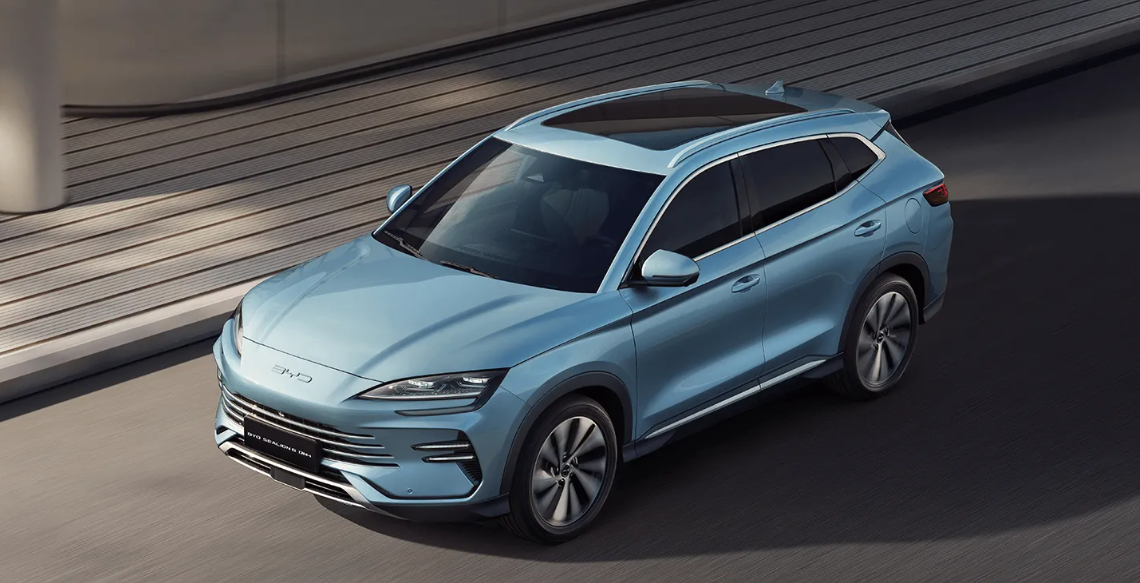
BYD's first hybrid model arriving on the shores of Singapore in 2025 is the re-badge Song Plus DM-i from mainland China. This PHEV compact crossover went on sale in the Chinese market in March 2021 and the the Song Plus is the best-selling BYD SUV in China. Global cumulative production of the model (excluding the ICE-powered variant) surpassed 1 million units by July 2024. The Song Plus was facelifted and an update was launched in June 2023 for the Chinese market, which includes the BEV and PHEV versions. Singapore just gets the PHEV version from mid-2023, so it's looking a bit outdated - particularly the interior. The 2023 Sealion 6 DM-i features a restyled front end and rear end design with headlamp units similar to the BYD Seal and Sealion 7. BYD also replaced the Song (宋) emblem with the standard BYD logo, aligning it with the vehicles from the Ocean series. The Sealion 6 DM-i's high voltage battery pack is sized at 18.3kWhr and supplied by BYD themselves via it's Blade battery format. When driving in pure EV mode, it can do about 80kms (WLTP) when the high voltage battery's State of Charge (SoC) is at 100% and down to 25%, before the petrol engine kicks in to re-charge the high voltage battery. The hybrid system provides four major control modes (EV, HEV series, HEV parallel, and engine direct drive). The Sealion 6 DM-i PHEV, features a 1.5L, 4-cylinder petrol engine producing 72 kW of power and 122Nm of torque. It's mated to an electric motor that produces 145 kW power and 300Nm of torque. The combined maximum power is 217kW, driving the front wheels. That's good enough to do the century sprint in 8.5 seconds. Unfortunately it also means the Sealion 6 DM-i goes into the expensive Cat B territory for CoE. With a 60L fuel tank, BYD's claimed range is around 1,100 kms. No more excuse on range anxiety for the durian run to Genting Highlands or fighting over a plug locally when the high voltage battery pack reaches a low value. Probably the best part for the petrol heads is avoiding the $700 annual sur-charge levied on the road tax as it burning dead dino juice. Fuel efficiency works out to be 5.45L per 100kms - assuming the high voltage battery is 100% and fuel tank is full. The numbers are okay for a hybrid, but not that great either due to the dead weight being carried around. Best to operate in EV mode as much as possible and top up charge the high voltage battery pack to minimize fuel use. Some selected specs of the Sealion 6 DM-i. Length: 4,775mm Width: 1,890mm Height: 1,670mm Wheelbase: 2,765mm Minimum turning radius: 5.5m Rear trunk capacity: 574L (expands to 1,700L with the rear seats folded down) Unladen kerb weight: 1,940kg Gross weight: 2,350kg Maximum carrying capacity: 410kg (seems a bit low) Battery capacity and type: 18.3kWhr (LFP BYD's proprietary Blade battery) Pure electric range: 80kms (WLTP from 100% down to 25%) AC charging capacity: 7kW (Type 2) will take around 8 hours to fully charge DC charging capacity: 18kW (CCS 2) will take 1.3 hours to fully charge VES band: A2 Electric drive train efficiency: 18.8 kWhr per 100km (not that great either) Electric motor: 145kW @ 300Nm of torque Petrol engine size: 1,498 cc Petrol engine power output: 72kW (98hp) @ 122Nm of torque Combined maximum power: 162.63kW (218hp) @ 300Nm of torque Fuel tank capacity: 60L Petrol drive train efficiency: 0.9L per 100km (claimed but not realistic) and more likely 5.45L per 100km assuming high voltage battery is 100% charged and fuel tank is full. Range (electric + petrol): 1,100km (claimed) in reality it'll be lower than this due to the dead weight of the vehicle - almost two tons! Top speed: 170 km/hr. In 2023, BYD unveiled the BYD Seal U, the export version of the Song Plus to the world. It debuted in Europe in September 2023 as part of the Seal family. In May 2024, the vehicle was introduced in Australia and other markets as the BYD Sealion 6. Singaporeans are late to the party only got Sealion 6 in July 2025 - almost two years late. Will see how sales go here as it competes in the increasingly crowded hybrid/PHEV market. Competitors to the Sealion 6 DM-i are: (1) Chery Jaecoo J7 PHEV; (2) Toyota Harrier hybrid; (3) Nissan X-Trail ePower; (4) Kia Sorento hybrid; (5) Hyundai Santa Fe hybrid; and (6) Mazda CX-60 PHEV. There are some conti PHEVs from the likes of Mecedes, BMW, Volvo, etc. but the conti price and maintenance are factors to take into consideration. Will do a follow up post on the interior of the Sealion 6 DM-i.


-
Since no thread on the latest 3rd Gen VW Tiguan , think should start this thread for potential buyers. As discussed in the car sexpo thread, found the courage to meet the MILF SE this afternoon. Was quite impressed with the overall car and it was crowded with many people molesting and abusing the showroom Tiguan car. Price increased by 5k as compared with the sexpo price. Those who test drove and signed on the dotted line , pls share share here..😅
- 380 replies
-
- 1
-
-
- volkswagen
- tiguan 2024
- (and 1 more)
-
Compared to the current X1, the grill seems to be wider by not as tall?
-
Good Day to Everyone! Finally got a chance to post and start a new forum myself; I am always looking forward for Lexus owners to share their driving experience, the things to watch out for the cars, maintainance, tyres / spare parts or some recommended service centres to share among all Lexus owners to better use the money when needed to deal with these matters for their cars. Feel free to update and post any replies; thanks for your kind support then!
-
The standard naturally aspirated 2.5-liter engine is dead; long live the 2.5-liter four-cylinder hybrid. The 2026 RAV4 packs a hybrid powertrain with Toyota's fifth-generation hybrid system equipped, which sees major improvements to the power control unit and battery for improved output and efficiency. The new RAV4 hybrid makes 226 horsepower when paired with standard front-wheel drive—the first for the model—or 236 horsepower with all-wheel drive. The FWD RAV has 23 more hp than the outgoing front-drive gas model, while the AWD version sees a 17-hp increase over the previous AWD hybrid. Toyota hasn’t released fuel economy figures yet. The GR Sport is Toyota’s first true performance-oriented RAV—although, it’s still not a full GR model. It’s powered by the PHEV powertrain and with AWD, making a properly powerful 320 horsepower, which means it should be even quicker to 60 miles per hour than the outgoing RAV4 Prime, which got there in 5.5 seconds. Visual cues like the larger front grille with the GR badge set the RAV4 GR Sport apart from the rest of the lineup (and it looks suspiciously similar to the GR Corolla’s updated grille), as do the special 20-inch wheels, rear roof spoiler, and interior, which is lined with suede and faux leather accents. The 2026 RAV4 goes heavy on screens with a standard 10.5-inch central touchscreen and a 12.3-inch digital instrument cluster. Buyers can opt for a larger 12.9-inch touchscreen on certain models. Every version of the RAV runs a new generation of Toyota’s Audio Multimedia system that promises to be quicker and even more responsive, complete with wireless Apple CarPlay and Android Auto, dual Bluetooth compatibility, and for the first time, a static home button. The 2026 RAV is also the first Toyota with the brand’s Safety Sense 4.0 safety suite, which has all the same technology as the previous system—adaptive cruise control, lane-keep assist, automatic emergency braking, etc—but with enhanced hardware and detection capabilities.
-
This compact electric SUV will be even smaller than the XC40, with an estimated dimensions of 4.2m (L) x 1.8m (W) x 1.6m (H). Design wise, the line between products from Volvo and Polestar is getting blurry, and can see that the rear windscreen is very narrow (by SUV standard), again compromising practicality for aesthetic appeal...
-
To be unveiled in Japan in September 2022. Although it is sized between the HR-V and CR-V, but this new SUV will be replacing the CR-V in the Japanese Market, as they just announced the cease of CR-V production days before introducing this latest ZR-V. A strange move to me. For those of you who are follow motoring news closely, you may find that it look very familiar and that you have seen it somewhere. Well, the same model is available in the USA recently, but using the HR-V nameplate. Another head scratching decisions by Honda...
- 30 replies
-
- 13
-
-
-
The famous (or is it infamous) maker of the Chery QQ is back with a new sub-brand called Omoda. The B&B brand of China's automotive giant - Chery Automobile. For Singapore, Chery has assigned Vertex Automobiles as the Authorized Distributor (AD) of the Omoda brand and only one model is currently available - the Omoda E5. First released back in April 2024 in the Cat B territory with 150kW of power. Unfortunately for Chery and Vertex, sales were lackluster for the first six months (April 2024 to September 2024) with only 51 units being sold. With sales going no where, both decided to wise up and offer the 99kW power front drive motor Cat A version of the Omoda E5 around early October 2024 and sales have kicked into high gear. In the last six month period (from December 2024 to May 2025), a total of 154 units have been sold. A solid 200% improvement in sales simply by offering the Cat A version of the E5 and an annual run rate of over 300 units. Three cheers for consumers and the market in showing what Chery/Vertex should have done in the first place. Hip-hip-hooray...! Details above on the Omoda E5. With five passengers and cargo, the maximum total load is 536kg. A unique feature is the front side charging port of the Omoda E5. Which means you'll have to get used to front parking into the charger (which is normally located at the rear of MSC) rather than the reverse parking. The Omoda E5 also comes with a small (19L) front truck - can store a few packets of smelly durian there. A full size spare tire s available underneath the boot! Not many BEV's have this feature and will come in handy one day when travelling up north. Cargo space for the boot is a bit small, about 300L and with the back seats folded down - increases to 1,079L. Some additional data on the E5. Battery type: LFP Blade battery (think it comes from BYD) Battery capacity: 61kWhr Charging time: 8 hours on [email protected] (three phase) from 0 to 100% and around 45 minutes on DC@80kW from 10% to 80%. The DC charging rate is low powered and thus slow. Driving range: 430 km (WLTP cycle) Claimed coefficient of drag: 0.281 Energy consumption: 15.5 kWhr / 100 km Drive unit: 99kW for Cat A and 150kW for Cat B. Maximum torque: 340Nm Top speed: 172 km/hr. The century sprint is a pokey 11.1 seconds for Cat A version. The interior starts with fake food and fake leather materials. Lots of soft touches where contact points are to make it feel better than Toyota/Honda/Nissan/Hyundai/Kia which have hard plastics. Close enough to some conti brands for the price paid on a B&B ride. Whilst Chery/Vertex will claim a 24.6" wide front screen, it's actually split into two 12.3" screens. There is the 12.3" infotainment touch screen that supports wireless Apple Carplay and Android Auto. Next to it is the 12.3" digital instrument cluster behind the wheel for the driver. The drive mode selector is located at the steering wheel (freeing up space in the center console) with buttons nearby for those who prefer some physical contact rather than going through the center infotainment touchscreen. More physical buttons on the center console. The 50W wireless charger with cooling and is hidden beneath the front hatch. Apparently the front arm rest comes with a cooling system. Unfortunately no panoramic roof to get the feeling of open space while drive - only the standard sunroof for the front passengers. The front seats are ventilated - good for the hot weather of Singapore. Driver's seat is six adjustable while the front passenger is only four way. Processor powering the display is the older Qualcomm 8155. There's a 360 deg surround view camera available to help with parking at MSC. The Advanced Driving Assistant Systems (ADAS) is at least Level 2, Chery claims to be 2.5. There's been some over the air software updates that allow settings to be remembered when the vehicle is switched OFF and then back ON again - will save some frustrations in getting those annoying bings/bongs silenced every time one gets into the car. With high CoE costs (Cat A at $101.1k) the current price of $159.9k seems a good deal. Will do a follow up post on cost breakdown on the Omoda E5.


-
Looks like Volvo is determined to conquer the mid size SUV segment with this new BEV. The spec is nothing but class leading... The new Volvo EX60: best-in-class 810km range and charging as fast as a stop for fuel and coffee Whether you plan to drive from Paris to Amsterdam, make a trip from LA to San Francisco, or travel from Stockholm to Oslo, the new, all-electric Volvo EX60 SUV has your back. With the ability to go up to a best-in-class 810 kilometres on a single charge* in an all-wheel drive configuration, beating even its most recently revealed competitors, the EX60 doesn’t just go further than any electric car that Volvo Cars has ever created. It turns range anxiety into range comfort, demonstrating that going electric is no longer a compromise. Volvo Cars engineers have optimised the car’s range for real-life driving and what customers experience in their daily drive. “The EX60 is designed to be a gamechanger,” says Anders Bell, Chief Technology Officer at Volvo Cars. “With our new electric vehicle architecture, we directly address the main worries that customers have when considering a switch to a fully electric car. The result is class-leading range and fast charging speeds, marking the end of range anxiety.” The EX60 does not only boast the longest range of any fully electric Volvo, it also charges faster than any electric Volvo before in all weather conditions. Instead of a full lunch break, a quick coffee stop is now enough to recharge the battery and hit the road again. Practically speaking, this means the EX60 can add up to 340km of range in just ten minutes when using a 400kW fast charger, making a charging stop nearly as fast as a fuel stop. And all EX60 customers can get a 10-year warranty on the battery. The key to the class-leading range is SPA3, Volvo Cars’ most advanced electric car architecture to date, which underpins the EX60. It unlocks maximum efficiency in key systems inside the car and allows the company to achieve an electric range that matches cars powered by petrol engines. Integrating the battery directly into the structure of the car with cell-to-body technology and developing e-motors in-house makes the EX60 more energy efficient and cuts excessive weight. The new cell design of the EX60’s battery carefully balances energy density and power delivery, further increasing driving range. The EX60 is the first Volvo car built with the help of mega casting, whereby hundreds of smaller parts are replaced with a single, high-precision casting in the production process. This reduces weight, which again improves range and lets you go further. The fast charging speeds are made possible by Volvo Cars’ new 800-volt electrical system and in-house developed software, which together move energy into the battery more efficiently. The use of lighter materials and less heat generation also support faster charging times, meaning the EX60 can add hundreds of kilometres of range in just a few minutes. Clever algorithms developed by Volvo Cars’ portfolio company Breathe Battery Technologies have also been incorporated in the EX60. These allow the car to constantly adjust how the battery takes in power, keeping it in its ideal operating zone at all times and in all weather conditions. Finally, because this is an electric car with less moving parts, it does not have to undergo conventional service as often. In short, the EX60 is a no-compromises electric car, designed to provide the freedom to move in a new, all-electric era. The Volvo EX60 will be revealed on 21 January 2026.


-
Kia has only begun putting its next-generation Sorento SUV on the road last month, when a heavily camouflaged prototype was spotted testing alongside a BMW X5 – not a bad benchmark vehicle at all. Today, we can show you a considerably less shy prototype, roaming the Nurburgring Nordschleife wearing Recaro racing seats and tighter-fitting foil, allowing us to better gauge its design language and overall dimensions. Less fussy design The 2019 Sorento isn’t exactly the cleanest-looking SUV in its segment. It has a lot of curvy design elements that seem to be squeezed together tightly in order to create a somewhat modern aesthetic. So what does Kia have planned for an encore? Apparently something with a sharper yet simpler design, featuring a more boxy front end plus a very ProCeed-like window line that curves upwards toward the tailgate. As for the rear end, the cutout on this prototype only tells half the story, as the taillights don’t appear to be horizontal anymore. Instead, it almost looks like they feature a boomerang design that extends onto the fenders. Of course, whether or not that’s the case, we still can’t say for certain. Also read: 2020 Kia Seltos Unveiled As The Company’s New Small SUV For Global Markets Meanwhile, we’re still not ready to give up on this render from last month, especially since there are a lot of common front fascia (thin headlights, grille design) and shoulder line features to speak of. As for what the new Sorento will be like to drive, we expect more efficient powertrains and better dynamics, while improved driver assistance and convenience technologies remain a given. Kia will probably launch its next-generation Sorento sometime next year as a 2021 model.
-
Nice. Seems like many brands are stepping up the game by providing good looking cars with nice interior. Are we ready to look pass the badge?
-
Following sister car Hyundai Kona's launch, Kia pulled the wraps off the Stonic, their version of the compact crossover. Personally, I prefer the look of this over the Kona although it's clear that the Stonic looks just like a raised up Rio hatchback with an identical interior as the Rio too.
-
Car debuts later in Paris. Korean automaker KIA has updated its mid-size SUV model, the Sorento. The nameplate is a stalwat among leasing customers because of versatile seatings and a high-riding stance. Engines lined up for the new car are expected to include two gasoline lumps, a 2.4-liter 4-cylinder and a 3.3 V6.
-
https://electricvehicleweb.in/toyota-corolla-cross-preliminary-details/amp/ https://www.carsguide.com.au/car-news/toyota-corolla-cross-2021-rendered-new-mini-rav4-hybrid-coming-to-lure-you-out-of-a-kia Baby RAV4? Looks like Toyota will be releasing a new CUV in thailand and I think likely to come to sg. But really, too many CUVs on the road and no characteristics. This model likely to take over the CHR to be the next popular phv vehicle.

-
What a mouthful for its name, I will just call it GLC EV. Anyway, the new GLC is to be unveiled next month, and the shape does looks good. The current combustion-powered GLC, codenamed X254, debuted in 2022, and the launch of the electric variant will likely coincide with the unveiling of the mid-cycle refresh. Even though Mercedes will not be using the three-letter EQX naming strategy anymore, it is keeping “EQ” in the name of its electric models, and it could be called the GLC with EQ Technology, like the electric G-Class. The MB.EA platform includes a two-speed transmission as part of the rear drive unit (like in a Porsche Taycan) and supports battery packs of different sizes with different chemistries—Mercedes is also investigating having multiple chemistries in the same pack. In the CLA EV, the base battery pack will feature lithium iron phosphate (LFP) cells, while the larger long-range pack will have nickel manganese cobalt (NMC) cells. This approach could be mirrored for the GLC EV but with higher capacities adapted to this vehicle class. The large battery pack is expected to have a capacity of 94.5 kilowatt-hours, which will give the 483-horsepower dual-motor GLC EV a WLTP range of 404 miles. A single-motor, rear-wheel-drive variant will also be available, but not at launch. Just like MMA, MB.EA runs at around 800 volts, which not only allows for improved powertrain efficiency but also unlocks extra charging power over 400-volt-class EVs. We therefore expect it to charge from 10 to 80% in half an hour or less, with a maximum charging rate of 320 kilowatts. Mercedes says it can add 162 miles of range in just 10 minutes. BUT, the huge LED grill with 942 animated backlit pixel dots makes me wonder does the driver still need DRL or even headlight? If that sounds exaggerated to you, just look out for those LED wreath used at funeral, which attracts many compliant from residents.
- 18 replies
-
- 12
-
-
No one talking about Aion Y Plus?
-
Much less futuristic as compared to its cousin (EV9). Using the same E-GMP electric platform as its Kia cousin, the new Ioniq 9 promises loads of space, lavish amenities, and lots of range - over 480 km on every trim. Powering the Ioniq 9 is a 110.3-kilowatt-hour (net) battery pack. The base Long Range model gets a single electric motor powering the rear wheels, while Hyundai offers a dual-motor Long Range variant and a dual-motor Performance model. The Long Range single-motor model makes 215 horsepower and 350 Nm of torque. The dual-motor Long Range version makes 310 hp and 603 Nm, while the Performance model packs an impressive 430 hp and 698 Nm. The quickest Ioniq 9 gets to 100 km per hour in 4.9 seconds and has a top speed of 193 km per hour. Hyundai doesn't have range figures for the dual-motor models yet, but the company says every version of the Ioniq 9 will have over 480 km of range. The base single-motor model is estimated to get 539 km per charge. Plug into a 350-kilowatt-capable DC fast charger and it’ll recharge the Ioniq from 10 to 80% in just 24 minutes. The Ioniq 9 even has a maximum towing capacity of 2,268 kg. With enough space for six or seven people inside, depending on the configuration, passengers in the second row will be able to experience Hyundai's new Relaxation Seats, which have a Dynamic Touch Massage function. The first and second rows also lay completely flat, and the second row swivels so you can come face-to-face with passengers in the third row (but only when the vehicle is stationary). Eco-friendly upholstery covers the seats and interior panels. The materials range from sustainably sourced leather to recycled polyethylene terephthalate fabric, and even wool. The driver and front passenger have access to dual 12.0-inch screens—one central touchscreen and a secondary digital instrument cluster. And an eight-speaker audio system comes standard while a Bose 14-speaker system is available as an option. With a 3,129 mm wheelbase and a total length of 5,060 mm, the Ioniq 9 is plenty roomy. It has 1,900 mm of headroom and 2,050 mm of legroom with the second and third rows combined. The battery configuration also means that the Ioniq 9 has a completely flat floor all the way to the third row. The rear cargo hold has 617 liters of space. Fold the third row flat and that number grows to 1,322 liters. The Ioniq 9 also has a frunk—or front trunk—that can carry 88 liters worth of cargo on the rear-wheel drive model or 51 liters on all-wheel-drive models. The ‘aerosthetic' exterior design combines futuristic elements like eight-bit headlights and taillights with aerodynamic efficiency. That yields a drag coefficient of just 0.259 Cd with the optional digital side mirrors (which likely aren't available in the US). By comparison, the Tesla Model X has a drag coefficient of 0.24 Cd. In keeping with the eco-friendly theme, the Ioniq 9 uses a new paint compound made from recycled tire waste. Buyers can choose from 16 different colors, with a few new hues made specifically for the Ioniq 9: Celadon Gray Matte, Celadon, Gray Metallic, Ionosphere Green Pearl, Sunset Brown Pearl, and Cosmic Blue Pearl.
- 17 replies
-
- 11
-