Search the Community
Showing results for tags 'Automotive'.
-

Why finding parking feels better than getting a promotion
chrissyc posted a blog entry in MyAutoBlog
There are many moments of joy in life. Getting married. Watching your children take their first steps. Receiving a promotion you’ve worked years for. And then there’s finding an empty parking lot right in front of the place you’re heading to. For Singaporean drivers, that last one might actually rank surprisingly high. If you've ever driven into a crowded shopping mall on a weekend, you’ll know exactly what I'm talking about. The Hunt Begins It always starts with optimism. You enter the carpark convinced you’ll be in and out within minutes. After all, how crowded can it be? Three levels later, you've driven past 47 occupied lots, questioned your life choices twice, and become oddly invested in the movements of a stranger who may or may not be returning to their car. Suddenly, parking isn’t a practical task anymore. It’s a mission. Every empty lot feels like winning Toto The funny thing about parking in Singapore is that the satisfaction is completely disproportionate to the achievement. You neither scored a goal, nor did you close a million-dollar deal. You simply placed a vehicle between two white lines. Yet the feeling is incredible. Especially when the lot is near the lift lobby. Or better still, a sheltered lot. At that moment, you’re no longer an ordinary driver. You’re a champion. We become amateur detectives Singaporean drivers possess a special skill. We can spot someone returning to their car from 100m away. A person holding shopping bags? Potential lead. Someone pressing a key fob? Interesting. A couple walking purposefully towards a row of vehicles? This could be it. We follow these clues with the determination of seasoned investigators. Oh, the disappointment when they walk past their car and disappear into another part of the carpark is genuinely heartbreaking. The unofficial parking Olympics Finding parking also brings out our competitive side. You spot an empty lot. So does another car. Now begins a silent contest involving eye contact, positioning, and strategic signalling. Nobody says a word. Yet both drivers know exactly what’s happening. It’s one of Singapore’s most intense sporting events. Why it matters so much The answer is simple. Cars are expensive in Singapore. Driving itself is often stressful. Traffic exists. ERP exists. COE exists. So when something finally goes in our favour, we celebrate. An excellent parking lot can genuinely improve the rest of your day. Nobody talks about this enough. A parking lot near the entrance means less walking under the hot sun, less carrying heavy shopping bags across a giant carpark, and less trying to remember where you parked three hours ago. These are small victories, but they matter… The real Singaporean dream For many Singaporeans, luxury isn’t necessarily a bigger house or a faster car. Sometimes it’s arriving at a crowded destination and immediately finding a parking lot. No waiting and no circling. Most certainly no following random strangers in the hope they’re leaving. Just drive in, park, and walk away. Pure bliss. Better than a promotion? Perhaps finding parking feels better than getting a promotion because promotions happen once every few years. A perfect parking lot can happen today. Or tomorrow. Or if you're particularly lucky, twice in the same week. And unlike promotions, nobody expects extra responsibilities afterwards. You simply lock the car, admire your parking job for a brief moment, and continue with your day feeling like you've beaten Singapore itself. For local drivers, that's sometimes more than enough. ~ Julian (Images from Sgcarmart, Unsplash) -
There was a time when buying a car in Singapore was simple. You chose something reliable, checked whether the boot could swallow a stroller or a golf bag (depending on your age), negotiated the price, and hoped the salesperson threw in solar film, floor mats and maybe a dashcam. Today, buying a car feels a bit more like hiring a very clever personal assistant - one that can park itself, brake before you panic, remind you to stay in lane, monitor your driving habits, update itself overnight and quietly judge your parallel parking at Cross Street. Yes, the age of smart cars has arrived. And yes, your next car might genuinely be smarter than your smart… phone. Cars are no longer just machines Modern cars are becoming rolling computers. Electric vehicles, hybrids and even mainstream petrol cars now come packed with large touchscreens, voice control, connected apps, advanced driver assistance systems, over-the-air software updates and more sensors than a Singaporean parent monitoring PSLE preparation. The car no longer just starts, moves and stops. It watches, learns, assists and occasionally nags. Drift too close to the lane marking? It vibrates the steering wheel. Brake too late? It flashes warnings. Forget to check your blind spot? It lights up like your granny screaming at you. In Singapore traffic, this is not a bad thing. Between lane-changers, delivery riders, buses, PHVs and that one driver who believes signalling is a sign of weakness, a little extra intelligence is welcome. EV has accelerated the smart-car revolution Electric vehicles have pushed this transformation even harder. That’s because EVs are more software-driven by nature, and many feel less like traditional cars and more like devices on wheels. Battery status, charging schedules, route planning, energy consumption and climate control can often be managed from an app. Some cars can pre-cool the cabin before you reach the carpark – which admittedly, in Singapore, is a necessity. Singapore is also moving clearly towards cleaner-energy vehicles, with all new car registrations required to be cleaner-energy models from 2030, and a broader national direction towards 100% cleaner-energy vehicles by 2040. Charging infrastructure is also expanding, with Singapore targeting 60,000 EV charging points by 2030, making the smart, connected EV lifestyle increasingly practical rather than merely futuristic. But smart does not always mean simple All that’s said, here’s the irony: As cars become smarter, drivers sometimes become more confused. Once upon a time, the most complicated button in a car was the rear demister. Now, changing the air-con vent direction may require three touchscreen menus, a software update and the patience of a monk. There is also the question of trust. Do we really want our cars deciding when to brake, how to steer, which route to take, and whether our driving efficiency deserves a smug little eco score at the end of the journey? Because nothing humbles a grown adult faster than spending $200,000 on a car, only for it to tell you that your acceleration style is “inefficient”. Helpful. Very helpful, indeed. The Singapore car buyer is changing too For Singaporeans, a car is not just transport. It is a major financial decision wrapped in COE, ARF, road tax, insurance, parking and family approval. That means smart features must do more than impress during the showroom demo. They need to make ownership easier. A genuinely smart car should help drivers save energy, reduce stress, improve safety, simplify parking, track maintenance and integrate smoothly into daily life. It should make the school run, grocery trip, office commute and weekend escape feel more effortless. In other words, clever technology should serve the driver without turning every journey into an IT support ticket. So, is smarter always better? Well, I reckon mostly, yes. The best modern cars are not just faster, cleaner or quieter. They are more aware, more connected and more helpful. They reduce the boring bits of driving so we can enjoy the meaningful ones. But the smartest car is not the one with the biggest screen or the most dramatic welcome animation. It is the one that understands what Singapore drivers actually need: Comfort in traffic, confidence in tight carparks, efficiency in ownership, and enough intelligence to help without making the driver realise he’s quite a useless person behind the wheel (and it could be true to a certain extent). Which is why there’s a good chance your next car may indeed be smarter than your phone. Just don’t be surprised if it also thinks it’s smarter than you. ~ Julian
-
Walk around any carpark in Singapore and you'll see hundreds of cars that look perfectly normal from the outside. But open the doors, and suddenly you're looking into a parallel universe. As someone who has spent years reviewing cars, attending launches, and talking to owners from every corner of Singapore, I've come to realise that cars are more than just transportation. They're mobile storage units, emergency shelters, dining rooms, and occasionally, museums of questionable life choices. Here are some of the weird things Singaporean drivers keep in their cars. 1. An umbrella collection Singaporeans don’t trust the weather. One minute it’s blazing hot. The next, you’re wondering whether Noah’s Ark has a COE. That’s why many drivers keep not one, but three or four umbrellas in their cars. Best part of all, some don’t even remember putting them there. At some point, every car mysteriously becomes an umbrella warehouse. 2. Plastic bags from previous generations Open the boot and you’ll often discover enough plastic bags to start a small NTUC branch. Nobody knows why they’re there. They just accumulate over time. Drivers keep them because “they might be useful someday”, which is the same logic people use when keeping old phone chargers that haven’t matched any device since 2012. 3. Emergency snacks that were supposed to be temporary Every Singaporean driver has a snack hidden somewhere. Maybe it’s a packet of biscuits. Maybe it’s sweets. Maybe it’s a pineapple tart left over from Chinese New Year. The intention is always noble. “What if I get hungry in traffic?” The reality is that the snack remains untouched for six months and becomes an archaeological discovery during spring cleaning. 4. The mysterious receipt collection You paid for parking. You drove away. The transaction is complete. Yet somehow that parking receipt lives in your door pocket forever. Many cars contain receipts from ERP top-ups, petrol stations, eateries, and shopping centres from years ago. Future historians may use them to study Singapore’s inflation rate. 5. One lonely shoe Nobody knows how this happens. Families with kids are especially vulnerable. At some point, a single shoe appears in the car and stays there indefinitely. Its partner is nowhere to be found. The shoe becomes part of the vehicle’s permanent equipment. 6. An entire charging cable ecosystem USB-C. Lightning. Micro-USB. You name it, it’s there. Perhaps even a cable that charges a device nobody in the family owns anymore The modern Singaporean car often carries enough charging cables to support a small electronics store. Nobody wants to get caught with a dead phone, so the collection keeps growing. 7. Reusable shopping bags. Lots of them The goal was simple. Bring reusable bags to reduce waste. Instead, many of us now have 15 reusable bags permanently living in the boot while continuing to forget them when entering the supermarket. The irony is beautiful. The car is a reflection of us Perhaps the strangest thing isn’t the umbrellas, receipts, snacks or missing shoes. It’s how every car quietly tells a story about its owner. Some are meticulously organised. Others look like a storage room on wheels. But that’s what makes driving in Singapore interesting. Behind every tinted window is someone carrying around a little collection of life’s necessities, memories, and random objects they “swear they’ll clear out this weekend”. Of course, if you’re reading this while sitting in your car, perhaps it’s time to check what’s lurking under your seats. You may be surprised by what you find. Or worse, reminded of where that missing shoe went. ~ Julian (Images from Unsplash)
-
Come across many near misses online, as well as misc automotive related news all the while, but don't feel right to create a thread for every single article. Thus starting this thread for all forumers to share their interesting read. For a start, these are what I deemed as near miss or news to be shared here. Massive WW2 Bomb Found Under Greek Gas Station Forcing 50,000 People Out Of Their Homes One of the things you don’t want to find when digging a hole in the ground is a massive 250kg / 550-lbs unexploded bomb from WW2, especially if you’re digging next to a gas station. This unbelievable discovery happened in Greece, when construction workers were digging to install a new tank for the gas station and according to local Voria they were able to stop the works just 4mm shy from hitting the bomb. The local authorities had to stop the original deactivation procedure as the bomb was much larger than initially anticipated, weighing 250kg in total (550lbs), and now are planning a massive evacuation in a 1.2-mile radius before they attempt one more time. The bomb was found at Thessaloniki in a densely populated area and the evacuation plan involves moving more than 50,000 people away from their homes this Sunday, February 12th. It’s been reported that the explosive weapon is an aerial bomb dropped from a plane during WW2 that didn’t explode when employed. Massive 700-Car Collection Liquidating In Ohio Includes Studebakers & DeLoreans, Tractors & Trucks There are lots of people who collect cars. Some amass more than others, but we've never seen anything quite this big. It's the Hackenberger collection, and it's going up for auction – all 700 cars, trucks, tractors, and motorcycles. The collection is the life's work of Ron and Eunice Hackenberger based out Norwalk, Ohio – about halfway between Cleveland and Toledo. Ron bought his first Studebaker at 15 years old with money borrowed from his grandpa, and set about a lifetime of expanding his collection after marrying Eunice. The rest, as they, is history. Hackenberger ran a trucking company before expanding into real estate, hospitality, and even cattle ranching, crisscrossing the country and picking up any and every type of unusual wheeled vehicle he came across along the way. Sometimes he would even take an empty car transporter out to the West Coast and bring it back packed with motorized oddities. At this point the collection has swelled to over 700 vehicles. There's some 250 Studebakers, reflecting his lifelong passion, with the rest of the collection including everything from European micro cars to John Deere tractors. There are some 1940s motorcycles, a series of mid-60s muscle cars, and even some Checker limousines – all in various conditions. There's even a DeLorean, Bricklin, Porsche, a couple of Jaguars, some Citroëns, and a Cadillac ambulance that looks straight out of Ghostbusters. It's all still being catalogued, but what's clear already is that the breadth and scope of it all is staggering. And it's all going up for auction over the course of one long weekend. Apparently Ron had planned to restore it all, but having reached this late stage in his life, realized it was too much to undertake. Everything will be up for grabs, with no reserve prices on anything when VanDerBrink Auctions handles its liquidation this coming July 14-16. Check out some of the highlights in the gallery below, or visit the auctioneer's website for more. Best Speeding Excuse Ever? Driver Tells Cop “Wind Was Pushing Me” Just when you think you've heard it all, an Australian driver finds the airiest excuse ever to get out of a speeding ticket. After being pulled over by the cops for allegedly speeding 17km/h or 10mph over the limit (127km/h or 79 mph in a 110km/h or 68mph zone), the unnamed man from Western Australia told the police “The wind was pushing me”. No, seriously, that’s what he said and it went on record with the Three Springs Police department sharing the citation on their Twitter account with the humorous caption ‘And the excuse of the day goes to…’. As you’d expect, the cops didn’t buy the excuse and handed the driver a AU$200 fine while also deducting two demerit points on Monday. Canadian Driver Masterfully Avoids Four Moose On Snow-Covered Road It seems that the driver of this car had a pretty good idea about what to do when he confronted a small herd of moose. According to the description of the video, once the driver saw the moose ahead, he started braking and the car kept sliding, which is when he cleverly lifted his foot of the brake in an attempt to steer around the animals. Thankfully, everything turned out OK for everybody involved. Seeing animals get hurt is always horrible, though from the driver's perspective, a direct hit with a moose would have probably been the end of the road for that vehicle, as these animals can weigh anywhere between 380 (837 lbs) to almost 700 kg (1,543 lbs). During the evasive maneuvers, the Canadian managed to steer his vehicle right in-between the animals, which at that point were simply trying to get away from the incoming projectile's path. By the way, is it us or does the guy's laughter sound a lot like he's saying "Ho Ho Ho?" A Mustang Almost Caused A Train Crash, Was Pushed Away Seconds Before Locomotive Rolled Through Four men helped prevent a disastrous situation when a Ford Mustang got stuck on a railway crossing in Portland, Oregon, on Friday morning. According to reports, bad weather conditions led several cars getting stuck in ruts crossing MAX lines along NE 99th and East Burnside, but the red second-generation Mustang got stranded just as a MAX train was approaching the crossing. “We saw a red mustang coming down the road. It was fishtailing a little bit. It got to that stop light up there. It went to go across those max tracks and got stuck,” said Andrew Rasmussen, a physical therapy student who followed the scene with his mentors at Laurelhurst Physical Therapy, KATU reported. “Rear wheel drive, real low sports car, yeah probably not the best to be on these kind of roads,” he said. A news helicopter flying from above captured the moment on film, when four men ran to help the Mustang driver. “About four or five people rocked the car to get it off the tracks in about 10 to 15 seconds before the max came by,” Rasmussen explained. Fortunately, no one was hurt, and the pony car will have another chance in making it to this year’s Top Mustang Crashes – see last year’s here. If there’s a lesson to be learned here it’s that, drivers should use common sense, and avoid things like, you know, heading out with a rear-wheel drive sports car, especially without appropriate tires, when the roads are covered in snow.
- 41 replies
-
- 20
-

-

-
From roaring engines to silent rockets: Is the soul of driving changing?
chrissyc posted a blog entry in MyAutoBlog
There was a time when the soul of a car announced itself before the car even arrived. You hear it first - a deep-chested growl from around the corner, a metallic bark on start-up, a rising snarl as the revs climbed. For generations, the soundtrack of driving was mechanical, dramatic and slightly anti-social. It was petrol, pistons, exhaust fumes and the occasional neighbour fantasising about bashing your head against the bonnet as you start your car at 6:30am. But today, the world of motoring is changing. Fast. As we already know by now, the modern electric car doesn’t roar. It hums. Sometimes, it doesn’t even do that. It simply glides away with the sort of quiet confidence usually reserved for luxury hotels and people who wear linen on weekdays. Yet, press the accelerator in a powerful electric vehicle (EV) and there is nothing gentle about the experience. There’s no waiting for revs to build, no gearbox theatrics, no dramatic intake noise. Just instant torque, immediate response and the strange sensation that the horizon has suddenly been pulled towards you. So, the big question is this: As electric cars replace combustion engines, is the soul of driving changing - or are we simply learning to feel it differently? The old soul of driving was emotional For petrolheads, the internal combustion engine has always been more than just a power source. It is arguably the heartbeat of the car. A great engine gives a car an amazing character. A naturally aspirated V8 feels different from a turbocharged four-cylinder. A flat-six has its own rhythm. A high-revving Italian V12 is less an engine and more an operatic event with tyres. And I reckon that was the magic. It’s as if cars had voices. Sure, some sang, some shouted, and some sounded like they had unresolved anger issues, but it was extremely emotional. Driving pleasure was tied to effort. You worked for speed. You managed gears, revs, turbo lag, traction and braking. The best cars made you feel involved, almost as if you were part of a conversation between machine, road and driver. Electric cars have changed the language On the other hand, EVs are different. They don’t communicate through noise and vibration in the traditional sense. Instead, they communicate through immediacy, methinks. In an EV, performance is cleaner, sharper and more accessible. The accelerator response can be astonishing. Even fairly sensible electric SUVs now accelerate with the kind of enthusiasm that used to belong to sports cars with big spoilers and even bigger fuel bills. For everyday drivers, this is a revelation. Electric cars are quiet in traffic, smooth in town and effortless on the expressway. In Singapore especially, where most driving happens between traffic lights, ERP gantries and carparks with tight ramps, EVs make a lot of sense. But for enthusiasts and purists alike, there is an adjustment period. Without engine noise, gearshifts and mechanical drama, some EVs can feel a little too perfect (or too soulless or too boring or too bland) - like tech appliances rather than machines with attitude. But soul is not only sound Here’s the thing: We may have confused noise with soul. A car’s soul is not just about how loudly it shouts. It is about how it makes you feel. Does it respond naturally? Does it give you confidence? Does it make an ordinary drive feel special? Does it create a memory after you’ve parked and walked away? By that measure, electric cars absolutely can have soul. It is just a different kind of soul - less rock concert, more silent missile. Less mechanical theatre, more futuristic precision. Perhaps we’ve been getting this all wrong . Perhaps the best EVs are not trying to imitate petrol cars. They are creating a new driving experience altogether: Quiet, instant, intelligent and strangely addictive. So, is the soul of driving changing? Yes, but changing does not mean disappearing. The old soul of driving was built on sound, smell, gears and combustion. The new soul is built on response, software, silence and speed. One is analogue emotion, while the other is digital intensity. See, petrol cars will always have their romance, but electric cars are proving that excitement does not need an exhaust pipe. The future of driving may be quieter, but it is certainly not boring. It just arrives without warning - and with full torque from zero rpm. ~ Julian -
The great car buyer dilemma: Heart says sports car, wallet says EV
chrissyc posted a blog entry in MyAutoBlog
Every Singapore car buyer knows this internal argument. Your heart wants something low, loud, and dramatic. Something with swollen wheel arches, a naughty exhaust note and the sort of badge that makes you want to park by the side of the road just so people can admire it properly. Your wallet, however, has other ideas. I would say wife, but that would be pushing it. Your wallet has been looking at COE prices, petrol bills, road tax, insurance, parking, ERP, servicing, and the cost of kopi going up by another 20 cents. And after much careful consideration, your wallet has decided that what you really need is probably an electric vehicle. Welcome to the modern car buyer dilemma: Sports car fantasy vs EV reality. The sports car still has a pulse Let’s be honest. A proper sports car still does things to the soul that few sensible cars can. From the low driving position and the steering feel, to the mechanical soundtrack and the engaging drive. It's the theatre of it all. A sports car turns a simple drive to East Coast Park into a personal qualifying lap - even if you’re actually stuck behind a PHV doing 62km/h in lane one. It is emotional, irrational, and deeply unnecessary. Which, of course, is exactly why people love them. But in Singapore, irrational motoring comes with very rational invoices. A sports car usually means higher COE category exposure, higher fuel consumption, higher insurance, higher maintenance, and the quiet fear of scraping the front lip on every multi-storey carpark ramp from Tampines to Tiong Bahru. The EV is becoming harder to ignore Electric vehicles used to feel like a lifestyle statement. Today, they increasingly feel like the financially alert choice. Singapore is clearly pushing towards cleaner-energy vehicles. All new car registrations will need to be cleaner-energy models from 2030, and the national direction is towards 100% cleaner-energy vehicles by 2040. EV incentives are also still part of the equation. For electric cars registered in 2026, the EV Early Adoption Incentive provides a 45% ARF rebate capped at $7,500, while the VES continues to support EV adoption, though rebates are being reduced over time. In other words, the government is not exactly being subtle. If petrol cars are the old guard, EVs are the new scholarship students - cleaner, quieter, and increasingly difficult for parents to argue against. But are EVs actually fun? Well, that depends on what your definition of fun is. The best electric vehicles may lack engine noise, but they make up for it with instant torque. Press the accelerator and the car simply goes - no downshift, no turbo lag, no dramatic clearing of the throat. Just immediate, silent shove. In Singapore’s stop-start driving environment, that matters. From traffic lights to expressway slip roads, an EV can feel properly quick without trying very hard. It is less “weekend warrior” and more “silent assassin in a school-zone-friendly package”. And because EVs have fewer moving parts, they can also offer lower servicing needs compared with traditional petrol cars. Charging infrastructure is improving too, with Singapore targeting 60,000 EV charging points by 2030 and more than 90% of HDB carparks already equipped with charging points as of December 2025. The wallet has a point For most Singaporeans, the car is not just a toy. It is a family mover, office shuttle, grocery van, school-run machine and weekend escape pod - all compressed into one very expensive certificate-backed purchase. That is where the EV argument becomes strong. Lower energy costs, smoother driving, generous equipment levels and strong urban performance make electric cars genuinely compelling. But the heart is not wrong either. A great sports car gives you memories. An EV gives you efficiency. Ideally, you want both - which explains why performance EVs are becoming so interesting. So what should you buy? If your car is meant to stir the soul every Sunday morning, buy the sports car - and accept that happiness in Singapore often comes with a high depreciation curve. But if you want something intelligent, future-ready, fast enough for daily life and easier to justify at home, the EV is no longer the boring answer. It may not roar. It may not smell of petrol. It may not make your neighbours peep through the curtains. But it might just be the car your wallet, your conscience and your right foot can finally agree on. ~ Julian -
Why cars in Singapore cost a fortune (and why we still want one anyway)
chrissyc posted a blog entry in MyAutoBlog
If you’ve ever wondered why owning a car in Singapore feels like buying a small apartment… you’re not wrong. In most countries, buying a car is a milestone. In Singapore, it’s practically a financial strategy. And yet - despite sky-high prices, world-class public transport, and constant nudges to go car-lite - many still dream of owning one. Why? Let’s unpack the uniquely Singaporean relationship with car ownership. The COE: The price of permission At the heart of it all is one three-letter acronym: COE (Certificate of Entitlement). Before you even buy a car, you need permission to own one - and that permission can cost more than the car itself. In recent bidding cycles, COE prices for Category A and B cars have hovered over $100,000. So what you’re really paying for isn’t just the vehicle, it’s a 10-year lease to own a car, a slice of limited road space and the privilege of convenience. It’s a system designed with one goal: Control car population. And to be fair, it works. Public transport: Almost too good Singapore’s public transport system is so efficient, it almost makes car ownership unnecessary. We have clean, reliable MRT lines across the island, affordable fares all around (buses, trains, etc) and increasingly seamless bus connectivity. For most people, getting from point A to point B is cheaper, faster, and less stressful without a car. And this is exactly what the government intends: Build a system so good, you don’t need a car. But here’s the reality: Cars still matter Despite all this, cars continue to hold strong appeal - especially for certain groups. If you’ve got two or three kids, you’re going to need a car for school and supplementary class runs. There’s also a good chance you’re going to need a stroller. Imagine having a couple of kids with no car. Suddenly, public transport becomes… less charming. You’ll have no flexibility, more time will be wasted, and there’ll naturally be more logistical stress. This will also apply to multi-generational households. You see, Singapore’s family structure often includes elderly parents, kids and the working adults like you and me. For these families, a car isn’t a luxury - it’s a mobility solution. Try getting an elderly parent to medical appointments across town with multiple transfers, and the value of a car becomes immediately clear. The emotional side: It’s not just transport Still, I have to be honest - cars in Singapore aren’t purely rational purchases. They’re also a symbol of progress and a marker of personal success of sorts. And for enthusiasts? Owning your dream car in Singapore feels like beating the ultimate boss level. The tension: Control vs aspiration Hence, this is where things get interesting. Singapore is balancing two competing realities: Urban efficiency (less congestion, better public transport) and human aspiration (people still want cars). The COE system has been effective in managing the former, but it has also made the latter increasingly difficult. Owning a car - especially a nice one - is becoming out of reach for many. What happens next? There’s growing discussion around whether the COE system could evolve. Perhaps a segregation of COEs for ride-hailing vehicles, electric vehicles and the regular internal combustion engine ones. The idea? Well, to make ownership more targeted and fair. Right now, ride-hailing vehicles compete in the same pool as private buyers, which some argue drives up COE prices further. And as EV adoption increases, there could be a case for incentivising greener vehicles and differentiating ownership models. But it’s easier said than done, considering any change will need to balance fairness, demand and infrastructure constraints. So… will cars ever get “affordable”? In short, probably not. That’s because Singapore’s philosophy isn’t to make cars cheaper - it’s to ensure only those who truly need (or really want) them commit to owning one. Owning a car in Singapore is no longer just about getting from A to B. It’s a lifestyle decision. It’s a financial commitment. And for many, it’s a quiet aspiration. Yes, public transport here is among the best in the world. Yes, the COE system is doing its job. But at the end of the day, there’s still something about having your own set of wheels - even in a city where you technically don’t need one. ~ Julian -
From Copycats to Category Kings: The Evolution of Chinese Electric Cars
chrissyc posted a blog entry in MyAutoBlog
Not so long ago, “Made in China” cars were politely overlooked. Functional, yes. Aspirational? Not quite. Fast forward to today, and the narrative has flipped entirely. Chinese electric cars aren’t just relevant - they’re running the show. In fact, over 70% of the world’s electric vehicles (EVs) are now produced in China, and more than 60% of global EV sales happen there. That’s not participation. That’s dominance. So how did we get here? Phase 1: The quiet build-up China didn’t suddenly “discover” electric cars. It planned for them. While traditional carmakers were still perfecting combustion engines, China invested heavily in things like battery technology, charging infrastructure and Government incentives. The result? A fully integrated ecosystem that made going electric not just viable - but inevitable. By 2024, China was already producing over 12 million electric cars annually, accounting for most of the world’s supply. Thus, what looked like a head start quickly became an insurmountable lead. Phase 2: The explosion Then came the tipping point. Electric vehicles in China didn’t grow - they exploded. Over 16 million EVs were sold in China in 2025 alone. In fact, around 60% of all cars sold in China are now electric. In some months, EV penetration has already crossed 60% of new car sales. Think about that for a second. While most markets are still debating the transition, China is already effectively living in the post-combustion era. Phase 3: From fast followers to pace setters There was a time when the Koreans - Hyundai, Kia - looked like the future of EVs. Clean designs, competitive tech, strong momentum. And then the Chinese arrived. Not slowly. Not cautiously. But with faster model cycles (up to 30% quicker than legacy automakers), aggressive pricing, better in-car tech and a deeper integration of software and lifestyle features. Today, brands like BYD, NIO, Xpeng and Zeekr aren’t chasing the competition. They’re defining it. In many ways, Korean brands didn’t lose - they were simply outpaced and outscaled. The lifestyle shift: Cars as devices Here’s where things get interesting. Chinese EVs aren’t just cars. They’re becoming lifestyle products. Most of the cars’ interiors feel like tech lounges, with screens, sound systems, and connectivity rivalling consumer electronics. It’s less “driving” and more living with a car, and that’s a fundamental shift because younger buyers today aren’t buying horsepower. They’re buying experience, convenience and perhaps identity. Chinese EVs understand this instinctively. So… is China here to stay? This is the million-dollar question. Will Chinese EV brands dominate long-term - or fade away like some past industry disruptors? The honest answer? It’s highly unlikely they will disappear because this isn’t just about brands - it’s about infrastructure, supply chain, and scale. See, China controls a massive share of global EV production, the majority of battery manufacturing and a domestic market that is already majority-electric. That kind of ecosystem doesn’t just vanish. If anything, Chinese EV makers are only just beginning their global push - with exports rising rapidly and expanding into Europe, Southeast Asia, and beyond. The evolution of Chinese electric cars isn’t just a story about cars. It’s a story about how quickly an industry can be rewritten. From overlooked to unavoidable, from imitators to innovators - China hasn’t just joined the EV race. They’ve changed the track entirely. And whether you’re ready or not, the rest of the world is now driving on it. -
There was a time when the idea of a fully electric Ferrari would have felt like heresy. No V12 wail, no turbocharged crescendo - just silence. And yet, here we are. The Ferrari Luce - Ferrari’s first all-electric car - doesn’t just exist, it makes a compelling case for why it should. Because if Ferrari has decided to go electric, you’d expect them to do it properly. And in the case of the Luce, they didn’t just build an EV. They rethought what a Ferrari could be. Ferrari goes fully electric and fully intentional The Luce marks a historic shift: Ferrari’s first all-electric production model. That alone would have been headline enough. But what makes this car truly interesting is how Ferrari got there. The design wasn’t handed to the usual suspects in Maranello. Instead, Ferrari brought in LoveFrom - the design collective led by Jony Ive (of Apple fame). That decision alone tells you everything: This car isn’t just about performance figures. It’s about experience. And importantly, this wasn’t a rogue experiment. It had board-level approval, signalling that Ferrari isn’t cautiously experimenting with EVs - it’s committing. When you think of Ferraris, this might be the last thing that your mind can conjure The most un-Ferrari Ferrari Let’s be clear: the Luce is probably the least traditional Ferrari ever made. There will be no engine noise (obviously), no aggressive, shouty design language that Ferrari has always been known for and no driver-first analogue minimalism. Instead, you get something different altogether. A calm, hyper-refined, tech-forward luxury performance machine. It’s less “track weapon,” more “rolling sanctuary.” But here’s the twist - that might be exactly what Ferrari needs. Because today’s ultra-wealthy as well as younger generation buyers aren’t always chasing decibels and downforce. They’re chasing craft, technology, and uniqueness. The Luce delivers all three - just in a very different flavour. At least the interior doesn't disappoint The cabin is where the magic happens Step inside, and you immediately understand what LoveFrom brought to the table. The Luce’s cabin feels less like a cockpit and more like a designed living space. Materials are clean, almost architectural. Screens are integrated rather than imposed. Everything feels deliberate. And then there’s the standout detail - the kind that turns a car into a story: The signature yellow Ferrari key fob doesn’t just start the car. It becomes part of it. When you power up the Luce, the fob slides seamlessly into the gear selector and is “absorbed” into the car. It’s subtle. It’s tactile. It’s brilliant. And it perfectly captures what this car is about: Not loud innovation, but thoughtful delight. So, in that sense, the Luce is tech-forward, not tech-obsessed. Unlike many EVs that overwhelm you with screens and gimmicks, the Luce takes a more curated approach. The interfaces feel considered, not cluttered while the interactions are intuitive, not over-engineered. It’s very Apple in philosophy - which, given LoveFrom’s involvement, isn’t surprising. Still a Ferrari, just not in the classic way you'd expect So, is this still a Ferrari? That’s the question purists will ask. The answer? Yes - but not in the way you expect. The Luce doesn’t try to replicate what came before. It doesn’t fake engine noise or mimic the past. Instead, it does something far more difficult: It redefines Ferrari for a new era. Where once Ferrari stood for mechanical theatre, the Luce represents designed emotion - quiet, precise, and deeply intentional. The Ferrari Luce may be the most un-Ferrari Ferrari ever made. But it might also be the most important because in a world where every brand can build a fast EV, Ferrari hasn’t tried to be the loudest. They’ve tried to be the most thoughtful. And that, ironically, feels very Ferrari indeed. ~ Written by Julian Kho (Images from Ferrari)
-
I was recently in Taiwan for a short getaway, and amidst the hiking, shopping and gastronomical indulging, naturally couldn’t pull my eyes away from the cars. One of the more interesting phenomena I noted on my first day already was just how dominant the Toyota Corolla Cross is. A quick search revealed that the car has been the island’s bestselling model for five years running – and is still going strong, with its numbers in 2025 representing a 32.6% jump year-on-year increase. But even more eye-catching was a brand badge I had never seen before in my life stuck onto a not insignificant number of cars: One bearing an ‘L’ in fancy font. Considering how widespread mainland Chinese brands have become, my mind initially went to "Oh, this must be another Chinese name I’ve never heard of" (a silly thought on retrospect, considering the fraught political relations between Taiwan and China). Some quick sleuthing, however, revealed the real answer: Luxgen. The beginnings of Luxgen In 2009, Luxgen emerged from the ambitious vision of Yulon Motor Company, Taiwan's largest automaker, which sought to establish the first Taiwanese car brand – and a distinct one at that, focused on innovation. Drawing from Yulon’s robust experience in building licensed Nissan models and importing well-known marques such as Infiniti and Renault, Luxgen cars were meticulously developed at the firm’s HAITEC research and development centre, bringing together local craftsmanship with global engineering prowess. This leap apparently represented not just a new chapter for the company, but for Taiwan's position in automotive history. Luxgen was birthed as the brain (First-generation Luxgen U6 pictured) The automotive space is one with high barriers to entry, so Luxgen naturally had to find a special way to stand out. Its initial strategy? Combining robust engineering prowess with advanced technology, to produce vehicles that would hopefully resonate with both domestic and international markets. It’s worth noting that Luxgen’s hope wasn’t built on thin air. By leveraging Yulon's existing infrastructure and resources, the homegrown marque was able to position itself uniquely within the automotive landscape, especially with their ‘Designed in Taiwan, Made in Taiwan’ branding. Luxgen quickly gained recognition, selling initially in Taiwan and Oman, and later expanding plans for production in China through a collaboration with Dongfeng Motor. With a focus on integrating cutting-edge technology, the first Luxgen models consistently reflected the brand's proactive approach to meeting evolving industry demands. The M7 - a mid-sized MPV - was the first model to be built by Luxgen (Image credit: Editorial Team) Luxgen’s first model Luxgen’s inaugural vehicle, the Luxgen7 MPV (later rebranded to the Luxgen M7), quickly exemplified this vision, debuting technology-forward innovations that set Luxgen apart in the industry. Among its standout features was an advanced onboard computer system co-developed by HTC (for the folks that still remember!) that integrated the car’s multimedia, navigation and telecommms functions, a panoramic camera and a blind-spot monitoring system, as well as a night vision feature that helped to enhance visibility in pitch-dark conditions. The Luxgen 7 also had a unique anti-theft seat that could slide forward on its on lean against the steering wheel – to resist getaway-car use. Interestingly, Wikipedia states that the Luxgen 7 EV+ even debuted as the world’s first electric MPV, featuring a 240hp electric motor (though not much in terms of electric range). Initially, Luxgen focused on creating vehicles that combined opulent features with cutting-edge technology, attracting mostly domestic attention. Over time, the brand expanded its lineup to include sedans, SUVs, crossovers, and MPVs, eventually branching into electric vehicles to align with global sustainability goals. The brand responded to market demands by extensively integrating electric and hybrid technologies, thus enhancing its portfolio and broadening its appeal. Its successful penetration of the Asia-Pacific, Middle Eastern, and Latin American markets indicates Luxgen’s adeptness at navigating competitive landscapes worldwide. Quick aside: Most popular Luxgen car models? Luxgen M7 MPV: As mentioned earlier, this was the torch-bearing pioneer in Luxgen's lineup, debuting as its flagship model upon launch in 2009. Inspired by the Renault Espace, the M7 catered to consumers seeking versatility and space. Though discontinued, its legacy as Luxgen’s first production model remains influential. The S5 remains the only sedan that Luxgen has built to date (Image credit: Wikimedia Commons) Luxgen S5: The Luxgen S5 sedan, introduced in 2012, was a milestone for the brand as its first self-developed Taiwanese car. Despite facing challenges, the S5 aimed to provide a compelling combination of advanced features and sleek design. Its ambition continues to resonate with those familiar with Luxgen's innovative roots. The U6 quickly established itself as a Taiwanese car market staple upon release (Image credit: Editorial Team) Luxgen U6: The Luxgen U6, a compact crossover introduced in 2013, quickly established itself as a staple in the Taiwanese car market. Crafted to combine performance with flexibility, it was offered with multiple engine options, including a turbocharged variant. Continuous updates in design and features have been rolled in a bid to keep the model relevant for both urban and suburban Taiwanese car-buyers. One of the later models to be introduced by Luxgen, the URX can seat up to seven (Image credit: Wikimedia Commons) Luxgen URX: Building on the U6 platform, the Luxgen URX entered the market in 2019 as a mid-sized crossover with the ability to seat up to seven. Known for its spacious interior and robust design, the URX has garnered attention for potentially being the first Luxgen model to reach European shores. The n7 is the first EV from Luxgen to ride atop of a Foxtron platform (Image credit: Wikimedia Commons) Luxgen n7: This one’s probably the most important one in the lineup today, since it marks Luxgen's foray into the electric vehicle sector. Unveiled to the tune of an impressive 25,000 pre-orders in 2022, the n7 symbolised the brand's push towards sustainability and innovation. A large part of its appeal comes from its apparently competitive pricing: The base model starts at NT$999,000 (approximately US$31,149), making it a cost-effective choice in the electric SUV market as detailed by the Taipei Times. Meanwhile, mid-range and top-tier trims are priced at NT$1.29 million and NT$1.34 million, respectively, offering various features and enhancements. Its allure has propelled it towards becoming the best-selling BEV in Taiwan. Upcoming Luxgen n5: Further headlines have been made by Luxgen with the upcoming N5. Set to launch in the burgeoning Taiwanese electric vehicle market by the end of 2025, the N5 is built on Foxtron's Model B platform. Initially planned to debut with 300 units for display and test drives in November 2025, Luxgen anticipates additional production in subsequent months. This vehicle integrates cutting-edge technology and is poised to enhance the brand’s presence in the competitive EV landscape. Luxgen never really established itself as a luxury brand despite its offering of bang-for-buck features and tech (Image credit: Wikimedia Commons) Is Luxgen a luxury car brand? Since its name seems to hint at it, it’s certainly valid to ask the question of whether Luxgen contains any luxury. And while the ambitions of luxury have certainly emerged over time (the brand has strived to integrate cutting-edge technology and modern design into its vehicles), Luxgen doesn’t quite appear to satisfy the conventional benchmarks associated with a luxury label. To give credit where it’s due, Luxgen did initially build its name on its ability to offer modern features (such as state-of-the-art infotainment systems and comprehensive safety measures) without the premium price tags typically associated with luxury vehicles. The approach gave it the ability to appeal to tech-savvy and budget-conscious consumers looking for affordable luxury options as detailed by Luxgen's profile. The U6 nameplate continues in the form of the U6 Neo today (Image credit: Wikimedia Commons) Models such as the U6 are still known for their advanced technological offerings and style, yet they are accessible at a competitive price point. Particularly, some online sources note that this approach helped to burnish their appeal early on in markets like the UAE, where consumers appreciated the blend of modern features and affordability against pricier Japanese and European models. In fact, the Luxgen U6 apparently still competes against the likes of the Honda HR-V and Mazda CX-30 in the UAE. However, Luxgen’s global presence remains limited, primarily due to challenges in long-term reliability and availability of parts outside Asian markets. Despite efforts to project a premium image, then, Luxgen remains more a savvy, tech-focused alternative rather than a definitive luxury car brand. Luxgen's future as its own independent car brand seems short, given its recent acquisition by Foxtron Vehicle Technologies (Image credit: Editorial Team) Recognition and future prospects: No more Luxgen…? For the better part of the nearly two decades during which it has been active so far, Luxgen was noted for consistently investing in R&D - a testament to its commitment to innovation, from autonomous driving to connectivity advancements. These efforts paid off most notably with Luxgen topping Taiwan's J.D. Power Customer Service Index multiple times. Here’s where things start to take a less luminous turn, though. Clearly, Luxgen’s global market presence remains limitet; in fact, it took a hit in 2020 with the announcement that it was withdrawing from the mainland Chinese market due to low sales. Concurrently, its reputation has also been challenged by past quality issues and a waning brand identity as documented by discussions on Luxgen's performance. The new Luxgen logo Furthermore, as efforts were made to fortify and future-proof the brand and embrace the future, its parent Yulon also started to collaborate more closely with Taiwanese tech firm, Foxconn. The result: A joint venture by the name of ‘Foxtron Vehicle Technologies’ established 2020, built on the goal of producing next-generation electric vehicles. Underpinning the Luxgen n7, in fact, is a Foxtron platform; ditto for the upcoming Luxgen n5. Then, in December 2025 (just last month!), Foxtron Vehicle Technologies announced that it would be acquiring Luxgen, with the US $25 million to see Foxtron “acquire 100 per cent of Luxgen, including its five sales subsidiaries, sales outlets and employees”, per a CNA article. The deal now unfortunately throws the future of Luxgen (as Taiwan used to know) up into the air. (Image credit: Wikimedia Commons) For what it’s worth, Foxtron is still a thoroughly homegrown brand, so it’s not that the sun is setting on the Taiwanese automotive industry yet, if at all. Still, one can’t help but feel some sense of loss at this turn of events - for a brand that once arguably exemplified Taiwan’s spirit of innovation and excellence, and which in challenging both bigger and more powerful players, as well as the status-quo of Taiwan’s car market itself. - Matt
-
 Over the past decade, more businesses and service providers are moving towards SaaS (Software as a Service) and subscription model, which claims to provide user with the most up to date products and technologies. While I am not a supporter for such business model (I am still using MS Office 2019 instead of Office 365), I have no issue with it since it is one of the many options for consumers. But the recent move by Tesla and Mercedes actually have me sit up and wondering if the whole automotive industry is also moving towards this "new" business model, at the expense of consumer's interest? For those who are not aware, Tesla's full self-driving capability is now available via subscriptions instead of a lump sum cost up front. Full Self-Driving Capability Subscriptions Tesla has started offering a monthly subscription for its Full Self Driving package for $199 per month (i.e. $2,388 per annum). Tesla owners who bought the since-discontinued Enhanced Autopilot package can get the FSD subscription for $99 per month, according to Tesla’s support page. Until now the automaker had sold its FSD package for a one-time fee of $10,000, but the monthly subscription lets users test the FSD features without a long-term commitment. Tesla owners can cancel their monthly FSD subscription at any time, according to the terms on the Tesla website. And shortly after that, Mercedes follow suit with an annual subscription plan for Full Rear-Wheel Steering for its EQS in Germany. Mercedes-Benz EQS To Offer Rear-Wheel Steering As A Subscription All Mercedes-Benz EQS models leave the factory with all the hardware necessary to turn their rear wheels by up to 10 degrees, they just need the right software. Auto Motor und Sport reports that German customers can pay €489 ($571) per year to have the feature unlocked or put down €1,169 ($1,376) upfront to have the software for three years. Interestingly, the publication notes that the system also requires the 360-degree camera which itself is a €1,130 ($1,331) option. In Singapore, where we are literally leasing a car for 10 years, such subscription are simply adding on to the owner's expenses (without taking into consideration the saving in vehicle taxes if the cost were to be paid up front). Going at this rate, what will be next, virtual cockpit, AEB, FCW, etc. to be provided on subscription basis? And what if the owner did not make timely payment, will the important safety features be disabled suddenly, resulting in accident(s)? Share your view here.
- 94 replies
-
- 12
-
-
- subscription
- business model
- (and 3 more)
-
Lai lai, let guess what will be the new name after their merger. Honsan, Nissda, HN Motors, NH Motors, etc. Japan’s Honda and Nissan to reportedly begin merger talks Nissan and Honda plan to enter into negotiations for a merger to better compete in the rapidly changing automotive industry, the Nikkei newspaper reported Tuesday. Honda and Nissan are considering operating under a holding company, and soon will sign a memorandum of understanding, according to the report. The combined Nissan-Honda-Mitsubishi enterprise would equate to more than 8 million vehicle sales annually, according to Nikkei. That would place the company among the world’s largest automakers, but still below fellow Japanese automaker Toyota Motor, at 11.2 million in 2023, as well as German automaker Volkswagen, which last year reported sales of 9.2 million vehicles.
-
 Sgcarmart Adventures: Car Factories from Past to Present Sgcarmart is proud to present our upcoming driving tour, a curated adventure designed for car enthusiasts and community. This is your chance to meet fellow driving aficionados and drive to explore the legacy and future of innovation of car factories in Singapore. From the iconic Ford factory, a symbol of wartime resilience, to Hyundai's cutting-edge EV factory, join us on this adventure where history meets innovation at every turn! 🚘 Adventure Route: [8.30am] Sgcarmart office (New Tech Park) Kickstart your adventure and connect with fellow drivers over breakfast. Gather for a fun convoy photoshoot before we hit the road! [9.30am] Former Ford Factory Step back in time at the historic Ford factory, where you'll learn about Singapore's role in the automotive industry during World War II. [11am] Hyundai Motor Group Innovation Center Singapore (HMGICS) In this exclusive VIP tour, witness the future of automotive manufacturing at Hyundai's first global innovation hub with a car manufacturing facility. You won't want to miss out on these highlights! 💯 1️⃣ Private tour guide at Former Ford Factory 2️⃣ VIP tour of Hyundai Motor Group Innovation Center Singapore 3️⃣ Learn about the automated production of Hyundai IONIQ 5 through an immersive 3D Virtual Reality Factory Tour 4️⃣ Enjoy a thrilling EV ride on Singapore’s first rooftop Skytrack 5️⃣ Get the opportunity to test drive Hyundai IONIQ 5 or IONIQ 6 Secure your spot on an unforgettable journey through Singapore's automotive heritage and its electrifying future, visit the link for more registration details. --> REGISTER NOW <-- Spaces are limited, so act fast!
_970x430.jpg.4d2609577b125b13a4c30f3146685fa4.jpg)
- 5 replies
-
- 1
-
-
- sgcarmartadventures
- drivingtour
- (and 6 more)
-
 Welcome to AUTO 101 At Auto101, our passion for cars runs through our veins. We are driven to provide high quality automotive services, with your satisfaction our top priority. Our Services Include: Servicing, Maintenance and Repairs Is important to have your car serviced and maintained regularly to ensure optimum performance and no let downs. At Auto 101, our team of highly qualified technicians will ensure that your vehicle is properly maintained top-notched all the time! Every car that comes to us for servicing goes through our Real 26 Vehicle Checks system where we thoroughly inspect almost every component of your car, making sure it is road worthy and safe. With every servicing, your records will be data-based and customers will receive a printed report of what has been checked and done together with the servicing. Customers can request for their records to be pulled out whenever a situation requires (e.g. when you are selling your car). We will also send out service reminders via e-mail and SMS on the 5th month after your last date of service. A valued-added service brought to you from us @ Auto 101! All vehicle makes and models are welcomed as we're backed with our extensive assortment of diagnostic equipment! Systems and Accessories installation From LED lighting and In-Car Entertainment (ICE) systems to Car Cameras and Alarm Systems, nothing will faze our team of professionals. At Auto 101, we believe in quick, lasting, neat and presentable work. We will spare nothing to provide the best service in all your systems and accessories installation needs. Air Conditioning Services Keep your air-con cool and clean with us! From cabin filters, system flushes and gas refills to condenser servicing, motor replacements and leak checks and seals, we've got it all to keep your cabin nice and cool! Vehicle Lighting Battery Supply and Service Suspensions & Brakes Vehicle Camera Systems
- 240 replies
-
- 2
-
-
- repaircamera
- aircon
- (and 7 more)
-
Long story short, just graduated few months back.from TED automotive, Trying to apply for job as finances at home are tight.. currently working as a temp in the meantime to help with income, but it isnt enough to support.. No luck so far with regards to job applications.. Not sure what to expect or how long usually the job application process take as this is my first time applying for job No driving license yet but currently midway taking class 3, didn't take when i was studying in order to focus on studies.. Anyone working in the industry so far? Thanks in advance!
- 130 replies
-
- 1
-
-
- job
- automotive
- (and 6 more)
-
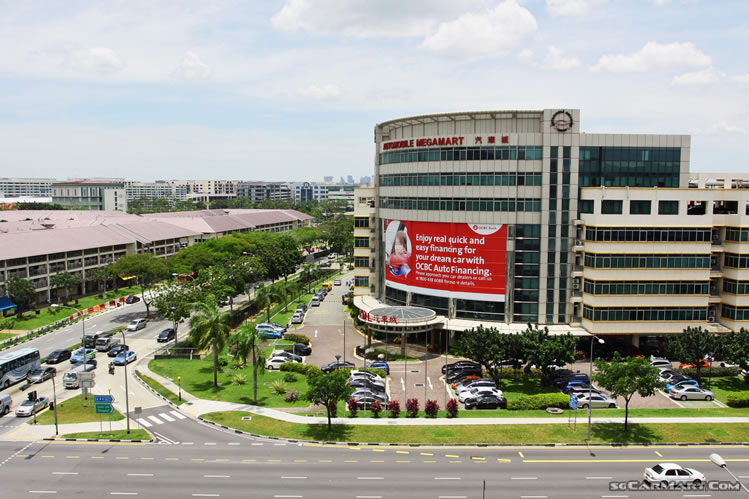
 https://www.straitstimes.com/singapore/transport/car-dealers-in-ubi-motor-belt-seek-extension-to-expiring-leases Leases for several car showrooms in the Kampong Ubi "motor belt" will be expiring from next year, and companies are scrambling for extensions. Among the half a dozen or so soon-to-expire leases is one held by Automobile Megamart, which operates an eight-storey complex housing more than 100 new car companies, used car dealerships and parallel importers. Its 30-year lease runs out in 2026, and stakeholders have set in motion an appeal for an extension. Another affected property is the Opel showroom held by the Alpine group. Like all others interviewed, Alpine Group managing director Albert Pang said he intends to apply for an extension. "After Leng Kee, this is Singapore's motor belt," Mr Pang said, referring to the Leng Kee-Alexandra Road car showroom district. "Of course we want to stay if we can." Directly opposite his showroom is Sime Darby's Performance Premium Selection used car complex, which recently had its lease extended till 2040.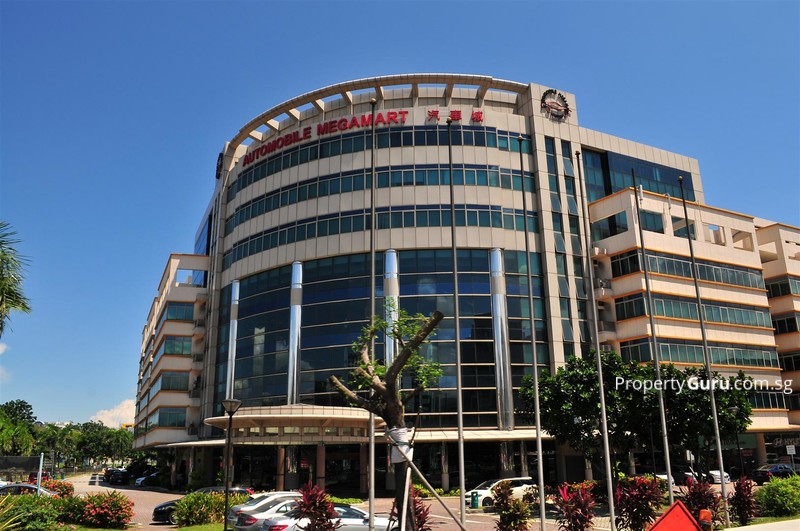
- 62 replies
-
- 3
-
-
- ubi
- car showroom
- (and 5 more)
-
Long time since I last start an informative thread. As what @BanCoe has said about me, I eat, sleep, shit also thing about cars and through surfing the web, I have came across some brands which I have never heard of... Hispano-Suiza (founded on June 14, 1904) Hispano-Suiza (Spanish for 'Spanish-Swiss') is a Spanish automotive–engineering company. Hispano-Suiza was founded in 1904 as an automobile manufacturer which eventually had several factories in Spain and France producing luxury cars, aircraft engines, trucks and weapons . In 1923, its French luxury car arm became a semi-autonomous partnership with the Spanish parent company. In 1946, the Spanish parent company sold all of its Spanish automotive assets to Enasa, a Spanish state-owned vehicle manufacturer while the French arm continued as an independent aviation engine and components manufacturer under the Hispano-Suiza name. In 1968, the French arm was taken over by the aerospace company Snecma, now part of the French Safran Group, and the Spanish Peralada Group (owned by the Suqué Mateu family). These were some of the cars produced by them, which look luxurious, sporty or even futuristic during their time (1920s - 1930s). 1922 Hispano-Suiza H6 Coupe-Chauffeur Landaulet 1922 Hispano-Suiza H6B Labourdette Skiff 1923 Hispano-Suiza H6B Cabriolet DeVille 1924 Hispano-Suiza H6B Coupe de Ville por Saoutchik 1924 Hispano-Suiza H6С Type Sports 1924 Hispano-Suiza H6C Tulipwood Torpedo 1925 Hispano-Suiza H6B Transformable Cabriolet 1938 Hispano-Suiza H6C Dubonnet Xenia por Saoutchik
- 20 replies
-
- 15
-
-
- automotive
- brand
- (and 2 more)
-
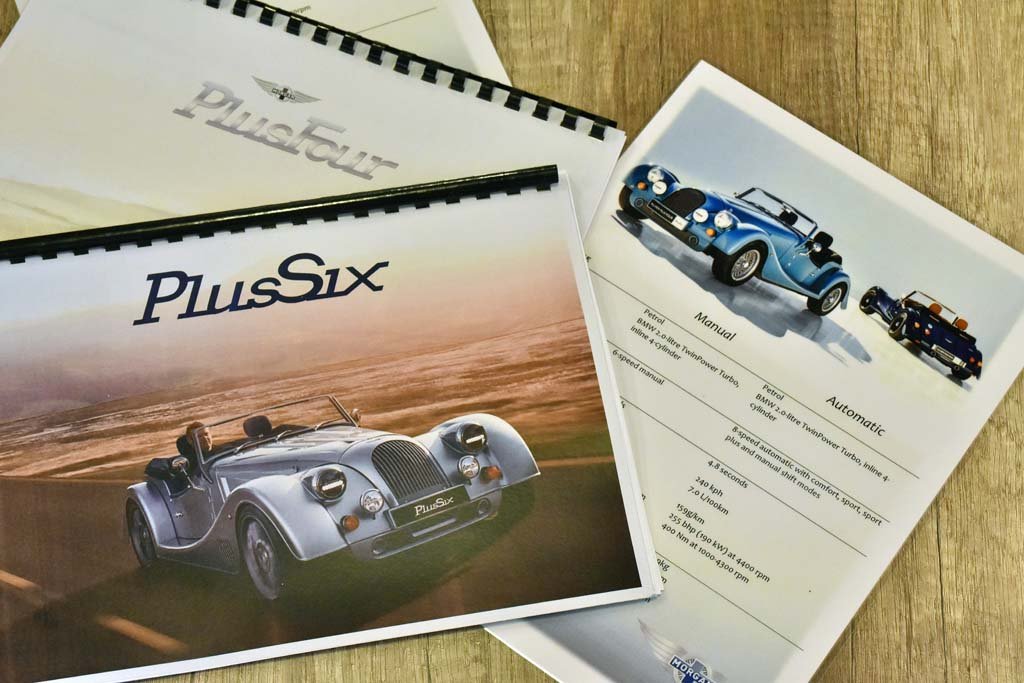
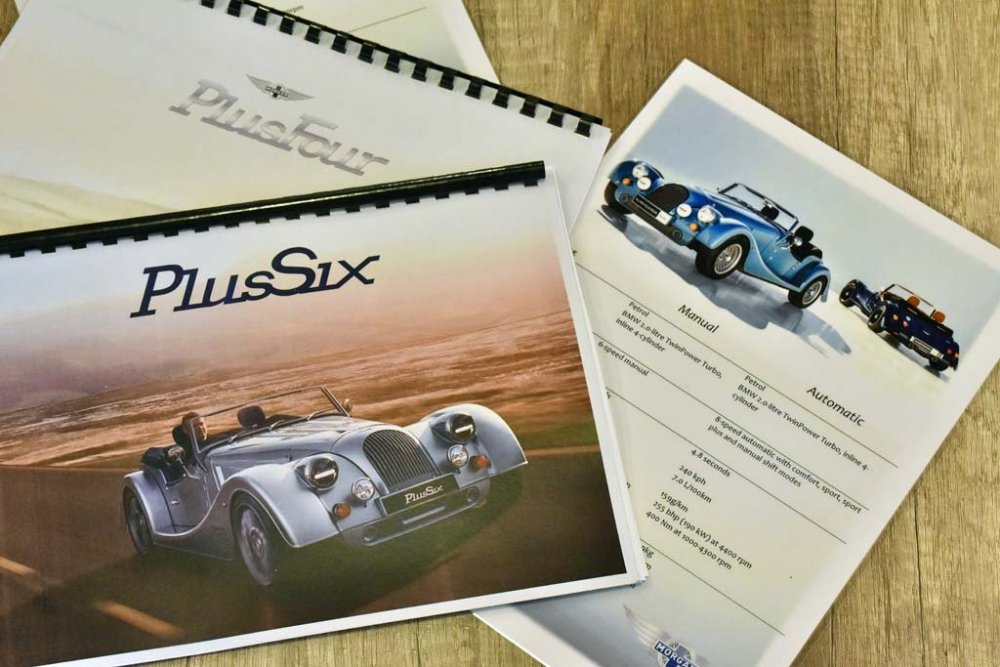
Morgan is a British automobile maker that makes some very unique, vintage-inspired cars. It’s also very likely that many readers would have never heard of them. But you can now buy them in Singapore as the cars are now being sold here by NB Auto, from a modest facility tucked away in Tuas, along Benoi Crescent. We spoke to the firm’s director, Douglas Ng, on why there was a decision to become the dealership for such a niche product. He explains that his family had always held great enthusiasm for old-school British sports cars, and he was also heavily influenced by his father in this aspect. When the idea of actually importing and selling Morgans here came up, the family decided that it was worth a shot as an additional facet of a number of other businesses that they already manage. “Before this, others have imported Morgans into Singapore on their own before, and every one of them was by a car enthusiast who wanted something special in their collection,” Ng tells us. Yet the process of getting them in officially was a complicated affair, not helped that it was all conducted online as it happened while most of the world, including Singapore, was in lockdown because of the Covid-19 pandemic. Weeks worth of video calls to England and plenty of discussions with homologation officers from Singapore’s Land Transport Authority were what Douglas had to deal with for months to get all the official paperwork approved. “As you can see, Morgan cars are quite unique, so it’s hard to apply the LTA’s standard assessment criteria to them. Some of the brand’s models cannot be homologated here because they stray too far outside the rule,” Ng explains. “For example, the famous Morgan Three Wheeler, powered by a front-mounted Harley-Davidson engine, will not pass muster here because it has no doors, and is technically a motorcycle rather than a four-wheeled car. Yet thankfully the operations guys at the LTA are also real car enthusiasts that took a real interest in making it work for the models that can be imported here.” Currently, Morgan only has two models in its catalog that can legally be sold in Singapore: the Plus Six and Plus Four, two identically-bodied cars with different engines. The cars are still made in Malvern, Worchestershire in England, and the company has a history going back more than a century. The chassis may be all metal, but on top of that the cabin is built on a painted ash-wood frame for that authentic vintage feel. The two drop top automobiles are a throwback to an earlier age of motoring, with nearly no storage space, a manually folding roof, and doors so small that you don’t really expect them to offer much protection from side impacts. There’s actually no boot space in the Plus Six and Plus Four at all. A round hatch at the rear looks like it could cover a cargo space, but it’s actually the access panel for rear axle maintenance. The cars do fully modern drivetrains however. The Plus Six uses the engine and transmission from the BMW Z4 M40i. The 3.0-litre turbo inline six cylinder engine with 335 horsepower sends power to the rear wheels through a BMW automatic transmission with no traction control or electronic stability assistance. Meaning that if the car skids or spins its wheels from a poor launch, it’s all up to the driver to rescue it. The whole car weighs just 1,075kg. In other words, it’s a very light car with a very powerful engine, and can be yours from S$415,888, before COE. The identically shaped Plus Four is a little less scary, with a 2.0-litre, four-cylinder turbo BMW engine with 255 horsepower in the front. The manual version goes for S$325,888 before COE, while the automatic costs an extra S$10k. “We’re not big name car dealers,” says Ng. “While it’s easy to set up shop along Leng Kee Road and hope for customers to walk in, the nature of a Morgan and the kind of cliente it attracts wouldn’t allow that business strategy to make any sense at all, and we’re taking baby steps as we move along.” NB Auto currently has one Morgan Plus Six already on display, with the Plus Four expected to make its way here soon. The facility is also able to offer full servicing, and Ng says that the Morgan HQ in England has been very supportive in helping them to establish the place. “As they are not a big company themselves, getting parts flown over or documentation endorsed is a surprisingly quick process, as they have nearly no hoops to jump through or complicated supply chain issues that larger carmakers may face.” For now though, Ng reveals that HQ has given him a “modest sales target” to meet for the first year of operation. It’s not a car for everyone, but there is enough interest amongst the well-heeled car nuts here, as well as in neighbouring countries, that are interested, and that should give some legs to the enterprise for some time yet. https://www.carbuyer.com.sg/morgan-cars-singapore-price/ richard hammond has one too the morgan plus 6 the dealership reminds me of perodua albeit a more atas one niche brand bt we have enough rich ppl in sg for it to succeed din even know we have morgans in sg... none in the used car pages morgan plus 4 fancy cars but not so suitable for us average drivers thou i reckon if u collect rolexes then u have space in ur garage for this




- 19 replies
-
- 6
-
-
.png)
-
- morgan
- automotive
- (and 2 more)
-
How many of you actually pay attention to automotive brand or their logo, and are curious how a car model get it name? The key objective of this thread is to allow us to share what we know about a particular brand, model and/or it logo. Let me start with the follow brands. More to be added. Alfa Romeo I own up first, I didn't know that the word ALFA is actually an abbreviation, which stand for Anonima Lombarda Fabbrica Automobili, whereas ROMEO is the name of a Neapolitan Entrepreneur, Nicola Romeo (who take control of the company in 1915), instead of it founder, Alexandre Darracq. I will skip the history part, as I don't wish you to fall asleep (as I normally do during history lesson ). But the most interesting part is with it logo, and again I have to admit, I have all the while thought that the snake-like creature on the right side of the logo is spitting fire, while the "fire" it is actually a human at the mouth of the "snake"! So have anyone managed to guess how the logo come about? Why is something so cruel being featured on the company logo? OK, there is 2 version of the story actually. Version #1: From Wikipedia Alfa Romeo's logo incorporates two heraldic devices traditionally associated with its birthplace, the city of Milan: a red cross, from the emblem of Milan, and the biscione (a heraldic charge showing on argent an azure serpent in the act of consuming a human; usually a child and sometimes described as a Moor or an Ottoman Turk), a crowned viper swallowing a Moor—emblem of the House of Visconti, rulers of the city in the 14th century. Version #2: From Alfa Romeo On the left: the red cross on white field is the symbol of Milan, the hometown of Alfa Romeo. On the right: the symbol of one of the most important families in the history of Milan (and Italy), the Visconti family – the family that ruled Milan. There are a lot of legends about the origins of this heraldic symbol, representing a mythological animal with a human in his mouth (some believe it to be a dragon, but most likely a snake). During the time of the crusades, Otone Visconti , the founder of Visconti Family and a knight, fought against a noble Saracen knight (nomad from the Syrian Desert that bordered the Roman Empire). Otone beat the Saracen knight and, following the tradition, took the symbols the Saracen carried on his shield: a snake with a human in his mouth. At first glance, it looks like the snake is eating the human. Instead, the human is coming out of the snake a "new man," purified and renewed. The meaning: The snake is a circular animal (a snake can assume a circular position) and is an animal of the changing – able to change his skin regularly and totally renew or rebirth himself. BMW OK, I believe most, if not all MCFer knew that BMW stands for Bavarian Motor Works (Bayerische Motoren Werke in German). But how does the blue propeller styled logo come about? Although some associated it with a spinning aircraft propeller (BMW was once in aviation business too - producing aircraft engine under Rapp Motorenwerke), it is actually derived from the logo of Rapp Motorenwerke, from which the BMW company grew, whereas blue and white is the official colors of the Bavarian flag.
- 69 replies
-
- 21
-
-
On and off, we will come across news, photo or video footage of driver(s) performing stupid stunt / act with their ride(s). Let me start off with these 3 cases reported recently (overseas). Autonomous car from Ford? Not yet... Residents of Arlington, Virginia, were stunned to see an unmarked, gray Ford Transit van tooling around town without a human driver behind the wheel. According to ARLnow, the vehicle was spotted driving through the Courthouse and Clarendon neighborhoods with nary a soul in the driver’s seat. Some speculated the van was part of Virginia Tech’s recently approved autonomous driving tests... ... A few days later, NBC 4’s transportation reporter Adam Tuss spied the driverless van again at a stop sign. And when he approached, Tuss noticed the driver’s “seat” had two hands and legs sticking out from it. Tuss tried to get the costumed driver to talk, but they sped off, running a red light in the process. A Cage to Protect Your Rolls-Royce, Will it Work? A rich guy buys $645,000 (Australian dollars) Rolls-Royce a few weeks ago, and then decides the parking structure of the luxury apartment building just wasn’t secure enough to safeguard his Roller. The Rolls owner had a custom cage built surrounding his parking space to protect the Rolls-Royce, sort of like how you’d protect a $500,000 labradoodle. Unfortunately, that very cage, built with the sole purpose to protect the car, also proved to be what caused a good amount of damage to the car, since the owner soon found that navigating in and out of the cage was a challenge beyond his skills, and ended up driving into one of the cage’s support poles and walls, causing a surprising amount of damage to the car. The steering was damaged along with a good bit of bodywork on the side and rear, plus the loss of a marker light that probably costs more than most of the objects you and I interact with every day. Ouch... ... Lessons learnt: Cars aren’t meant to be kept in cages. Especially if you’re pretty shitty at parking as it is. Porsche Pay For Owners Sunglasses? Lawsuits and settlements are usually pretty straight forward but one involving Porsche is anything but normal. A class action lawsuit has resulted in the company being held responsible for compensating owners for sunglasses - yes, sunglasses. According to the settlement, customers who purchased or leased any Porsche model between 2007–2016 are eligible to make a claim. However, the vehicle must have been equipped with a Cognac, Luxor Beige, Natural Brown, Platinum Grey, or Sand Beige dashboard. If you're one of the handful of Porsche owners who fit that description, you could receive up to $175 in compensation. Affected owners can check out DashboardGlareClassAction.com for more information but claims for sunglasses need to be submitted by September 21st. Customers who made other modifications to reduce the glare coming off their dashboards will have until June 25th of next year to submit a claim. The whole issue sounds ridiculous but the original lawsuit claimed the glare was a safety issue. Porsche objected to this notion but eventually decided a lengthy court battle wasn't worth the effort. In case you were wonder, the lawyers for the plaintiffs will apparently receive $790,000 in attorneys’ fees and $50,000 for expenses. That should be more than enough to buy a few Porsches and their own pair of sunglasses. Penny wise, pound foolish??
- 81 replies
-
- 13
-
-
-
Anyone know of job lobangs in automotive industry?
Nick2342 posted a topic in General Car Discussion
Been sending out application for half a yr on jobstreet and going down to companies to ask but still no luck.. Had to pause and to withdraw from interviews for a while as my hearing further detoriated badly suddenly (had to see doc) but its fine now. Tried to contact the interviewers from before but the position i guess taken alr... Really kind of desperate now as need the $ to support family in the meantime. Thanks in advance.. -
This thread served to provide a central reference for vehicle recall issued by automotive manufacturer. For a start, I will start with something light (but still along the line hor). Case #1: Lamborghini Centenario It doesn’t matter how rare or expensive your car is, there is always a chance it could be recalled. The Lamborghini Centenario was developed to pay homage to the 100th birthday of Lamborghini’s founder. It’s based on the Aventador and is powered by a naturally aspirated V12 engine, generating 770 horsepower. Only 40 units total are out in the wild – 20 coupes and 20 roadsters – and apparently at least 11 of them are in the U.S. The 2017 Lamborghini Centenario is being recalled due to an incorrect certification label, which may have an incorrect weight limit. This could cause the vehicles to potentially be overloaded, increasing the risk of suspension or tire failure, which could increase the risk of a crash. A total of 11 units are affected by the recall, which includes both the Centenario coupe and roadster models. The Italian automaker will begin notifying owners on how to get the correct label fitted to their exotic. Err... how much could one possibly overload a 2 seater sport car? Come on, no 1 owner will likely be using it to say transport heavy items, of for the matter of fact, use it as a cargo mover, so how can it get overloaded to the extend of having it suspension damaged?? Well, I guess that is a high SES question that low SES people like me cannot foresee. Case #2: Rolls-Royce Ghost Amid a seemingly endless run of multimillion-vehicle recalls by volume carmakers, Rolls-Royce looks to have joined an elite group for making one of the smallest. The British-based luxury carmaker was forced to issue a safety recall notice in the US because of a problem with the side-impact airbags on the 2015 model of its best-selling Rolls-Royce Ghost. The number of cars affected — one. The company, which is owned by Germany’s BMW, told the Financial Times that the issue “was due to the incorrect labelling on one of the airbags” that had been identified during the customer pre-delivery check by Rolls-Royce. The company added that at no point was there any question of a safety risk. “It is a good way of demonstrating Rolls-Royce’s attention to detail,” it said. The carmaker, which sold a little more than 4,000 vehicles last year, said the car with the fault had left its factory in Goodwood, West Sussex, in January 2014 but its North American owner had not yet taken delivery. “The affected vehicle has thorax air bags fitted to both front seats that may fail to meet the side impact performance requirements for the front seat occupants,” according to the recall notice, issued by BMW North America, through the US Department of Transportation’s National Highway Traffic Safety Administration. Rolls-Royce did not confirm which company supplied the airbags. Although the NHTSA did not immediately respond to a request for comment, subsequent data provided by the agency confirmed that among carmakers a single vehicle recall is rare. It is label again... Now, since the recall involved only 1 car, and that car was not even delivered to the customer, is there a need to issue a statement of recall for it? It is more for marketing purpose if you ask me, or maybe again, a high SES problem... ... OK, back to the topic, and on a more serious note, here are some information relating to vehicle recall, which was posted on onemotoring.com.sg At a glance - When a vehicle is recalled, motor dealers/ importers are required to notify LTA and the owners of affected vehicles. - Your motor dealer/ importer will then arrange for rectification works, if your vehicle is affected. - With the Electronic Vehicle Recall System (EVRS) you can now check the details of the recalls, and determine if your vehicle is affected. Understanding vehicle recall Your vehicle may be recalled if the manufacturer finds defects that need to be rectified. Your motor dealer or importer is responsible for informing you as well as LTA. They must also make arrangements to rectify the affected vehicles. If your vehicle is affected, your motor dealer or importer will notify and arrange rectification works directly with you. Check with your motor dealer for the latest information on vehicle recall. Electronic Vehicle Recall System (EVRS) When LTA is notified by a motor dealer or importer about any vehicle recall, the information is updated into the Electronic Vehicle Recall System (EVRS). With the EVRS, you can check: - If your vehicle is recalled (Enquiry on Vehicle Recall - Vehicle Specific) - The list of vehicles being recalled (Enquiry on Vehicle Recall - Submitted for Last 6 Months) - The status of rectification works for your recalled vehicle (Enquiry on Vehicle Recall - Vehicle Specific)
- 33 replies
-
- 7
-
-
- car
- automotive
- (and 4 more)
-
Saw this link in sgcarmart and STCars. http://sphclass.com.sg/carambassador/ SPH is looking for Car ambassador for this year Carnival. They have renamed it as "The Cars@Expo". Previously known as CATS Carnival.
- 1,242 replies
-
- 2
-
-
- car carnival
- cars
- (and 8 more)
-
How does GPS is work in cars if internet system is not working. And where to buy and install GPS system online.
- 55 replies
-
- 3
-
-
- automotive
- cars
- (and 4 more)
-
Hey, street-smart drivers! Test yourself in Singapore's favourite automotive telematch, Torque On The Move! Beat the rest and win the first prize worth over $4500! We have many more attractive gifts and prizes to be won! Happening on 27 August 2016, sign up with a friend and enjoy loads of fun, challenges and lots of driving. Our early bird registration discount is ending on July 17, 2016 with limited slots left, so hurry and register now! Registration opens now, sign up at www.torque.com.sg/totm16