Search the Community
Showing results for tags 'singapore'.
-
Has anybody feel that yesterday(Mon 8-Dec-2008) was indeed very cold? From my flat i have to wear sweater in the morning, i am jsut wondering whether it was below the official announced 24 deg C, anyone felt the same?
-
https://asia.nikkei.com/Business/Energy/Surging-fuel-prices-shake-Singapore-s-electricity-market?utm_campaign=GL_asia_daily&utm_medium=email&utm_source=NA_newsletter&utm_content=article_link&del_type=1&pub_date=20211021190000&seq_num=11&si=44594 Surging fuel prices shake Singapore's electricity market Gas-reliant country urges power companies to 'at least meet' retail demand Singapore's heavy reliance on imported gas has left the city-state vulnerable to surging energy prices. © AP KENTARO IWAMOTO and DYLAN LOH, Nikkei staff writersOctober 21, 2021 14:34 JST SINGAPORE -- Singapore is taking "extraordinary" steps to secure energy supplies as rising fuel prices hit the import-reliant country's electricity market, with three retail suppliers in just over a week announcing they will halt services. While the government insists energy supplies remain sufficient, its moves come amid global concerns over tight electricity supplies that threaten both businesses and consumers. On Tuesday, Singapore's Energy Market Authority said it will make government fuel reserves available to power companies in the event gas supplies are affected or there is a need to ensure reliable electricity supply. It also asked the companies to secure enough fuel to "at least meet the demands of customers of their retail arms." "These pre-emptive measures are extraordinary but necessary to secure our fuel and electricity supply," the authority explained in a statement. While surging fuel prices have been seen worldwide, Singapore is in a unique position as about 95% of its electricity is generated from imported natural gas. This gas is delivered via pipeline from neighboring Indonesia and Malaysia or shipped in liquefied form from other gas exporters. Over the past months, spot liquified natural gas prices rose sharply due to increased demand from China and elsewhere while gas and coal production dropped. Meanwhile, gas supplies via pipeline to Singapore have been affected by upstream production issues in an Indonesian gas field, the EMA said, with reduced output expected to last until the end of the year. Singapore generates nearly 95% of its electricity using imported gas. © Reuters "The Singapore power crunch is certainly alarming," said Ken Lee, a senior analyst at energy research company Wood Mackenzie, pointing out that wholesale power prices averaged $115 Singapore dollars ($85) per megawatt-hour from January to September, but shot up to SG$635 this month as of Oct. 19. Lee said that higher power demand has also contributed to the price spike, noting that Singapore consumed about 5% more electricity this year compared with the same period last year due to a rebound from slow economic activity last year. Disruption in the local market is forcing some electricity retailers that had offered cheaper plans for households to pull out. Earlier this week, Best Electricity Supply, which entered the market in 2015, announced it would exit the business on Thursday, citing "unexpected volatile conditions in the energy market." The company became the third retailer to pull out of the local electricity market in just over a week. "Retailers, especially independent retailers who do not own physical power plants, have suffered the most," Wood Mackenzie's Lee explained. "Such retailers were unable to manage power supply price risk as many of them have entered into fixed-price retail contracts with end-users." One longer-term question is how the power crunch might affect local businesses. Singapore's core manufacturing sectors include chemicals and electronics, both of which consume large amounts of electricity. "We have not heard anything with regards to industries and manufacturing being impacted. However, the industries that have not signed fixed-price retail contracts will very likely be impacted as they won't be shielded from the current price spikes," Lee said. Some businesses are already bracing for possible impacts. Since July, Singapore medical equipment maker Racer Technology has seen its power consumption expenses creep up. CEO Willy Koh told Nikkei Asia that electricity costs have increased by about 30% across the company's factories in the city-state amid the current energy crunch. "Right now we have a labor shortage, then we have power [costs] going up, so we are very worried in the manufacturing line," he said, referring to a shortage of workers due to the COVID-19 pandemic. The cost of production is "getting higher and higher." Koh said he is looking to lock in energy contracts to secure power supplies at a fixed rate but only once electricity costs come down from their current highs. French energy technology provider Schneider Electric is advising its corporate clients in Singapore to use their power more efficiently. "Our customers are not spared the impact of the current energy crunch and their pain points are the potentially unstable supply, unpredictable [and] increasing energy costs, and how to increase their resiliency in case of a power outage or reduction," Yoon Young Kim, Schneider's regional president for Singapore, Malaysia and Brunei, told Nikkei. As far as households are concerned, electricity tariffs of state-owned Singapore Power are set at 24.11 Singapore cents per kilowatt-hour for the October-December quarter, up 12.5% from a year earlier. The government has urged residents to conserve electricity over the coming months, but electricity consumption is crucial for air conditioning in the tropical nation, especially with more people working from home. Higher utility bills could potentially cool consumption sentiment, which in turn would weigh on the economy as it begins to recover from the COVID-19 pandemic.
-
 SINGAPORE – High certificate of entitlement prices are not quelling motor dealers’ appetite to grow their portfolios. Premium Automobiles, the retail dealer for Audi, has just been appointed the distributor for Zeekr, a luxury electric vehicle (EV) brand from Chinese automotive giant Geely. The agreement was signed in late December. The showroom for the brand will be built in the Leng Kee Road area in the first half of the year, Premium Automobiles said in a statement sent to The Straits Times late on Dec 28. The service facility will be in the Ubi industrial area. When asked, Premium Automobiles said the details are still being finalised for their exact locations, but added that these will be dedicated facilities that will not be shared with Audi cars, which the company will continue to sell. Zeekr will be launched here with two models – 009, which is a multipurpose vehicle (MPV), and X, a sports utility vehicle (SUV). Deliveries will begin in the third quarter of 2024. The 009 MPV is over 5.2m long, which makes the six-seater bigger than the latest generation Toyota Alphard, which measures just under 5m. Premium Automobiles did not confirm the exact specifications of the models, but the 009 MPV has a promised range of 800km on a full charge. Its dual motor set-up offers maximum power of 400 kilowatts, enabling it to sprint from 0kmh to 100kmh in 4.5 seconds, and making it the world’s fastest MPV. The X SUV is about the same size as the Nissan Qashqai at 4.4m long. Two versions are offered in the other markets where Zeekr is already operating. One has a 200kW motor that powers the rear wheels and boasts a range of up to 440km and the other is a zippier 315kW dual-motor all-wheel-drive version that can cover 400km on a single charge. Singapore, Hong Kong and Macau will be the first places where Zeekr right-hand drive cars are available. https://www.straitstimes.com/singapore/transport/chinese-ev-maker-zeekr-s-cars-to-be-sold-in-singapore-with-deliveries-from-q3-2024
 -
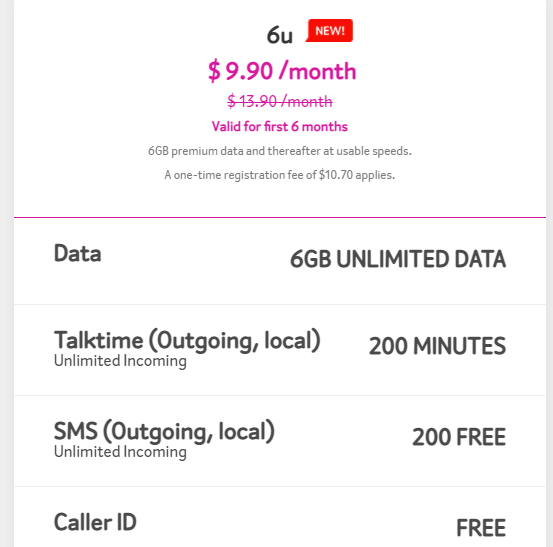
Starting a thread to consolidate the sharing of SIM-only plan experiences and lobangs. Still 1 month+ left on my current M1 SIM-only contract and looking at what other players (telco and MVNO) are offering. Came across Zero1's 6u plan which seems pretty competitive, so putting this plan on my radar screen.
-
Singapore wants top foreign talent to avoid being left behind https://sg.finance.yahoo.com/news/singapore-wants-top-foreign-talent-062349407.html?fbclid=IwAR0zS_Nr17XUh69xca_hVr26IfTiYN15fZEbToSIWP-CeVFjW7j2-BJBZ6E Bloomberg Sun, 21 August 2022 at 2:23 pm A points-based system for allowing in expats is set to kick in next year. Singapore wants to lure more top talent to its shores, joining Germany and the UK in the contest for cosmopolitan professionals. “In this global contest for talent, Singapore cannot afford to be creamed off, or left behind,” Prime Minister Lee Hsien Loong said in his annual National Day Rally address Sunday. “This is an age where talent makes all the difference to a nation’s success,” he said, adding details will be released soon. The business-friendly Southeast Asian city has long been a magnet for international talent and the rich. But worries among locals about the large numbers of foreigners and stringent Covid rules led to the largest decline in white-collar expats in over a decade last year. Meanwhile, countries including the UAE, the UK and Germany rolled out plans to attract talent. And mobile, young professionals are putting countries from Curacao to Cape Verde on their horizon. Lee signalled that the new initiatives will especially target “sectors with good potential” beyond technology, where there are already existing plans to keep talent. He also acknowledged Singaporeans are “rightly concerned” about the large numbers of foreigners in the city. “While we manage the overall population of foreign professionals here, we must not stop seeking out top talent who can contribute to our Singapore Story,” Lee said. “And every Singaporean will benefit from our progress and success.” A points-based system for allowing in expats is set to kick in next year. Singapore offers permanent residency status to entrepreneurs and investors who “intend to drive their businesses and investment growth from Singapore” via a Global Investor Programme. Another plan launched in 2021 offered 500 visas for tech-related roles.

-
I decided to create a separate thread for AI. Things are really rapidly changing. AI to replace sales staff that are in a revolving door situation. Seems like this company has hit upon a niche that larger companies are very interested in. Not all of these ideas will work out. But you can bet a significant portion of desk/admin jobs will slowly be redundant over the next 10-15 years. Maybe by then, some of us would be working alongside AIs to do some of the routine tasks. https://techcrunch.com/2017/04/09/saleswhale-seed-funding/
- 758 replies
-
- 2
-

-
- artificial intelligence
- singapore
- (and 3 more)
-
I'm beginning this thread so I can continue to discuss matters on a topic that interests me. I know there is a thread with similar content, but it's become a bit toxic, so if the mods don't mind, I'll start one here? Otherwise go ahead and merge. Basically we have an economic crisis on us, and internationally things are not doing well either. But in spite of this, property prices seem to be headed northwards and the agents will want to tell you, they won't drop. But job losses are on the way, and the capital appreciation on property isn't what it used to be and despite what agents try to tout, one must consider all factors rationally, and see if your money is better served elsewhere. Eg a good benchmark will be the 2.5% that CPF offers. But property remains enticing because it takes a lot more effort and investigation to find alternatives and not all Singaporeans are that hardworking or familiar with the investment instruments available. I wonder what the rest think? Cheers
-
Personally, the mindset of the national is if it is FREE we will keep it hence, i dont envisage a possible reduction in our NS duration what i am very worried about is the world is moving so very fast we already had been disadvantaged by NS, resulting in being 2 or 2 1/2 years behind our girls and our foreign classmates in the future it will be worse for our children even 6 months can mean a break or score the economic cycle also is shorter hence, i am just worried about our children am i worrying too much for our kids or should i just relax TAIPEI
-
Malaysia’s TB outbreak: 503 new cases recorded https://www.straitstimes.com/asia/se-asia/malaysias-tb-outbreak-503-new-cases-recorded KUALA LUMPUR - A total of 503 new tuberculosis (TB) cases were reported nationwide during the fifth epidemiological week. In a statement issued on Feb 15, the Health Ministry said the latest detections brought the cumulative number of TB cases to 2,571 across the country. The breakdown of cases shows that Sabah recorded the highest number with 614 cases, accounting for 23.88 per cent of the total reported. This was followed by Selangor with 476 cases (18.51 per cent) and Sarawak with 257 cases (10.00 per cent). Johor ranked next with 233 cases (9.06 per cent), while the federal territories of Kuala Lumpur and Putrajaya recorded 202 cases (7.86 per cent). Penang registered 148 cases (5.76 per cent), followed by Kedah with 144 cases (5.60 per cent) and Perak with 127 cases (4.94 per cent). Lower figures were reported in the remaining states, including Kelantan with 96 cases (3.73 per cent), Pahang with 81 cases (3.15 per cent), Terengganu with 60 cases (2.33 per cent) and Negeri Sembilan, which recorded 58 cases (2.26 per cent). Meanwhile, Melaka recorded 42 cases (1.63 per cent), Perlis reported 17 cases (0.66 per cent), and the Federal Territory of Labuan registered the lowest number with 16 cases, representing 0.62 per cent of the total. The statement said in preparation for the upcoming festive season and extended public holidays, the public has been advised to remain vigilant in preventing and controlling TB transmission. “Preventive measures include practising proper cough and sneeze etiquette and wearing face masks in crowded areas. “Individuals experiencing symptoms such as a persistent cough, fever, loss of appetite or unexplained weight loss have been urged to seek immediate screening at the nearest healthcare facility,” it said. The statement emphasised that these measures are not only based on principles of personal risk assessment but also constitute an important social responsibility to protect oneself, family members and the wider community from the risk of infectious disease transmission.

- 38 replies
-
- 6
-
-

-
- tuberculosis
- outbreak
- (and 10 more)
-
 Source: https://mustsharenews.com/singapore-nuclear-energy-2050/ Singapore Could Potentially Use Nuclear Energy By 2050 When the topic of nuclear energy gets brought up, some might instinctively think of the dangers associated with the alternate energy source. However, nuclear energy can also be an efficient power source. On Tuesday (22 Mar), the Energy 2050 Committee published a report showing that Singapore could tap into nuclear energy in the coming decades. With recent advancements, nuclear technology has apparently become safer and more reliable. However, more research and development are needed to determine if it’s indeed viable for Singapore. Nuclear energy could supply 10% of Singapore’s needs by 2050 According to The Straits Times (ST), a report commissioned by the Energy Market Authority (EMA) concluded that about 10% of Singapore’s energy demand could be supplied by nuclear energy by 2050. While Singaporeans might understandably be worried about nuclear energy, the Energy 2050 Committee said advancements in the field have made the alternative power source safer than before. The report projected 3 uncertain geopolitical scenarios in 2050: Clean Energy Renaissance Climate Action Bloc Emergent Technology Trailblazer S’pore can determine if nuclear energy is viable by 2040s In the 3rd scenario, the world is fragmented and technology advancements will delay but eventually arrive. Singapore will be able to deploy low-carbon alternatives, such as nuclear energy, into its energy mix. The report stated that a fragmented geopolitical situation means that countries would find it harder to collaborate and achieve their climate targets. This would limit electricity imports in Singapore’s energy mix. This is as opposed to the other 2 scenarios, where electricity imports would contribute a significant portion of Singapore’s energy needs. Scenario 1: Clean Energy Renaissance Scenario 2: Climate Action Bloc Nevertheless, in all 3 scenarios, electricity imports, hydrogen, solar, and energy storage systems will be important. The Straits Times (ST) reported that in 2014, Singapore allocated $63 million to fund research and education in nuclear safety, engineering, and science. By the 2040s, Singapore would likely be able to determine if nuclear energy is viable. If so, we can start developing domestic generation capacities. Could contribute greatly to our climate efforts Once associated with danger and volatility, we are glad that modern developments have made nuclear energy much safer and hopefully more viable. While it might sound ambitious for Singapore to incorporate nuclear energy, it could contribute greatly to our nation’s climate efforts.
 -
Boom and doom? Singapore to launch vaccinated travel lanes with India, Indonesia and Saudi Arabia SINGAPORE: Singapore will extend its vaccinated travel lane (VTL) scheme to more countries starting from Nov 29, according to the Ministry of Health (MOH) on Monday (Nov 15). The country intends to launch VTLs with India and Indonesia from Nov 29, and with Qatar, Saudi Arabia and the United Arab Emirates (UAE) from Dec 6.
-
https://www.channelnewsasia.com/news/singapore/income-inequality-gini-household-singapore-lowest-2019-12453450 can u spot the “fake” news by our government? How much did our median income increase by?
-
 https://www.channelnewsasia.com/singapore/gen-z-young-workers-job-hop-career-switch-5217766 A CNA survey finds that on average, Singapore’s Gen Z workers prefer to stay in a job for 2.9 years – the shortest duration among their peers in Asia. SINGAPORE: When Ms Kumar, 27, told her parents she planned to leave her first job, her mother was taken aback and questioned her lack of “loyalty" to the company. Ms Kumar, who preferred to be known by her surname only, found this sentiment “quite ridiculous”. She left her job as a university administrative executive early last year. “You have to be loyal to yourself ... what you deserve and how you want to improve. If the company’s not serving you, it’s okay to leave,” she told CNA. Her point of view appears to be shared by working-age peers in Gen Z – loosely defined as the generation born from 1997 to 2012, and aged 13 to 28 this year. In a survey by CNA's Money Mind programme, Gen Z workers in Singapore aged 21 to 28 reported the shortest mean optimum period – 2.9 years – for staying in a job, compared to their counterparts in Asian countries. It was 3.5 years for workers in Indonesia, Thailand and the Philippines; 3.7 in Malaysia; and the longest of 4.6 in China. Staying for three to four years was the most popular option for Gen Z workers in most countries, including Singapore. China and the Philippines bucked the trend, with most choosing to stay for five years or more. In Singapore, 37 per cent of Gen Z workers would choose to stay for a shorter period of one to two years. This was higher than all other countries, particularly China, where just 5 per cent chose this option. Out of the 508 respondents in Singapore, only 14 per cent chose five years or more as the optimum duration in a job. This was by far the lowest proportion among countries surveyed. Gen Z workers have a strong desire for higher salaries and career growth, and changing jobs every two to three years is seen as an effective way to develop their careers, said Mr David Blasco, country director at recruiter Randstad Singapore. But individual motivations aside, structural reasons may also be a factor. “The pandemic and economic instability, marked by a surge in ‘revenge hiring’ quickly followed by global restructuring and a slowing economy, have made traditional job security feel less attainable,” said Mr Blasco. “As a result, Gen Z’s tendency to job-hop is better understood as a rational response to a more volatile market, not simply a lack of commitment.” NOT RESTING ON LAURELS Ms Kumar, now a programme executive in a non-profit, cited job satisfaction and personal and career development as her main reasons for switching both job and industry. The Money Mind survey found that in Singapore, work-life balance (65 per cent), high wages (62 per cent) and flexible work arrangements (53 per cent) were Gen Z workers’ top reasons for staying in a job. On the flip side, work-related stress (48 per cent), lack of career advancement (44 per cent) and unhappiness with a superior or colleague (44 per cent) were their top reasons for quitting in Singapore. Other Gen Z workers interviewed by CNA cited similar motivations as Ms Kumar. Mr Heng T J, 28, a public servant in healthcare who asked to be identified by his initials, has changed jobs three times in five years. Since he started working in 2020, his longest role has been for about two years in a university, while his shortest stint has been around half a year in a bank. Mr Heng said he did not intentionally set out to change jobs so frequently. But in the early stages of his career, learning is a priority. “(After) two, two-and-a-half years, if I’m not learning in my role, I guess the hesitation to leave will not be that high,” he said. “I don’t think I should be resting on my laurels.” His reasons for switching jobs include being a poor fit with the job and workplace culture; lack of growth potential; and dissatisfaction at his scope of work changing after a company reorganisation. Another Gen Z worker, a 29-year-old advertising and public relations account manager who did not want to be named for this story, has worked in four agencies since 2020. She stayed for about a year in each position. “At each step, I already know what exactly I want to do, and what I want to achieve out of this agency,” she said. For example, her goal could be to manage a marketing campaign budget of a certain size, or to run an offline campaign. “If I’ve already achieved it, whether it’s one year or less than a year, I’ve done what I came here to do. I’ll just move on.” Human capital experts said Gen Z workers’ priorities differ from those of older workers. Flexible work arrangements, learning opportunities and quality of management matter more to Gen Z workers, while older workers focus on pay and benefits, job security and job location, according to Aon’s head of talent solutions for Asia-Pacific Puneet Swani. Mr Blasco said professional and career progression are especially important to Gen Z. “They expect clear growth and development opportunities, seeing each job as a stepping stone rather than a long-term destination.” Job-hopping also presents an opportunity to negotiate for a higher salary, which was a consistent outcome for the Gen Z workers CNA spoke with. The account manager said the salary hikes from each job switch outpaced what she would have got from yearly increments if she had stayed put. Mr Heng, who also got a salary increment each time, recalled a senior’s advice that "the hiring budget at most companies is always higher than the retaining budget”, which he said shaped his thinking. Mr Swani stressed however that workers should consider job changes for the sake of learning and exposure rather than a salary boost to perform the same role. “Is it merely a 5 to 10 per cent salary increase, or is it the pursuit of new skills and competencies by transitioning to a different organisation? “Research indicates that employees who remain with one company tend to perform well, prompting the organisation to invest in their development, fast-track their career progression, and enhance their skills,” he argued. But organisations must in turn invest in their employees and support skills acquisition, or workers are likely to look elsewhere, he said. WHAT THIS MEANS FOR WORK Job-hopping is naturally a challenge for employers because of the substantial costs associated with training and acclimatising new workers, said Mr Swani. Employers can also see job-hopping as a sign of instability and lack of experience on the part of the potential employee, said Mr Blasco. “Rather than focusing solely on individual tenures, employers should focus on the clear upsides that Gen Z workers bring,” he said. “Gen Z’s creativity, comfort with technology and openness to new ideas can accelerate digital transformation, reinvent and strengthen existing processes, and introduce more collaborative, inclusive ways of working.” Employers should also think about retaining younger workers by aligning with their expectations for competitive salary increases, work flexibility, clear opportunities for career advancement and a “people-centric” workplace culture, added Mr Blasco. As for workers, “what matters more is being able to show that each job move was made thoughtfully and that you brought commitment and credibility to every role”, he advised. The Gen Z workers told CNA that although their peers have fears and worries over job-hopping, they themselves have not felt disadvantaged in their job searches so far. The account manager said that in her industry of advertising and public relations, employers collectively consider the amount of work, clientele and experience she has, rather than looking into how long she was in one company. This only changed when she was being considered for in-house marketing roles rather than agency ones, with companies in the former category questioning her short stints. “It says a lot about them as well,” she said. “It’s a two-way street – I am reviewing them as they are reviewing me.” Mr Heng felt the same. “If the hiring manager is of a very traditional and rigid kind of mindset, would you really want to join such a company?” Both however expect their attitude and approach towards job-hopping to evolve, with more time spent in the workforce. Mr Heng said his priorities will change as he goes through different life and career milestones, such as starting a family or becoming a manager. The account manager said changing jobs every year would not be sustainable in the long run, and believes this is probably “the last year” she can do this. “Moving forward, I would also like to find an environment that I will be happy with for two years,” she said. “It’s not that I want to leave every one year to earn more money or something. If I can do that in a comfortable place, why would I want to leave?”
 -
hi all started this new thread for perodua owners in s'pore. can share tips on modi, spare parts n accessories, etc.
-
That was why i dun go to buffet
-
who wants to place bet of how long this will last? [rolleyes]
-
Hey guys, any1 knows which marathon is in Feb - April 2011 which has the 10km distance? Cos i planning to train for marathon but i dun wan to go straight for the 42km, i prefer to gradually increase the distance..so im hoping to run 10km beginning of next yr..den 21km at adidas sundown in May..den eventually the StanChart 42km in Dec next yr. Any advice? Thanx in advance.
-
 Simple logic: Population goes up + supply of COE remains the same (0 growth policy) + more company bidding for COE = 6 digits COE price! LTA really huat until cannot recognize home. (huat gao buay jin chu) 6.9 mil target is realizing for sure, and maybe even more. We lower and middle class is going to get squeeze out by the force very soon. [:(] Source: https://www.channelnewsasia.com/singapore/singapore-population-604-million-non-resident-increase-4627281 This was a 1.2 per cent increase from June last year, when the total population exceeded 6 million for the first time. The latest figures were published on Monday (Sep 29) in the annual Population in Brief report by the National Population and Talent Division (NPTD) of the Prime Minister’s Office and its partner agencies. The non-resident population increased by 2.7 per cent from 1.86 million in June 2024 to 1.91 million in June 2025. The increase came primarily from work permit holders, followed by migrant domestic workers. The pace of foreign employment growth in Singapore remained stable from June 2024 to June 2025, compared with June 2023 to June 2024, said the report. The foreign workforce makes up about two-thirds of the non-resident population, while the remaining third comprises mainly maids, dependents and students. "The non-resident population is diverse, and its size and composition fluctuate depending on our economic and social needs," the report said. As of June 2025, there were 4.2 million Singapore residents – 3.66 million citizens and 0.54 million permanent residents (PRs). The citizen population increased by 0.7 per cent from 3.64 million in June 2024, while the PR population remained stable. Singapore's annualised population growth rate of 1.5 per cent over the past five years – from 2020 to 2025 – was higher than the 0.5 per cent over the preceding five-year period. This was mostly due to an increase in the number of work permit holders in the construction sector to support key infrastructure projects such as Changi Terminal 5 and the ramping up of housing supply, the report said. There were 29,237 citizen births in 2024, 1.2 per cent more than the 28,877 citizen births in 2023. Citizen births refer to babies born to at least one Singaporean parent. The average number of births per year in the last five years (2020 to 2024) was 30,400, lower than the preceding five years, which stood at 32,900. The median age of citizen mothers at first birth was 31.6 years in 2024, up from 30.3 years in 2014. The report said that the resident total fertility rate was 0.97 in 2024, unchanged from 2023. Singaporean families are getting smaller, with fewer children per family, the report noted. Over the past two decades, the share of citizen ever-married females without children or with one child has increased from 6.7 per cent to 14.4 per cent and 15.9 per cent to 22.8 per cent respectively. Within the same period, the share of citizen ever-married females with three or more children decreased significantly from 34.5 per cent to 20.6 per cent. "Decisions to get married and have children are deeply personal," said the report. "As seen in many other advanced societies and observed in our surveys and engagements with Singaporeans, the trend of low fertility reflects a generational shift where younger Singaporeans value and prioritise other life goals ahead of marriage and parenthood. "More Singaporeans are marrying later and delaying childbearing or choosing not to have children." From the government's survey and engagements with Singaporeans, marriage and parenthood decisions are influenced by a "wide range of factors", including the costs of raising children, balancing work and family commitments, and expectations around what it means to be a good parent. There were 22,955 citizen marriages in 2024, 5.7 per cent lower than the figure of 24,355 in 2023. This was still higher than the 22,165 in 2019, the report noted. Citizen marriages refer to marriages involving at least one Singaporean. The average number of citizen marriages per year in the last five years (2020 to 2024) was about 23,000, a drop from the 23,600 in the preceding five years. The median age at first marriage for citizen grooms and brides was 30.8 and 29.1 years in 2024, up from 30.1 and 27.9 years respectively in 2014. The report also provided data for transnational marriages and interethnic marriages in 2024. These made up 37 per cent and 19 per cent of citizen marriages respectively. The report noted that the proportion of singles has been rising in recent years. Between 2019 and 2024, the proportion of singles rose across almost all male and female age groups. "This trend is particularly pronounced in the younger age groups, with the 25 to 29 and 30 to 34 age groups registering higher increases in the proportion of singles, compared to other age groups," the report said. The report said that despite the trends around marriage and birth, aspirations to marry and have children remain strong in Singapore. According to the report, 80 per cent of young Singaporeans say they intend to marry, and over a third of married couples aspire to have three or more children. "The government is committed to supporting Singaporeans’ parenthood aspirations, with a comprehensive suite of measures across areas such as housing, healthcare, preschool and education, financial and work-life support," it added.
 -
As an automobile journalist and a keen collector of Pokemon cards, I’ve been to my fair share of Car Expos and Motor Shows, and the one thing I’ve noticed is that deep down, they’re pretty similar to the Singapore Card Show, or the various weekly/monthly trade shows that happen. I’d liken the Motor Show to the Card Show, since both only come about once or twice a year, both are ticketed events, and both are more likely to find better deals and way more options. I’ve been to both major card shows in 2025 (June and December), and both times, there was a mix of local and international vendors selling their wares, bringing in harder-to-find products, and keener to offer better pricings. The Singapore Card Show genuinely draws a huge crowd every year, so it's advisable to go later in the day unless you want to smell the otakus' body odour (I'm not kidding) Plus, the vibe is totally different, because more often than not, vendors who sell stuff there are genuinely doing it for the love of the game, and more people look forward to it because there’s a lot more to see. I’d say the Car Expo is more like a trade show, in the sense that it’s more locally based and since vending is pretty expensive, products are usually sold a little above market. That’s not to say that the Car Expo is pricier: In this sense, I’d wager that the motor show offers better deals than the Car Expo, hence the comparison. In Pokemon card terms, this is the equivalent of a Rolls Royce: A pretty pricey showpiece that you handle with gloves and get palpitations when someone else handles it And that’s not to say that vendors at the Car Expo don’t do it for the love of the game, the main point is that the Motor Show vibes are way better, and that’s the truth. In terms of sealed products, one might compare it to COE, in the sense that demand is usually higher than supply, and prices right now are not what they used to be. In the TCG scene, scalpers have completely ruined the market, although right now it’s slowly stabilising, with most of the losers heading over to get their grimy, slimy claws on the One Piece scene. It’s worth noting that most of these losers came over from the sneakerhead and labubu scene. Some people truly have zero shame. There are many more tales and drama that have come out of this from the TCG scene, but that’s a long story that only a true TCG collector will be interested in, so I won’t bore you with the details. "Bro, you think my BYD got chance PSA10?" And just like the Motor Show, the Card Show takes up a huge space, although with cars taking up more space than cards, a single Expo hall was enough. As part of the Motor Show’s media tour, we were invited to witness all the unveilings from all the brands, which took about five hours. That’s similar to the average time I spent at both iterations of the Card Show in 2025, as I resolved to visit each and every booth and peruse their wares (and strike deals) to make sure I did not miss out on anything. Tiring? Sure. But just like both, I do it for the love of the game. ~ Fremont (Images from Facebook, Sgcarmart)
-
RIP Dr Liu din get a chance to see the plans materialise

-
lai liao 😁 @ https://www.techinasia.com/source-tesla-nears-final-approval-sell-cars-singapore
-
Because some idiot decided to pick a quarrel with me online (not here) about this, just thought I'd start a poll to ask this question. My view is, whether we like it or not, whenever people think of Singapore now, they think of MBS, since the damn boat on the 3 towers keeps getting featured everywhere, especially in overseas media/social media.
-
https://www.straitstimes.com/singapore/environment/new-species-of-cockroach-discovered-in-singapore-named-after-pokemon SINGAPORE - A new cockroach species has been found in a forested nature reserve in Singapore. Named after Pheromosa, a cockroach-like Pokemon that appears in the seventh generation of the video game series, the species was discovered through comparing differences between the male genitalia of specimens with its closest relative from Borneo, among other checks. Entomologist Foo Maosheng, who co-authored the finding, said: “There are some similarities between Pheromosa and the delicate cockroach that we found, such as having a long antenna, wings that mimic a hood and long slender legs. “Both my collaborator and I are Pokemon fans, so we thought, why not name it after a Pokemon inspired by a cockroach.” Entomology is the study of insects and their relationship to humans, the environment and other organisms. The discovery of Nocticola pheromosa, published in the Journal of Asia-Pacific Entomology on Feb 27, marks the first time a cockroach from the genus Nocticola – which means fond of the night in Latin – has been found here. Mr Foo, a scientific officer at the National University of Singapore (NUS) Lee Kong Chian Natural History Museum, said: “There are very few studies done on cockroaches and termites, in part because they are less charismatic than bees, butterflies and beetles.” The cockroach’s identity was a mystery when a few male specimens were collected between 2016 and 2017 in a secondary forest in Bukit Timah Nature Reserve during an insect survey. “There were no formal records of the cockroach in Singapore,” said Mr Foo. “Since its DNA did not match any species recorded online, it does add to the suggestion that this species had not been formally documented.” Help arrived when Mr Cristian C. Lucanas, an entomologist from the UPLB Museum of Natural History in the Philippines and the study’s lead author, came across pictures of the species on The Biodiversity of Singapore website and contacted Mr Foo to help with his quest. Realising that the cockroach had not been scientifically documented before, Mr Lucanas decided to publish the findings after dissecting it. The new species joins 22 others from its genus, which has been found in tropical Africa, India, mainland Asia and South-east Asia as well as Australia. Unlike hardy American cockroaches, which most people tend to associate cockroaches with, Nocticola pheromosa is more delicate as those of its kind tend to live in well-protected ecosystems, said Mr Foo. But not much is known of the Singapore species, including where they came from. Nocticola pheromosa is more delicate as those of its kind tend to live in well-protected ecosystems. Unlike hardy American cockroaches, which most people tend to associate cockroaches with, Nocticola pheromosa is more delicate as those of its kind tend to live in well-protected ecosystems, said Mr Foo. But not much is known of the Singapore species, including where they came from. While some people might be averse to cockroaches, they can play a part in the ecosystem, he said. “A few forest cockroaches are pollinators and a handful do help with nutrient cycling. “Cockroaches do have a role but because of negative connotations and their appearance, they tend to be overlooked even during insect surveys.” Mr Foo’s love for all insects and Pokemon has earned him the moniker of “bug catcher” among his students at NUS and other entomologists. He said: “I’m like one of those bug-type trainers (in Pokemon) as I go to different places to find out more about what insects we have. “This contributes to the museum for research and education and The Biodiversity of Singapore website, which is kind of like our local Pokedex.” The Pheromosa cockroach joins several other creatures named after Pokemon. In 2021, three Australian beetles identified by their fiery colours were named after rare bird Pokemon Articuno, Zapdos and Moltres.

- 31 replies
-
- 13
-
-

-
-
.png)
-
MCF bros, you all got ED problems a not? Entertaining video on a Friday (10:36 min). http://www.youtube.com/watch?v=1NJ4fa0CoNY