Search the Community
Showing results for tags 'CHINA'.
-
 DIY holiday to China recently, with the family. Broadly, this was what we did: Day 0 - Depart Singapore to Hangzhou (Scoot Airlines), Arr. Hangzhou 2135hrs Day 1 - Hangzhou, got a driver, tour the city, including West Lake and Ling Yin Temple Day 2 - Depart from Hangzhou to Wu Zhen (water town), and then transfer to Shanghai Courtyard Marriot near Disneyland Day 3 - Shanghai Disneyland! (One full day) Day 4 - Transfer to Shanghai Marriott City Center, Walk to the Bund Day 5 - Private day tour to SuZhou Day 6 - Shanghai Free & Easy Day 7 - Home sweet Home - Shanghai to Singapore on Singapore Airlines Allow me to share in this thread my holiday. We would fly from Singapore to Hangzhou, and we were trying out ScootBiz in Scoot Airlines for the first time. Scoot is a wholly own subsidiary of Singapore Airlines, and it is their low-cost arm. When Scoot was first launched, we flew with them to Sydney! That was way back in 2012. Since then, we have flown on Scoot a few times (including Hong Kong), but this is our first time in ScootBiz. ScootBiz is Scoot Business Class? What is ScootBiz? Well, it is NOT the typical Business Class of a full service airline. It is more akin to Premium Economy. What attracted us were the seats - full learther with at least 38" of legroom, 22" of width and 6" of recline, with adjustable headrests and legrests. You also get complimentary meal and drink, but that was less important. Scoot flies from Terminal 2. Check-Lines moved quickly. You had to do self-service check in first, before dropping off your bags. That's the new trend, self-service. I didn't see any special check-in line for ScootBiz passengers, so we joined the same queue. SATS Premier Lounge Terminal 2 After clearing immigration, we headed to the SATS Premier Lounge to chill out for a while and get some food. Note that ScootBiz does not provide lounge access with the normal ticket. We used our Priority Pass cards to gain entry. Here is the entrance of the SATS Premier Lounge, which was opposite the SilverKris lounge at T2. Video of Lounge Experience A video of our lounge experience. This lounge was voted Asia-Pac lounge of the year, for Priority Pass. For a Priority Pass lounge, it is decent. In fact, a good number of airlines use this contract lounge for their Business Class passengers too. Here are YouTube video links so lounge reviews of SATS Premier Lounge in Terminal 1and SATS Premier Lounge in Terminal 3. Below is the video of SATS Premier Terminal 2. The Lounge in Terminal 2 won the Asia Pacific Lounge of the Year Awards 2017 for Priority Pass. Our credit cards provided us with Priority Pass access to Lounges, which is very nice. We could bring the entire family in, using my card and my wife's card. FLIGHT EXPERIENCE SCOOTBIZ - FlyScoot Singapore to Hangzhou Flight Number TR 188 Dep: 1635hrs, Arr: 21:35 Hangzhou Xiaoshan Airport No time zone changes We had wanted to visit Hangzhou and Shanghai. So it was great that Scoot has a direct flight. Scoot currently operates the Boeing 787-8 Dreamliner aircraft. This was our plane at the gate, its nickname was 'Bo Jio'. The 7:30 minute video below details our experience on board ScootBiz, showing you the seats and the meals. Enjoy! Food wise, ScootBiz ticket comes with food and drink. For the food package, you have to order in advance (online, when you book). I didn't realise that there were different types of meals. The most 'value-for-money' would be the Premium Meal selection, sample below. This meal comes with 2 deluxe sides and a drink. But there was no Nasi Lemak here. I selected Nasi Lemak and that was packaged with a lower value meal (no ice-cream). So, hot tip, if you want a full meal with Ice-Cream, pick from the Premium Selections! Waiting for Luggage - Scoot Crew luggage came out first Landing into Hangzhou was smooth and we got to the gates quickly. The immigration clearance was fast. What took some time was the baggage. See the video below, for pretty much the entire aircraft passengers waiting at the luggage carousel. Funny thing - the cabin crew luggage came out first! After we collected our bags, the Customs officials made all passengers put every bag through an X-ray machine, i.e. 100% check. That caused a line to form, but the overall process was orderly and didn't take too long. The video also shows snippets of the taxi ride, and the room service we had. We stayed at the Holiday Inn Hangzhou City Center, and we ordered room service for supper, as we were tired and hungry. Room Service - All the Food in the Photo for 177RMB plus 3 drinks (including beer) That concludes Day 0 - flight to Hangzhou. Day 1 - Hangzhou Today, we would hire a driver to bring us around to see the sights of Hangzhou. But before that, let me show you the narrow beds in our hotel room. Our room came with two twin beds, but when we booked on the Holiday Inn IHG website, it room clearly stated two double beds. Oh well. For the fun of it, I got two "models" to show you the breadth of the twin bed, for laughs! Breakfast The day started with a good breakfast at the Holiday Inn Buffet. Our room rate came with breakfast for two adults. The buffet supervisor allowed my two kids to eat for free. Video below shows the good food we had. Breakfast area wasn't too crowded, which was nice. Journey to West Lake (Xi Hu) Our driver picked us up from the lobby, as per the arranged time. Our ride was in a very comfortable MPV. There were many skyscrapers in Hangzhou. It looked to be a developed city. There was construction outside our hotel - driver told us that they were building new metro/underground lines. Driver's 7 Year Old Kid Studies All Day Glad that we could speak some Mandarin, and that allowed us to have interesting conversations with our driver. We did not book a guide, only driver. But as you can see and hear from the video below, our driver was more than happy to tell us about China, and his family and other interesting nuggets of life in China! West Lake, Hangzhou First stop, the famous West Lake 西湖! West Lake (Chinese: 西湖; pinyin: Xī Hú) is a freshwater lake in Hangzhou, China. There are numerous temples, pagodas, gardens, and artificial islands within the lake. Map of the West Lake in Hangzhou, China Leifeng Pagoda West Lake has influenced poets and painters throughout Chinese history for its natural beauty and historic relics, and it has also been among the most important sources of inspiration for Chinese garden designers. It was made a UNESCO World Heritage Site in 2011, described as having "influenced garden design in the rest of China as well as Japan and Korea over the centuries"and reflecting "an idealized fusion between humans and nature". (Source wiki) Below is the video of our very calm boat ride. Again, glad that we could understand some Mandarin. The boatman was most enthusiastic in telling us about Chinese culture and history. Made for some good story-telling. The scenic boat (or human powered sampan) ride took 40 minutes and cost 150 RMB. The boat can take a max of 6 pax, but I think 4 is ideal. Any more may be a bit of a squeeze. A picture of another boat going past. See that the boat is very low and we are very close to the water. You could play with the water, if you wished. Don't fall in! (Not sure if there were life jackets, maybe under the seat). After an calming boat ride, we took a walk around the waterfront. Even though we only paid for a driver, his service was excellent. He took pains to bring us around the waterfront. He brought us to see some squirrels, and then a slow walk back to the vehicle. I noticed all the electric buses and carts. Saving the environment! Even the Police Car was an electric one. Looks like the Chinese authorities were very serious in ensuring clean and fresh air around their famous Lake. Next stop was Ling Yin temple. Will continue in the next post.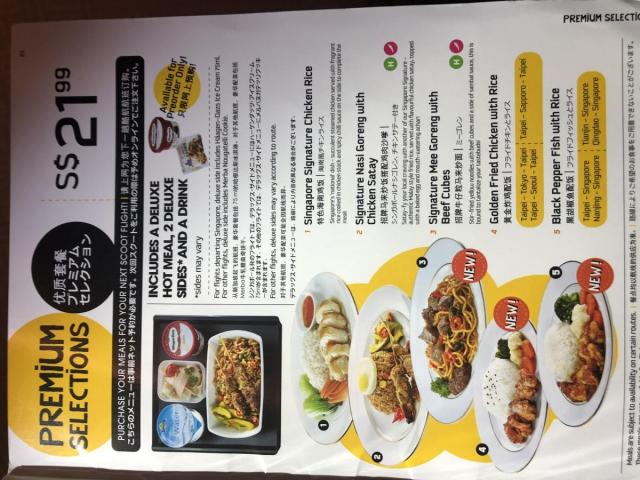


-
Hooray finally Taiwan will be liberated from the imperialists! Go CCP go! https://www.bloomberg.com/news/articles/2022-08-02/china-announces-military-drills-encircling-taiwan-from-aug-4-7-l6cc5ljn China Plans Four Days of Military Drills in Areas Encircling Taiwan - Beijing declares provocative show of force after Pelosi lands - Taiwan’s ruling party calls on China to be ‘responsible power’ By Sarah Zheng, 2 August 2022 at 22:29 GMT+7Updated on3 August 2022 at 00:12 GMT+7 China will conduct large-scale military drills and missile tests around Taiwan in a defiant show of force after House speaker Nancy Pelosi became the highest-ranking US politician to land on the island in a quarter century. Beijing announced six exclusion zones encircling Taiwan to facilitate live-fire military drills from Thursday to Sunday, with some of the areas crossing into the island’s territorial waters. The size and scope of the areas could set the stage for the Chinese military’s most provocative actions near Taiwan in decades. An aircraft carrying US House Speaker Nancy Pelosi arrives in Taipei, Aug. 2. Photographer: Lam Yik Fei/Bloomberg Separately, the People’s Liberation Army said exercises could start as soon as Tuesday, leaving open the possibility of military activities around Taiwan while Pelosi was visiting. The operations include “long-range live firing in the Taiwan Strait” and “regular-guided fire testing in the eastern waters” off Taiwan from Tuesday evening, the PLA said. “This action is targeted at the US’s shocking recent major escalation on the Taiwan issue, and serves as a serious warning to Taiwanese independence forces or those seeking independence,” Shi Yi, a spokesperson for the Eastern Theater Command, said in a statement. A map released by the Xinhua news agency in China details areas that will be used for military drills encircling Taiwan from Aug. 4-7. Source: Xinhua. During the military drills, “relevant ships and aircraft should not enter the above sea areas and airspaces during this period,” the official Xinhua News Agency said in a report late Tuesday, which gave coordinates for the exercises. The exercises highlight the risk that Taiwan tensions could exacerbate existing supply chain woes. The Taiwan Strait is the primary route for ships passing from China, Japan, South Korea and Taiwan to points west. Almost half of the global container fleet and 88% of the world’s largest ships by tonnage passed through the waterway this year, according to data compiled by Bloomberg. Taiwan’s defense ministry said 21 Chinese military aircraft entered its air-defense identification zone Tuesday, compared to four the day before. The PLA has stepped up its flights near Taiwan in recent months, and ramps ups the show of force around key events, including visits by US poltiicians. Pelosi became the first US House speaker to visit the island in 25 years when her military aircraft arrived at Songshan Airport shortly before 11 p.m. local time. China considers Taiwan part of its territory and protests diplomatic visits to the democratic island. The planned drills would be the most serious show of force by China around Taiwan since at least 1995, when Beijing test-fired missiles into the sea near the island. That move was part of China’s protests against President Bill Clinton’s decision to let Taiwan’s first democratically elected president, Lee Teng-hui, visit the US. Back then, China also declared exclusion zones around target areas during the tests, disrupting shipping and air traffic. Pelosi plans to hold a joint press briefing with President Tsai Ing-wen at about 10:50 a.m. Wednesday, the Taiwan leader’s office said in a statement. She is expected to depart the island later that day to continue her Asia tour visiting US allies South Korea and Japan. Taiwan’s ruling Democratic Progressive Party called on China to exercise restraint and stop acts of military and political intimidation. China should “demonstrate the demeanor of a responsible power,” DPP spokeswoman Hsieh Pei-fen said in a statement late Tuesday. “No threatening remarks or provocative actions can reduce even slightly the determination of Taiwan and its international friends to defend democracy and freedom,” she added.
-
Xi Jinping signals intent to remain in power by revealing politburo with no successor https://www.theguardian.com/world/2017/oct/25/xi-jinping-signals-intent-power-successor-politburo-china China’s president unveils his all-male cabinet, but crucially no member is young enough to take the reins from Xi at the end of his second term Xi Jinping has kicked off his second term as leader of the world’s second largest economy, vowing to spearhead the “great rejuvenation of the Chinese nation” and signalling his intent to tower over Chinese politics for decades to come. At just before noon on Wednesday, Xi unveiled the new line-up of China’s top ruling council – the Communist party’s politburo standing committee – leading six besuited comrades out into a blaze of camera flashes in the Great Hall of the People. “Here, on behalf of the newly elected central leadership, I wish to express our heartfelt thanks to all other members of the party for the trust they have placed in us. We will work diligently to meet our duty, fulfil our mission and be worthy of their trust,” Xi said in a 21-minute address that marks the formal start of his second term. Crucially, the all-male group contained no potential successor, since none of its five new members – all aged between 60 and 67 – is young enough to take the reins from Xi after the end of his second term, in 2022, and to then rule for the customary decade. Such is the secrecy that cloaks Chinese politics that the identities of the standing committee’s incoming members were known only as Xi escorted them out onto a scarlet-carpeted stage. Joining Xi and premier Li Keqiang on the elite committee are: Li Zhanshu, 67, Han Zheng, 63, Zhao Leji, 60, Wang Yang, 62 and Wang Huning, 62. “I still can’t get over the fact how the world’s second largest economy, which is declaring this new role of global leadership, is nearly as opaque as the North Korean political system,” said Jude Blanchette, an expert in Chinese politics from New York’s Conference Board research group. “I just find that absolutely striking and in a way almost unacceptable for a system that wants to play such a fundamental role in guiding and shaping the 21st century.” China’s propaganda apparatus has touted this week’s political show as an example of openness and transparency. However, a number of major western news organisations whose coverage of Xi’s rule has irked Beijing were excluded from Wednesday’s event without explanation including the BBC, the Financial Times, the Economist, the New York Times and the Guardian. In his address, Xi outlined his vision for what he called China’s “new era”, an era in which an emboldened and purified Communist party would play an even more prominent role in returning the country to its former glories. “It is my conviction that the great rejuvenation of the Chinese nation will become a reality,” he said, urging his party to become “the backbone of our nation.” “We should never entertain the idea of taking a breather or halting our steps. Instead, we must continue to rid ourselves of any virus that erodes the party’s fabric, make great efforts to foster a healthy political environment of integrity and generate waves of positive energy throughout our party which can build into a mighty nationwide force driving China’s development and progress.” Xi also pledged “a resolute push” to eradicate poverty, to “open China still wider to the world” and hinted at the more assertive and muscular role Beijing is expected to seek on the world stage in the years ahead. “With confidence and pride the Chinese people will be steadfast in upholding our country’s sovereignty, security and development interests,” he said. The unveiling of China’s new ruling council came one day after the end of the 19th party congress, a week-long political summit at which Xi established himself as the country’s most dominant leader since its revolutionary founder Mao Zedong. On Tuesday, Xi’s eponymous political philosophy was enshrined in the party’s constitution alongside those of Mao and Deng Xiaoping, the architect of China’s economic opening to the world. Experts say that momentous and highly symbolic achievement puts Xi in a virtually unassailable position at the pinnacle of the 89 million member organisation. Having failed to anoint a successor, he is now likely to be calling the shots in Chinese politics well into the 2030s. With Xi now entering his second, although perhaps no longer final five-year term, thoughts are turning to what the next stage of the Xi era might hold. Supporters claim that having used a ferocious anti-corruption campaign to purge rivals and consolidate his grip over the party during his first five-year term, Xi will now turn his mind to comprehensive reforms of China’s economy. “I think the real reform just began,” said Wang Wen, a pro-establishment scholar from a thinktank linked to Renmin University. Wang argued that Xi would enter his second term with “much more authority” and a greater ability to implement his blueprint for China. Such optimism was echoed in China’s party-run media on Wednesday as cadres lined up to heap praise on their all-powerful leader. “We firmly believe that if people all over the country roll up their sleeves under the guidance of Xi’s Thought … we will move steadily into the future with the irresistible force of a high-speed train,” Chen Meifang, a Shanghai railway official, was quoted astelling the Beijing Daily. However, such hopefulness is widely disputed. Blanchette said he expected to see a “super-sized version” of Xi’s first-term policies in his second stint, as China’s leader pursued what he saw as his “program of Chinese greatness”. That would mean accelerating efforts to build a modern, battle-ready military that could begin to push the United States further and further out of what China saw as its Pacific backyard; an increasingly assertive foreign policy in regions such as the South and East China seas; and continued efforts to promote a hi-tech economic revolution by championing huge companies that were either controlled or heavily aligned with the state. It would also mean that the Communist party – and the Communist party only – would continue to lay down the law, in all aspects of Chinese society. In an editorial celebrating the start of Xi’s “new era” on Wednesday, the People’s Daily, the party’s mouthpiece, argued: “History has shown and will continue to show that without the leadership of the Chinese Communist party, the idea of national rejuvenation is a fantasy.” “We should hunker in for a long winter of tight political control,” Blanchette predicted. We should hunker in for a long winter of tight political control Jude Blanchette Elizabeth Economy, the director for Asia studies at the Council on Foreign Relations, said she saw this week’s congress “as affirmation of the direction in which Xi has already been moving the party as opposed to a point at which now we are going to see the real Xi Jinping and his real reforms emerge”. She added: “I think what we are going to see is an intensification along the same lines.” Economy balked at the suggestion that Xi – whose first term has witnessed an unusually fierce crackdown on party opponents and human rights – might suddenly emerge as a political reformer. “I don’t think a crypto-liberal would do what he has been doing over the past five years. I don’t think a crypto-liberal lets Liu Xiaobo die in jail, and the arrests and the intensification of the attacks on the [human rights] lawyers. That is not a crypto-liberal,” she said. Blanchette said Xi had shown a remarkable “mastery of the political system” in China during his first term in power: “The second question though is does that mean he has an omniscience or an omnipotence to deal with all the significant challenges that China is facing? “There is a huge list of challenges that Xi Jinping has to deal with,” he added, pointing to a gradually slowing economy, a looming debt crisis and the possibility of a nuclear conflagration on its doorstep. “He now has the power to do it. But how he deals with these challenges will be one of the most important indicators of whether or not he is able to stay on for the term that he feels he deserves.” Additional reporting by Wang Zhen. What 'Xi Jinping Thought' Stands For https://www.forbes.com/sites/salvatorebabones/2017/10/22/what-does-xi-jinping-thought-mean-and-how-does-it-compare-to-america-first/#2bfee5ab3262 Xi Jinping is universally regarded as China's most powerful leader since Deng Xiaoping, and perhaps since Mao Zedong. Both Deng and Mao left their marks in the charter of the Communist Party of China, and the rumor is that Xi will be their first successor to do the same. Mao's "mass line" and Deng's "seeking truth from facts" have become official tenets of Communist Party dogma. Xi's "socialism with Chinese characteristics for a new era" may soon join these august concepts as official truth. But just what does "Xi Jinping Thought" really consist of? To answer that question, it helps to compare Xi's governing principles to those of the four preceding "paramount leaders" of China's Communist Party. Xi versus Mao Xi Jinping is most often compared to Mao Zedong, China's revolutionary leader, red emperor and communist theologian. Mao's political maxims were collected in the Little Red Book once read by leftist college students and Latin American guerillas. Mao Zedong thought is not all that bad, if you happen to be planning a people's revolution to overthrow your government. Unlike Lenin and most European Marxists, Mao taught that revolutions had to come from below. And unlike most revolutionaries, he still fought to overthrow the government even when he was the government. The infamous Cultural Revolution that rocked Chinese society from 1966-1976 was the result. Xi is no revolutionary, and he is certainly no Mao. Xi'sChinese Dream is a "moderately prosperous society," not a communist utopia. Xi does talk a lot about "national rejuvenation," but that's really just a way to avoid using the Western word for what he really means: renaissance. Xi's Chinese renaissance is all about China's space program, high speed rail network and high technology parks. But a real Chinese renaissance requires the reversal of China's long-term brain drain to the United States and other English-speaking countries. The problem? Most Chinese scientists are unwilling to give up their tenured positions overseas to take a chance on a permanent return to China. Barring a reversal of epic proportions, in 2021 Xi will preside over the centenary of the Chinese Communist Party. That will be as good a time as any to finally lay Mao Zedong Thought to rest for good. If Xi has his way, they may just take the opportunity to bury Mao along with it. He's been waiting long enough. Xi versus Deng Soon after the death of Mao, his long-time frenemy Deng Xiaoping put paid to the Cultural Revolution and started China on the path to opening and reform that it has followed for the last 40 years. Famous for saying that it was OK for some people to get rich before others, Deng was repeatedly condemned by Mao as a "capitalist roader" -- which, as soon as Mao died, is exactly what he turned out to be. To facilitate his economic reform agenda, Deng urged that China should "keep a low profile" in international affairs, biding its time while building its strength. Xi'sstrive for achievement strategy couldn't be more different. In his landmark Communist Party Congress speech, Xi pledged that China would have a "world class" military by 2050, in line with his policy of relentless maritime expansion in the South China Sea. Xi has departed radically from Deng's advice on foreign policy, but what Xi shares with Deng is a staunchly conservative preference for order over chaos. Deng ruthlessly suppressed the Tiananmen Square democracy movement in order to preserve the rule of the Communist Party. Xi has much more subtly turned the screws on political dissent using the more discriminating but perhaps more effective tools of online surveillanceand selective imprisonment. As the ever-quotable Deng said himself, "it doesn't matter whether the cat is black or white, as long as it catches mice." Xi versus Jiang Deng Xiaoing's successor Jiang Zemin is perhaps best remembered for the fact that everything done under his leadership was done "with Chinese characteristics." Deng may have coined the phrase "socialism with Chinese characteristics" to justify his introduction of the market into China's planned economy, but under Jiangthe phrase became a standing joke. Jiang Zemin codified these Chinese characteristics into the "Three Represents": the idea that in addition to the poor, the Communist Party of China would also represent China's business and cultural elites. Under Xi, this has evolved into the Two Represents, and if China's new rich get their way it may soon degenerate back into a novel kind of One Represent. Xi versus Hu Hu Jintao's major contribution to the intellectual life of the Communist Party was to bring Confucius back into the fold. Long prescribed under Mao as the reactionary idol of the pre-revolutionary patriarchy, today Confucius is back in China, with no small thanks to Hu, who rehabilitated Confucian thought, reopened Confucian temples, and chartered the Confucius Institutes to become China's cultural ambassadors to the world. Hu's trademark slogan was the "harmonious society" -- i.e., trust the government and don't complain and everyone can live in harmony. No word on what thenotoriously cranky sage, who got himself successively kicked out of ten different countries for criticizing their poor leadership, might have thought of this. Hu later extended the harmonious society to the harmonious world (i.e., trust China and don't complain and the world can live in harmony). With his One Belt, One Road expansionism and South China Sea island building, Xi seems keen to continue Hu's expansive foreign policy program, only with even less emphasis on the "harmonious" part of the equation. "Party First" Xi Jinping Thought, in a nutshell, seems to boil down to something resembling "America First, with Chinese Characteristics." By all accounts, Xi and U.S. President Donald Trump got along surprisingly well at their first meeting in April, perhaps because at a level deeper than mere speech they spoke the same language. If Xi's political philosophy isn't exactly China First, it is something close to it but at the same time distinctively Chinese: something like "Party First." And putting the interests of the Communist Party first is one thing he shares with all of his predecessors. Like Deng, Xi is a pragmatist who will stay on the capitalist road so long as it leads to much greater wealth than any other. Like Jiang, he is very happy to lead a ruling party dominated by his country's business elite. Like his immediate predecessor Hu, he is crafty enough to use patriotism and ethnic pride as tools to keep ordinary Chinese (if not necessarily China's minority groups) on his side. And like Mao, Xi seems to be ruthless enough to succeed in making his own Chinese Dream a reality. As long as he continues to put the Party first, Xi is likely to maintain his grip on power -- and the Party's loyalty. And as long as the Party puts Xi first, he is likely to have no cause to complain. Xi Jinping Thought may not sell as many books as Mao's did, but come 2021 it will be Xi who sets the course for the next 100 years of the Communist Party of China.
-
A rebadged Deepal S07? Mazda is fast-tracking its EV expansion by leaning on its Chinese partner. After launching the EZ-6 last year, the sedan’s SUV counterpart has now been revealed on the Weibo social media platform. The EZ-60 is also coming alive courtesy of a tie-up with Changan, a state-owned automaker. Their 50:50 joint venture, founded over a decade ago, helped Mazda launch the 6e in Europe. Similarly, this new model should be sold outside China as the CX-6e. Essentially, we’re dealing with a production version of the Arata concept. It’s an attempt at making another electric SUV with the hope that it’ll be more successful than the slow-selling MX-30. It looks sharp, and we’re pleasantly surprised to see flying buttresses, which are uncommon in this body style. In case you're wondering, mirror-replacing side cameras have been legal on production vehicles in China for about two years. The Tesla Model Y competitor is likely a Deepal S07 underneath the skin, implying a fully electric drivetrain and a range-extending variant with a 1.5-liter gas engine. However, whether the latter powertrain will be available in Europe is unclear. Mazda only offers the Model 3-fighting EZ-6 sedan as a pure EV for now. If you're unfamiliar with Deepal, it's the electric subsidiary brand of Changan. Mazda is considering a third and fourth model from its JV with Changan. If approved, the additional vehicles will be released between 2028 and 2030. In the meantime, the Zoom-Zoom company is working on its own platform for EVs. The first model is scheduled to come out in 2027, with derivatives to follow by the decade's end.
- 23 replies
-
- 10
-

-
20 single-deck electric buses each from BYD and ST Engineering Land Systems 10 single-deck and 10 double-deck electric buses from Yutong The buses will progressively arrive in Singapore from next year, with the final batch delivered in 2020 Source: The Straits Times
-
BBC News - TikTok's UK headquarters in doubt amid US pressure https://www.bbc.co.uk/news/business-53462918 I'm no lover of the ccp. But this is really incredible hypocrisy. This is coming from the two governments who collect massive amounts of data on their own citizens as revealed by Edward Snowden. Reportedly to find terrorists. They would love to tap the entire world except that Apple the main handphone used by most Americans refuse to comply with many of their information requests. And Canada, USA, England are tapping all communication cables on both sides of the Atlantic.... And the silly thing is that you can choose not to use wechat, tiktok or huawei phones...
- 370 replies
-
- 11
-
-
.png)
-
Creating another thread specially for CN. Cos this country is huge and also can be very hard to keep track of the info in the other various holiday threads. Too many locations even within China. Thinking of going somewhere in CN in Year end 2026. Probably 8 max 9 days due to work commitments. Not been there in 20 years. Avoiding southern CN due to the winter rains (Yunnan etc) What's the best way to go Zhang Jia jie? Via Changsha? I think can go HSR via Sichuan (Chengdu also) but Sichuan alone should be a separate trip. Any other places to recommend?
-
 Dear Forumers, Starting this topic as I believe some of us here may be in the same situation as me and I also hope to learn from the rest of the EV forumers here with respect to being a likely first-time EV owner. So, my 'hunt' started with a visit to the car showrooms at Leng Kee with a family member who was shopping for a car. Unwittingly, the 'shopping bug' latched on to me as well and I found myself 'magically' drawn to the showrooms myself with my family in tow. With regards to my current profile, I am driving an Alphard (Year 2021) thus when comparing 'apple to apple', an equivalent replacement would be another MPV. For the new Alphard, it costs anywhere between $360,000 - $400,000 (depending on dealer) with an annual depreciation from $31,000 onwards. From the online pictures and review, I didn't bother to check out the current Alphard as there wasn't any significant updates from my current ride. Instead, I paid a visit to the Lexus showroom to view the Lexus LM (7-seater). At > $600k, I didn't find the interior quality to be worthy of it's price tag. Even the SA commented that the LM is meant for would-be Alphard buyers with money to spare and distinguishing themselves from the 'peasants' Alphard crowd. Unsatiated, I looked elsewhere and found my gaze drawn to the EV MPVs from China, that were flooding the market coincidentally at this point in time. And thus, the impetus for this topic as to who will dethrone the long undisputed king of MPVs that is the Alphard. 1. Xpeng X9: https://drive.google.com/file/d/1e6BfFyfb5mHigWXyuQo2YwiXHm-iblhs/view?usp=sharing This is the newest kid on the block and while the car is in the showroom, it is undergoing homologation at LTA thus no test drive is possible. As per the SA, the selling price is likely to be at $310,000 and depreciation (my estimate) about $28,000 - $30,000. Pros: This is the most futuristic MPV among the lot, in both its exterior and interior. My family loved the interior the most due to the TV (for rear passengers) ala the 7-series which folds down dramatically at the touch of a button. Most of the other functions in the cabin are also operated by 1-touch buttons making it seamless and modern. Last but not least, its 3rd row recess electrically into the boot at the touch of a button creating a completely flat rear cabin. Cons: In my opinion, the looks of the X9 is going to be divisive with polarising opinions. Personally, I am not able to fathom it's appearance, especially its rakish rear 3rd quarter. In some ways, it seems like it is modelled after the Tesla Cybertruck but I don't think it was pulled off as successfully. Therefore, I have my doubts as to its eventual resale value due to this main consideration. 2. Zeekr 009: https://drive.google.com/file/d/10SmD8B66eUKu5shV8Q2-SDRBFnk5fGOK/view?usp=sharing This is the car with a similar price tag as the new Alphard. I didn't enquire with the SA about the depreciation due to its initial hefty price tag and associated cost (more on that later). Pros: This is also a modern-looking MPV that drew comments like 'it looks like a Rolls Royce' from my family. It also features the most luxurious interior with it's trimmings and overall build quality. Most cars will also be left helpless in it's wake in a traffic light sprint as it's 0-100km/hr is in a class leading 4.5 seconds. Cons: Beyond the hefty price tag, the road tax is at a crazy $6.5k per annum. As one of the motivation for switching to EV is to lower the operating cost, this is definitely a huge red flag and therefore reduces it's appeal (didn't even test drive as don't want to waste the SA time). 3. Maxus Mifa 7/9: https://drive.google.com/file/d/1vDibRvN8KYnmNLWnWJQc6f0qldVE_ka3/view?usp=sharing This is the most affordable car among the lot. Visited the showroom just to draw a level of comparison but didn't test drive as wasn't really keen on it. A note though that, this was the only showroom where we were not accosted by a SA thus maybe they had hit the sales quota for 2024. Pros: This has the lowest price tag and first mover rights as it was the first large 7-seater electric MPV to make its foray into the local market. Cons: No disrespect to current Mifa 7/9 owners, but I feel that the interior build quality and trimming reflects in the price tag. For the Mifa 9, the instrument cluster and head unit is really below par as more of an afterthought. However, I believe this was the best option in the past as it was the only sizeable MPV that is an EV and therefore, owners really didn't have much choices to consider. 4. Denza D9: https://drive.google.com/file/d/10YwRQpBtBkR2Jj_Rjc5syg2nzcVwhsHD/view?usp=sharing This was the only car I test drive as from the online research, it had ticked all the right boxes. Pros: First and foremost, it is unpretentious in its intention and looks like an Alphard. Therefore, I believe its design is more palatable for existing Alphard owners making the transition. Next, the price tag (depreciation at $27-$28k for the FWD Elite model) is 'reasonable' in current market conditions and undercuts the Alphard by $3-4k a year in depreciation. It makes decent power and have sufficient range, and it's road tax is only $480 more than the new Alphard. It's interior build quality and trim is also 'value for money' in terms of its quality. An initial collaboration between BYD and Mercedes, this is apparent in the cabin such as the wood trimmings (same as in Mercedes products) and ambient lighting. It also offers better seat comfort in the 3rd row as compared to the Alphard/X9 and perhaps comparable to the 009. This is because the seats are inclined a few degrees towards the ceiling thus making it significantly more comfortable as compared to the Alphard which is flatter and has shallower seat bottoms. In terms of the drive, it also feels more 'continental' - same secured/rooted/engaged sensation as premium makes that I had driven before that hails from Germany/England. Cons: From the B-pillar onwards, one may be surprised to find that the D9 offers less in terms of cabin space than the Alphard despite its longer length/wheelbase. This is due to the 'thicker materials' used (like the captain seats) and a 410L fixed boot (Alphard has none). The ambient lighting also looks like it is underpowered (too dim even at its brightest settings) unlike its ex-sister brand Mercedes. Finally, there isn't any TV for rear passengers like the 009 and X9 which was a severe disappointment for my family (as we have 1 in our existing Alphard). As you would have guessed it by now, all things considered, the Denza D9 is in my opinion going to give the Alphard a real run for its money in its uninhibited attempt to wrestle the 'King of MPV' throne in Singapore. There is nothing wrong with the Alphard (past and present). From the B-pillar onwards, in my opinion, it beats the more luxurious contemporaries such as the Mercedes S-class or 7-series. It also leverages intensively on its branding as the most reliable car brand in the world (and rightfully so as my past 3 years of ownership had been uneventful compared to my previous experiences). On the flip side, it offers an emotionless and soul-less drive. It's interior build quality is at best average and the 3rd row seat comfort is mediocre. With the new Alphard at >$30k in annual depreciation, it really makes no financial sense at all to choose the new Alphard as its interior build/quality is still average and features almost non-existent. For MPVs, the 2nd row seats are the 'money seats' and therefore, it must be the most important point of reference for these luxury MPVs. For instance (past/new Alphard), in its most basic trim, there are no touch-screen control panels at its captain chairs, no ventilated or massage seats. And all these comes standard in the D9. Therefore, all things equal, it is bewildering why one would consider the new Alphard over the D9, when you paying more for less! Furthermore, in terms of operating cost and assuming an annual mileage of 20,000km for the average driver and based on a fuel consumption of 12km/l and RON 95 petrol at $2.20/l for the Alphard, it costs $3667 in petrol cost per year. For the D9, it has a consumption of 4.66km/kwh and based on $0.5 kwh charging costs, one would pay $2145 per year which translate to a saving of $1522. If one would to minus $480 (due to the higher annual road tax of the D9 compared to the Alphard), it would still translate to a saving of $1042 yearly. This saving would be even higher if petrol costs increases and if one has access to home charging (at $0.3 kwh compared to 3rd party service providers). Also, we haven't factored in the lower maintenance costs of EV (dealer for D9 offering 10-years battery warranty/maintenance) compared to ICE. All-in-all, it is certainly financially compelling to jump ship to the D9. Finally, what may be the other cons stopping Alphard owners? To me, it would be the branding and resale value down the road. And I also appreciate any other forumers inputs who have been there and done there (by transiting to EVs). At $300k a pop, the D9 ain't exactly loose change thus I am also worried if I had missed out any 'blind spots' in my analysis. Awaiting your valuable inputs and hope my sharing had offered other forumers who are in the same situation as me in making a better decision on their next purchase, thanks!
- 373 replies
-
- 17
-
-
This will be the 16th China EV brand (passenger vehicle only) to hit our shore in the past 3 years. Consumers are supposedly spoilt for choice, but it will be carried by Premium Automobiles, which is known for charging a premium... Premium Automobiles to distribute Changan, Huawei, CATL-backed luxury EV brand Avatr in Singapore China luxury electric vehicle (EV) brand Avatr will be distributed and sold by Premium Automobiles in Singapore. Lee Hoe Lone, Premium Automobiles’ managing director, told The Business Times that the brand will be officially launched in the Republic in late July or early August. The brand’s first model, the Avatr 11 sport utility vehicle (SUV), will debut at the same time, with another SUV, the Avatr 07, to follow in 2025. More about Avatr 11 mid size SUV. The rear opening is unconventional... Dimensions: 4,895mm (L) x 1,970mm (W) x 1,601mm (H) x 2,975mm (WB) Power (tentative): 237KW Torque: 396Nm Drive: RWD Weight: 2,310Kg 0 - 100Km/h: 6.5sec Top Speed: 200Km/h Battery: Ternary Lithium Capacity: 116.79KWh Range: 815Km (CLTC Standard) 0 - 80%: 35 min
-
 Take note if you're travelling to China, taking their domestic flights. 😁 China bans uncertified power banks on domestic flights starting Jun 28 over fire risk BEIJING: China will ban uncertified power banks on all domestic flights starting Saturday (Jun 28), as aviation authorities tighten safety rules following several onboard fire incidents linked to portable chargers. Passengers will no longer be allowed to bring power banks that lack the official China Compulsory Certification (CCC) mark, the Civil Aviation Administration of China (CAAC) said in a notice on Thursday. Power banks that have faded or illegible CCC labels or are part of a product recall will also be barred, added the national civil aviation regulator. The notice cited recent incidents of power banks catching fire or emitting smoke mid-flight, along with multiple product recalls involving major brands. “These developments indicate that the power banks carried by passengers present safety and quality hazards, and the risks posed to civil aviation safety are growing,” CAAC said. Under the new rule, passengers without a valid CCC-certified device risk having their portable chargers confiscated at security or being denied boarding altogether. Airlines and their agents have been instructed to step up awareness campaigns about the fire risks associated with power banks, while airports are required to tighten inspections. CAAC has also called for improvements in the installation and maintenance of charging facilities at terminals. A record 730 million people flew domestically in 2024, according to CAAC. While most were Chinese residents, a portion included international visitors travelling within the country. In recent months, multiple in-flight smoke and fire incidents have been linked to power banks. On May 31, a China Southern Airlines flight from Hangzhou to Shenzhen was forced to turn back 15 minutes after take-off, after smoke was detected from a passenger’s camera battery and power bank. Two months earlier, a Hong Kong Airlines flight from Hangzhou to Hong Kong was diverted to Fuzhou when a mid-air fire broke out in the overhead compartment. The blaze was suspected to have been caused by a power bank. Multiple Asian airlines, including carriers from Singapore, South Korea, Taiwan and Hong Kong, have barred the in-flight use of power banks, though most still allow them to be carried in cabin luggage. At the same time, made-in-China power banks have come under scrutiny. Two major Chinese electronics manufacturers, Anker and Romoss, recently recalled more than 1.2 million portable chargers, citing battery issues that posed a fire risk. Certain power bank models from other Chinese brands, including Baseus and Ugreen, have also had their CCC certification suspended or revoked in recent months over safety concerns, according to local news reports. https://www.channelnewsasia.com/east-asia/china-ban-power-bank-uncertified-domestic-flights-fire-risk-5206791
- 149 replies
-
- 5
-
-

-
- ban
- uncertified
- (and 5 more)
-
 Let me cut to the chase, and show you the pair of money shots first... then I'll share my super ardous journey, ala bro teo and his walk horse, see flower refugee style travels.. This is Jiuzaigou aka 九寨沟 and autumn is the time to visit. So I got an invitation to go to Mian Yang 绵阳 in Sichuan for some talks and work. I’ve never heard of it so some googling helped me discover it was the epicenter of the 2008 big Sichuan earthquake. But more importantly it was a relatively short distance away from the beautiful Jiuzaigou (JZG)! Now short in massive China is a relative thing but it was doable. However if you are planning a trip, the typical route is to take a plane from SIN to TFU (Chengdu airport) then you take a cab / bus and possibly a train to the Chengdu East Train station, then a high speed train to the newly opended Huanglong station then a cab to your hotel in JZG. But because of my time constraint, I had to do a faster route ala chop chop in out. So basically I will take a red eye flight to Chengdu then a driver will take me to Holiday Inn express in Jiuzaigou then rest for the night. Early next morning I’ll go inside the park with the aid of a guide then spend four hours looking for the five flowers lake after which the same driver will take me to mianyang hospital for my second leg which is the business part. Then a few days later I’ll take a train to Chengdu and a flight to HK for the debrief then home the next day. The trip didn’t get off to an auspicious beginning as my limo ride went awol and I had to hail a ride to hustle to the airport. It was a little disconcerting to see terminal three practically empty and that got me a bit worried. Everyone else had checked in apart from a handful of people at the business class queue. But Changi isn’t the top airport for no reason. Within 10 minutes I had checked in and passed customs, and was walking to my gate. Now my gate was right at the end of T3, being closer to T1 in fact. I tried a lounge in T3 but there was no food, however the kind receptionist suggested I go to the T1 lounges which were very close to my gate. The Premium Plaza lounge had decent chicken rice plus a mushroom soup and plenty of space at this unearthly hour. They served ? Breakfast about an hour and a half the flight and I’m glad I booked the chef. It is a full flight and the stewardess was very busy. So it’s a 480 km drive to JZG through some seriously mountainous terrain and many long tunnels. My original plan was to take a cab from the airport to the train station then a high speed train to Huanglong station followed by a car to my Jiuzaigou hotel. Thankfully my friend stepped in and provided a driver and car. If you think the 15-20 minutes inside the KPE tunnel is long, try stretches of more than an hour deep inside the bellies of huge mountain ranges. These feats of engineering have reduced the journey from more than 10 hours to around six. It also helped that my ride was a nice Audi A6L a stretched version of the already nice car which made the journey a lot less stressful. The 2l turbo is pretty economical too, it has enough fuel to cover my trip from the airport to Jiuzaigou then to mianyang and then back to Chengdu and then some. NVH suppression is also decent. The journey from the airport to my hotel took just about six hours with a couple of pee breaks and one lunch break. Somehow my first meal in China isn’t some fancy Chinese feast but a quite McDonalds meal haha. In the interest of time so that we can proceed with the long drive I grabbed a breakfast bun to munch along the way. The tunnel filled highway is a newly opened one, just completed in September, shortening a ten hour journey by four hours. Our lunch break was a mixture of instant noodles and a Siew Mai which was really nice and I had it daily during my stay in Sichuan. After a fairly long drive I got to my hotel - Holiday Inn Express Jiuzaigou. My friends were in Jiuzaigou a few months before me and they shared their recommendations but an online video suggested this place which was within walking distance to the park entrance. Plus it offered free breakfast and there was also a McDonalds on level one. Rates were $124 off Agoda. Now you might be asking why am I concerned about a fast food chain despite being surrounded by food ? Well I’m no good with chili and Sichuan is the epicenter of hot food. So it was an oasis of food in a land of killer chili. Now about the park There may be some important details to take note of Firstly the park doesn’t accept visitors after two pm. So for those flying in from Singapore into Chengdu , you can’t use Chengdu as a base to travel up daily. Basically you need to stay near the park. Second It’s pretty high up and only you will know if altitude sickness is an issue. Bring some prescription medicine called diamox or get the Chinese medicine called 红景天。symptoms can be a cough or a bad headache and do check yourselves because it can be fatal. I’ve travelled to four thousand meters with no symptoms but even then I took some as a precaution as I had a cold the week before. Tea is a diuretic that helps and I had a Chagee adjacent to my hotel that became my favorite place in Jiuzaigou and Mianyang. My driver walked around with me and I finally found a dumpling chain store with non spicy food. It was excellent and about 50m from my hotel. As temperatures were plummeting fast, a warm meal was most welcome. Speaking of temperatures, the week before it snowed in the park so I came prepared for a snowy reception but sadly it was cold without snow. Temperatures in the time were in the low teens dropping to almost freezing at night. So layering is vital and I had a base layer then a merino thin fleece followed by a 650 fill down and finally my new fleece lined waterproof and wind proof outer shell. For my legs I wore long johns then my thicken soft shell hiking pants and a pair of ski socks then my hiking shoes. I also had a fleece beanie, a bandana for my face and neck plus goretex gloves. When suitably equipped, you’ll find it comfortable even when the temperature drops. Layering also helps you adjust to fluctuating temperatures, removing layers when it heats up, eg when you exert yourself. I only had a four hour morning window to see the main attractions so the use of a good guide is worth the money. The entrance fee was 280 RMB which the guide can buy first with a pic of your passport. Her fees are 600 RMB during peak season and 400 after 16/11 when winter season sets in and the park opens later. I met her at 7 am but by then there are already hundreds of people queuing to get into the park. At least the queue moves pretty quickly and within 15 minutes you can enter and a good guide will take you to the important attractions before the crowd arrives. There are free bus shuttles to bring from one point inside the park to another. Do note that the park is about 2500-3000m depending on exact location. You may experience some altitude sickness so take the appropriate measures. Some spots require a little walking so wear good shoes and also bring a good pack with water and a little snack as food is more expensive inside. You can pack Mac’s or KFC which isn’t far from the entrance. Although I only had four hours my guide managed to show me about five major sights aka the money shots. A good guide is essential if you don't have time, as they will know how to avoid the crowds, and start your day early, because in autumn, it gets bright early, the park opens at 7 plus and it's packed at the entrance, so your guide will rush you to the best spots first. And my guide is a true local, with a place inside the park itself. Are they good? Is the park worth all the effort? Well for yourself, because a picture is indeed worth a thousand words... And she can bring you to places which make the park look deserted Will share more pics soon once I'm defrosted and I get stable internet... gotta use data, because wifi is pretty useless in China.


- 131 replies
-
- 19
-
-
Expect more China EV brand to hit our shore in the next 2 years, as the big wave have just started. Ultimately, only the fittest will survive on our tiny island (since we have a fixed quota for new car registration each month/year). Another point to ponder: Is PA changing their game plan (betting heavily on Chinese EVs) with the declining market share of Audi? Chinese EV brand Xpeng to be launched in Singapore by second half of 2024 Xpeng, a Chinese electric vehicle (EV) brand backed by German carmaker Volkswagen, will be launched in Singapore by the second half of 2024. Sources with close knowledge of the negotiations said the EV maker appointed Premium Automobiles as its distributor recently. This will be the second Chinese EV brand that Premium is representing, after Zeekr from Geely. The first Xpeng model to retail in Singapore is expected to be the G6, a sport utility vehicle that is about the same size as the Tesla Model Y. This is likely to include a single motor version capable of covering 580km on a single charge. Premium Automobiles did not respond to queries on Xpeng when approached for comment. The dealership, which is also the retail partner of German car brand Audi, would say only that Zeekr remains on track to be launched here by the third quarter of 2024. The Straits Times has also contacted Xpeng for comment. Xpeng’s impending foray into Singapore comes as the EV adoption rate here rises. In 2023, EVs made up 18.1 per cent of total car registrations, up from 11.7 per cent in 2022 and 3.8 per cent in 2021. The Chinese brand is regarded by industry experts as among the strongest contenders against Tesla, although it delivered just 141,600 units in 2023 – a fraction of the 1.08 million units managed by the American EV brand. It sells left-hand drive models in China, Denmark, the Netherlands, Norway and Sweden. On March 11, the South China Morning Post reported that Xpeng plans to launch right-hand drive models in the second half of 2024 as part of its global expansion strategy. Volkswagen holds a 5 per cent stake in the company from Guangzhou, China, and the companies are working to develop two VW-branded models for the Chinese market. Automotive consultant Say Kwee Neng said Xpeng is one of three Chinese EV brands – the other two being Nio and Li Auto – that are well regarded for their products’ technology, design and level of sophistication. “There is a lot of hype behind these three brands, but ultimately, it will be down to the representative in Singapore to bring in the right model mix and be relevant. We have already seen how BYD has broken down walls to make Chinese EVs desirable to consumers here,” Mr Say added. Chinese EV brand BYD was the fourth-biggest selling brand in Singapore in 2023, outselling the likes of Nissan (fifth), Hyundai (seventh) and Tesla (ninth). Xpeng joins at least five other Chinese brands that are slated to enter the Singapore market, including GAC Aion, which will be launched in April by Vincar. Their addition will more than double the number of Chinese car brands from the four in 2023 – BYD, MG, Maxus and Ora. Mr Say believes that Chinese EV brands are hastening their move into Singapore to build up global credibility as they try to break into European markets. Automotive analysts expect EV sales in China to grow at a slower pace in 2024, even as domestic EV brands and Tesla have been cutting prices to boost demand. This slowdown in demand is pushing Chinese EV brands to look abroad for sales, some industry insiders believe. The other Chinese EV brands slated to launch here are Smart, which Cycle & Carriage will roll out in the first half of 2024; Chery, which is represented by Vertex Automobile; Seres, which is imported by Hong Seh; and Neta, which Vincar has the rights to distribute.
- 148 replies
-
- 15
-
-
https://www.carz.com.my/2025/04/fake-made-in-thailand-tyres-scandal A Chinese tyre manufacturer is under investigation by Thailand’s Industry Ministry. Said tyremaker allegedly smuggles sub-standard tyres into the country, rebranding them, and falsely labelling them for export as new products
-
 Just when 99.999% of the car buyers are still trying to figure out which are the other 19 Chinese car brands (passenger car only) sold here, another one is joining our already crowded automotive scene soon. China’s most expensive car brand, Hongqi, debuts in Singapore with Eurokars as dealer The first cars from China luxury brand Hongqi will be launched in Singapore in the first half of 2026, with Eurokars Group having been appointed as its agent. Eurokars subsidiary Eurokars Elite became the brand’s official dealer and distributor in an agreement signed in June. Three models have been confirmed for Singapore, with two of them fully electric vehicles (EVs). The brand will also offer other drive trains, such as petrol-electric hybrids and plug-in hybrid EVs, in the future. Hongqi is part of the FAW Group, one of China’s “Big Four” state-owned automotive manufacturers alongside Changan Automobile, Dongfeng Motor Corp and SAIC Motor. Most of Hongqi’s cars target the mainstream luxury segment, where its competitors include the likes of Audi, BMW, Mercedes-Benz and Tesla. However, Hongqi is the only China marque that also has a full line-up of ultra-luxury models – though these are not widely exported yet. In this area, it competes with the likes of Bentley and Rolls-Royce in its home market. Like other China car brands, Hongqi is targeting export markets, including South-east Asia, to boost its overall sales figures. The brand’s showroom in Singapore will be at 19 Leng Kee Road, and is expected to open in 2026. The premises are currently occupied by SAIC-owned British brand MG. MG will move to a new location at 11 Leng Kee Road that will house it and sister brand IM Motors. Both brands are represented by Eurokars in Singapore. Three Hongqi models will be introduced: the E-HS9 large sport utility vehicle (SUV), a yet-unnamed model code-named G117, and the production version of the E-007 concept car. At 5.2 m long and priced around 590,000 yuan (S$105,680) in China, the fully electric E-HS9 is a competitor to the BMW X5 and Mercedes-Benz GLE. It will debut in Singapore in 2026. The G117 and E-007 are still under development, and so their launch dates are not confirmed. The full-electric E-007 is a mid-sized SUV that was displayed as a concept car at the Auto China motor show in Beijing last year. As the car is smaller and less expensive than the E-HS9, media reports say that it will also compete against German luxury models such as the BMW X3 and Mercedes-Benz GLC. The G117 will be a smaller SUV than the E-007, but there are few details known as it is in an even earlier stage of development. Hongqi’s full range includes EVs, petrol-electric hybrids, plug-in hybrid EVs and cars with internal combustion engines. Often dubbed “China’s Rolls-Royce”, it started in 1958 as a provider of cars to Chinese dignitaries, heads of state and VIPs. Its ultra-luxury models are offered under the Golden Sunflower series. This includes the Hongqi Guoli, a 6 m-long luxury limousine that costs 7.2 million yuan and is the most expensive China-made car. In comparison, its Rolls-Royce competitor, the Phantom, starts at 8.5 million yuan. Hongqi still provides vehicles to China’s dignitaries, including the N701 armoured limousine used by President Xi Jinping. Last year, China gave a Guoli to Malaysia’s Sultan Ibrahim Iskandar as a gift, making him the first in the world to privately own the Hongqi luxury sedan. In 2024, Hongqi’s sales increased 17.4 per cent year on year to about 412,000 cars, with around 44 per cent being EVs and hybrids. At the Auto Shanghai motor show in April this year, the brand announced plans to expand production capacity and establish a major presence in South-east Asia, Europe and Latin America. It aims to sell 500,000 vehicles in 2025 and produce 200,000 units overseas annually by 2030. In 2024, FAW Group exports increased 36.2 per cent to around 125,000 units, though specific figures for Hongqi were not provided. In June, Hongqi said that it will launch 20 new models globally in the next five years, including its Golden Sunflower models, with the ambition of becoming a global brand. In Singapore, automotive dealership Eurokars Group sells cars from BMW, Mazda, McLaren, Mini, Pagani and Rolls-Royce. It also has a presence in Australia, China and Indonesia.
 -
Journey to the West: First Steps in Southwestern China, Pt. 4
hollowataraxia posted a blog entry in MyAutoBlog
Note: This is the final instalment of a series covering my trip to southwestern China. Read Pt. 1, Pt. 2 and Pt. 3 here. YUNNAN Day 11: We had an early start as we had to fly to our first location in Yunnan province, Lijiang. It was a short two-hour flight, but my parents had chosen to fly business class (just five rows ahead from where my brother and I were) for the extra baggage allowance, which turned out to be a wise choice given my unexpected purchases in Chengdu. Stepping out into Lijiang Sanyi International Airport (ironic given that it only manages domestic flights), the weather felt cool still, but warmer than most of the other places on our trip. On the way to our accommodation in Baisha Old Town, our taxi driver apparently had something to attend to, so she dropped us off to be picked up by a colleague. Something so inconceivable to a city dweller - a perfect way to start our time in the boonies, I thought. When we arrived, I was surprised. Perhaps it was the fact that it was a touristy area and not a nameless village, but my initial impressions of Yunnan being a remote, hidden-in-the-clouds province were wiped when I saw the usual F&B outlets in an otherwise laid-back town. Dread it, run from it, familiar franchises like Mixue and Luckin Coffee appear all the same. Our accommodation was the Yulong Laixi Mountain View Homestay, specifically the family suite that provided 2 king-size beds and a view of Yulong Snow Mountain. Once our luggage was settled, we had lunch at a nearby restaurant. The local food was a segue for our taste buds, transitioning from spice-heavy Sichuanese cuisine to a more “conventional” (by my standards), albeit oily, one. In the late afternoon, we took a 20-minute DiDi ride to Lijiang Old Town, a UNESCO World Heritage Site. Here, the traditional houses at night were quite the sight. One street reminded me somewhat of Amsterdam’s Red Light District that I’d visited earlier in the year due to the presence of nightlife illuminating the otherwise dark area (though of course the pubs did not offer similar services). Day 12: Waking up early in the morning, I saw the sunlight gradually illuminating Yulong Snow Mountain in the distance from my bed. Going to the Black Dragon Pool cemented the thought I had as I went about getting footage for my personal projects - Lijiang is a beautiful place. We stumbled upon the Dongba Culture Research Institute and Museum at the other end of the park, getting a quick rundown on Naxi culture. The later half of the afternoon was spent walking around, eventually returning to Lijiang Old Town. Exploring the old town unfortunately got old after a while, having been to at least one in every city, so we went back to our accommodation and played pool for an hour. After a quick walk for dinner, we settled in for the night, and quietly looked out our windows as the fireworks ushered in 2025. Day 13: We headed to Dali by car, stopping at some old towns along the way. A fairly uneventful day, except that the transport company attempted to scam us by charging us a premium for a driver who arrived in an older-generation Buick GL-8 instead of the latest generation shown in the listing. Since overly disputing it might have left us without transport, a compromise was reached, and we continued on our way. Of the various stops we made, the most notable one would probably be the Yujin Bridge in Shaxi Old Town. Mum wanted to visit because the town was the setting of the Chinese drama Meet Yourself, which brought in many tourists like us. We eventually reached our hotel in Dali, and spent the night walking the nearby Dali Old Town. Day 14: The day was spent going around Erhai, Dali’s social media-famous lake measuring 40 km by ~7-8 km (for reference, Singapore measures 49 km by 28 km). More old towns awaited (they started to become indistinguishable much like European towns), but also a lot of picturesque views of the lake, the little islands within and of course seagulls. Probably the most bizarre place this entire trip was Ideal State, a ripoff of the Cycladic architecture associated with Santorini, Greece. An astonishing number of people climbed up the resort (many paid to gain access to more private paths). Day 15: We took a two-hour train ride to Kunming, which Dad revealed was only on the itinerary because there was no other way to fly back to Singapore. Arriving in Kunming, I was somewhat shocked at the number of commuters despite it not being a holiday season. The lack of attractions was eminent in how we pretty much covered all the landmarks Dad had researched by dinnertime. On my end, I was surprised by yet another ACG store, where I bought Genshin Impact keychain finger dolls. I usually dislike keychains, but as I had not seen them before, that moment might have been the only opportunity to get them without paying for shipping that could cost more than the product itself. Now, I’m glad I did, because while these finger dolls exist in Singapore, I have not seen any shops with Raiden Shogun or Nahida in stock. As we walked back to our hotel, we entered Gingko Shopping Mall, having walked past it earlier in the day. With only a Xiaomi store open and most other shops closed, our debate on the way back was centred around whether it was a dying mall or a new one. Day 16: With nothing much to do, we sauntered around Daguan Park, a public park that felt more like a theme park with the assortment of displays portraying traditional Chinese culture. Later, we went to a random mall we spotted on the way to the park. An amusement ride outside the mall caught my eye due to its shameless Frankenstein’s monster of the protagonist Gundams from Gundam SEED, an instalment of the Japanese franchise popular in China. Just another mall, though I got to see the XPENG flying car that my colleagues had seen months before. With that, we picked up our luggage and headed for the airport, where we waited for several hours for our 3.00am flight home. HOME SWEET HOME And that’s that! I learnt quite a bit about a relatively unexplored part of China (compared to the eastern cities) on this trip. Going back to the original question in Pt. 1 of why southwestern China is gaining popularity among tourists, I would say it coincides with China’s rise as a global power. Even before blowing up on social media, Chongqing was already becoming a popular tourist destination. This attention has also spread to Yunnan as a province, and it’s not hard to see why. Just like any other place in the world, there are plenty of wonderful sights, both natural and man-made, the food delicious, and for the most part the people were accommodating, if not friendly. If you have even the slightest interest in visiting China, I would definitely bring the southwestern cities up for consideration, though it may also depend on factors like: How many times have you been to China? How much do you enjoy spice? What balance of urban/rural sights do you like (because Yunnan in particular is more rural)? Perhaps I should head further west in the future? Xinjiang seems otherworldly... ~ Wei Feng Images: Myself -
I think VN, PRC and PHP are all indulging in wishful thinking
- 1,878 replies
-
- 2
-
-
- Territorial
- claims
- (and 2 more)
-
something that i admire and "dream" to do after retired! drive to china, ship the car back, fly home ... not so siong to drive home ... driving there already epic and enjoy the moments ... not so "enthusiastic" to drive back ... LOL 1hr long video but nicely done and not boring ...
- 31 replies
-
- 13
-
-
 The 1987 trains in operation since MRT was a thing will be retired. The first two new trains for the North-South and East-West MRT lines (NSEWL) have arrived in Singapore. Source: https://mothership.sg/2022/02/new-mrt-trains-replace-1987-fleet/ They are part of a fleet of 106 new trains designed in Germany and built in China. The trains were shipped to Singapore by sea. The journey took about one month to complete. Details about the new trains were shared by the Land Transport Authority (LTA) on Facebook on Feb. 21. Replace trains in use since 1987 The new rolling stock will replace trains that have been operating on the two lines since 1987 when the NSEWL began operations. The first-generation trains will be retired when the new trains enter service from the end of 2022. The new trains also highlight how the supply chain spans many countries in the northern hemisphere. “The design was conceptualised in Germany before they were manufactured and assembled in China, and their parts were sourced from various countries including United Kingdom, France and Germany,” LTA wrote. Decked out in green and red stripes, the traditional colours of NSEWL, they will serve commuters from end-2022, LTA added. The trains will undergo rigorous testing and commissioning works before they are ready. Standardised look In 2018, LTA announced that it had bought 66 new trains to replace its oldest fleet. The trains were to be made by Canadian company Bombardier Transportation, and were supposed to arrive in batches from 2021. In 2020, it was announced that a second set of 40 trains were to be bought from Bombardier to replace second- and third-generation trains on the North-South and East-West lines from 2024. The 19 second-generation trains have been operating since 1995. The 21 third-generation trains have been in service since 2000. A total of 198 trains of six different types serve the NSEWL as of 2020. In contrast, all 106 new trains will have the same design.
 -
I went to these three cities recently and took some unique photos, which others say are nice. I will share them with you over the next few days. I am sharing them on a separate thread instead of tapping on other threads, as the trip path for these cities is unique. My first return to Shanghai after 8 years it started with a some chill at the airport lounge having a plate of chicken rice as I would be missing out on SG food for the following weeks or so. Was craving for a plate of Hokkien mee but that has to wait.


- 143 replies
-
- 11
-
-
Journey to the West: First Steps in Southwestern China, Pt. 3
hollowataraxia posted a blog entry in MyAutoBlog
Note: This is the third instalment of a series covering my trip to southwestern China. Read Pt. 1 and Pt. 2 here. CHENGDU Day 7: We savoured one last morning view of the Chongqing skyline from our rooms before heading to Shapingba Railway Station for our ride to Chengdu. Because we had quite a bit of luggage, we split into pairs upon our arrival and took different taxis to our accommodation. When Mum and I got there, my brother was waiting alone. Apparently, upon reaching the hotel, Dad realised he had left his backpack, including his recently-purchased tablet, on the train to Chengdu. He had to wait for the already-departed train to make its way to Chongqing (an hour one way) and back before retrieving it. After checking into Atour Chengdu Taikoo Li, the rest of us walked around in the vicinity, taking pictures with the “I AM HERE” panda perched on Chengdu IFS. Once Dad returned, we made our way to Tianfu Red Mall. The scant information courtesy of Google showed an Animate store had recently opened, which was why I wanted to visit, but as we stepped into the mall we realised it was entirely dedicated to ACG (animation, comics and games) - a pleasant surprise for me. I gleefully walked around the shops, purchasing merchandise from one of my favourite games - one a China-exclusive, and the other at almost half of its cost in Singapore due to the lack of shipping fees (though I needed some encouragement from my brother, as I was stuck there overthinking it). Day 8: First thing in the morning, we stepped out of the hotel to see our driver in a ZEEKR 001, which my family was impressed with (and it became my favourite ZEEKR). We were taking a day trip to Leshan, famous for the 71-metre tall Giant Buddha that is not only the tallest pre-modern statue in the world, but also the tallest stone Buddha statue. We first toured the nearby Suji old town with its rather interesting bridge and had lunch. Now, the main attraction. The climb up to the top of the hill to see the Buddha from above was somewhat tiring, but the climb down to the Buddha’s feet via steep stairs jammed with tourists was, in a word, terrifying. And we still had to climb back up to the exit. After we made it out of the park, our driver brought us to a hotpot restaurant. Not a conventional place for afternoon tea, but he perhaps wanted us to get the experience. It was quite atypical in the sense that we got to choose the skewers we wanted by taking them off the shelves the way one does in a málà restaurant. For dinner, we ended up in a small restaurant as recommended by our guide. Of note was a particular drink, a lychee soda made with water claimed to be sourced from the melting snow off the nearby Emei Mountain. I liked it enough to take a picture in the event I wanted to buy more from a supermarket during the rest of the trip, but sadly I never saw it again. Day 9: For some reason, Mum wanted to see the pandas despite the initial lack of interest. A late start to the day meant we arrived at the Chengdu Panda Base close to noon, and because we’d fulfilled our purpose about 15 minutes into the park (seeing live pandas), we walked around for another hour to make good use of our entrance fees (about SGD$10-15, but the park was pretty big anyway, so we had a good look around). Heading back to the heart of Chengdu, we went to Kuanzhai Alley, stopping in a tea house to watch traditional performances including biàn liǎn (face-changing), a signature of Sichuan opera. Interestingly, some of the performers went around the tables doing their routines like pouring tea and giving high-fives. It was a pretty standard trio of old streets otherwise. Later, we made a visit to People’s Park as my parents wanted to see the area dedicated to matchmaking. The effectiveness of matchmaking aside, it was somewhat comforting for this singleton to see that in this day and age, people of all ages (I saw profiles of people my age and even a few from my parents’ generation) are still looking for love. My cynical side, however, wonders how many of these forms were submitted out of cultural obligations to get in a relationship and eventually marriage. Either way, I’m not convinced filling up physical forms and putting them up in public is the way to go. Day 10: For our last day in Chengdu, we covered several “cultured” locations, like the Du Fu Thatched Cottage, where the famed Tang dynasty poet lived for five years till he escaped amid a rebellion. We then visited Wuhou Shrine. I read Romance of the Three Kingdoms in graphic novel form as a kid, so seeing quite a number of familiar names given a canonised form, if you will, was both awe-inspiring and… puzzling. Perhaps it was just the way he’s been depicted, both in the graphic novel by AsiaPac I read and in Koei’s Dynasty Warriors game franchise (often as the face of the games no less), but Zhao Yun seemed oddly old for a member of the Five Tiger Generals with his ghostly-white complexion. Finally, we headed south of the city centre to the New Century Global Centre, a mixed-use complex with a claim to fame of being the world’s largest building by floor area. It turned out to be underwhelming once we realised much of the massive space was occupied by the water park, with the shopping mall comparable to the average-sized mall. CLOSING THOUGHTS Honestly, I came to find Chengdu in general underwhelming towards the end of our time there. Beyond the aforementioned cultural sites and Tianfu Red Mall, it is not a city I am particularly enthusiastic about revisiting any time soon. I will admit though: There are still some places I would have liked to visit, like a cafe operated by the Chengdu-based audio company Moondrop which I could only find via Baidu Maps while I was there. It was sadly too far to fit into our already packed itinerary (an hour’s bus ride from the city centre). I would’ve also liked to visit some music venues given that the city is home to a burgeoning hip-hop scene, with the four-man group Higher Brothers being Chinese hip-hop’s biggest export. Doing research on China as a tourist sure is tough. ~ Wei Feng Images: Myself -
Volvo has revived the XC70 nameplate after a decade of hiatus. @Volvobrick from the teaser photos, it look like a crossbreed between wagon and SUV, which isn't as out of place as the new ES90. My cup of tea actually (without considering the selling price), as EREV (longer range than typical PHEV like the XC60 T8) bridges the gap between ICE and BEV, allowing one to enjoy road trips up north per normal. Coming soon: the new Volvo XC70, Volvo Cars’ first extended-range plug-in hybrid The new Volvo XC70 mid-size SUV is Volvo Cars’ first extended-range plug-in hybrid. It provides a pure electric range of up to 200 kilometres*, making it Volvo Cars’ longest-range plug-in hybrid to date. Built on the new SMA** platform, a premium extended-range plug-in hybrid architecture, the XC70 represents an important product addition for Volvo Cars. The new XC70 is designed to meet the demand for longer-range plug-in hybrids in China, where it will be available for order later this year. Volvo Cars is exploring potential additional markets at a later stage. “The XC70 marks our strategic entry into the extended-range plug-in hybrid segment, a perfect bridge to full electrification,” says Håkan Samuelsson, president and chief executive of Volvo Cars. “It enables us to maintain and develop a balanced product portfolio, while offering a highly attractive alternative to customers who are not yet ready for fully electric cars. This is also an example of regionalisation, where we adapt to the local market needs.” With its extended electric range and fast charging capabilities, the XC70 lets you handle most daily travel without tailpipe emissions and at a lower cost, while the efficient combustion engine provides freedom and flexibility for longer trips. This means you could travel longer distance without worrying about charging or refuelling. Combined with its versatility that offers space and comfort for all passengers, the XC70 is a car for every type of journey. Building on Volvo Cars’ tradition of solid and purposeful design, the new XC70 reflects a modern take on the company’s Scandinavian design heritage. Its commanding stance and distinct features express calm confidence and rational simplicity, with seamless lines flowing from front to rear. In combination with a sweeping roofline, the sculpted shoulder creates a robust yet dynamic silhouette. At the front, the shield-like closed grille – inspired by the company’s all-electric models – is paired with an active grille shutter that adjusts automatically to optimise aerodynamics, cabin climate and cooling. This feature contributes to improved energy efficiency, which in turn extends driving range. The signature Thor’s Hammer design has evolved to a bolder expression, and just below these daytime running lights, the XC70 features headlights with Matrix LED technology. It allows the headlights to adjust intelligently to road and traffic situations, which helps to improve both visibility and safety. Towards the rear, the vertical C-shaped taillights are seamlessly integrated into the rear glass, creating a flush, contemporary appearance that is both striking and functional. The new XC70 shares its name with one of Volvo’s most iconic cars. When the original XC70 was first introduced, it was an adventurous evolution from the more traditional V70 estate. The name reflects its character: a versatile family car, ready for all kinds of adventures. The new XC70 continues this legacy in a mid-size SUV format, slightly larger and more spacious than the Volvo XC60. More details about the new XC70 will be revealed in the coming months, so stay tuned. * The driving range is estimated based on testing done according to the CLTC standard and is only applicable to the China market. ** Scalable Modular Architecture.
-
The most absurd news to many but good news for tiko peh. 🤣 Can this case be cited as an example of work-life balance?🤪 Chinese Security Guard Dies While Having Sex at Work, Family Awarded Compensation as It’s an “Industrial Accident” (https://worldofbuzz.com/chinese-security-guard-dies-while-having-sex-at-work-family-awarded-compensation-as-its-an-industrial-accident/) A man in his 60s who worked as the only security guard at a small factory in China passed away while having sex with his girlfriend during work hours. According to the South China Morning Post, his death was later classified as an “industrial accident,” which entitles his family to compensation. Zhang was with his girlfriend in the factory’s security room, where he usually rested, and while the two were having sex, he suddenly died mid-act. Police later confirmed it was a sudden, natural death with no foul play involved. About a year later, Zhang’s son applied for compensation from the Municipal Social Security Bureau. However, the authorities turned down his request, saying his dad’s death didn’t count as a work-related accident since it didn’t happen while he was actually doing work. In 2016, Zhang’s son decided to take both the factory and the social security authority to court. He argued that his dad’s death should count as a workplace accident because he had to be on duty 24 hours a day with no days off. Since he couldn’t leave his post, he had no choice but to meet his girlfriend at the factory’s security room, adding that taking breaks is a basic worker’s right. A lawyer from Chongqing also argued that because Zhang had to work 24 hours a day with no time off, dating his girlfriend became a natural physiological need. “Since he was with his girlfriend and not hiring a prostitute, his actions didn’t violate social norms,” the lawyer said. According to the country’s Industrial Injury Insurance Rule, if an employee dies suddenly at their post during working hours, it should be classified as an industrial accident. The court agreed, ruling that Zhang’s death happened during work hours and at his work post. Both the factory and the social security authority appealed, but a higher court upheld the original verdict. Later, the social security authority issued a document confirming that Zhang’s death was classified as an industrial accident, though it did not specify the amount of compensation his family would receive.
- 22 replies
-
- 16
-
-
Decided to share this little detour that I took in Feb this year when going to Xiamen for holiday. The original intention was to visit ancestor villages but due to lack of efforts, ended up just spent time in Xiamen and Huangshan (黄山). In short, Huangshan is not just a mountain but a series of ridges divided into north and south region supported by 4 cable car systems. You can choose to hike or take cable cars up the ridges, and then do the hiking, then descend by foot or cable cars. There is a short cable car ride within the ridges more for scenery at west side. To enter the mountain, you need to take the shuttle bus to the ticketing counters whether at north or south ends, pay entrance fee, and cable car fees if you intend to take cable car up the mountain which is highly recommended unless you are very fit and want to challenge the 3 to 6 hour route up depending on which one. Then after hiking the ridges which would take hours you can take the cable cars down the mountain or hike. The fees vary according to season, and this year all foreigners need to pay half price for entrance fee. It is advisable to spend one night on the ridges to catch the sunset and sun rise. Normally a visitor would arrive at foot of 黄山风景区 and stay one night to get ready for the strenuous hike. The South side also got 前山 and 后山 options supported by cable cars while the north side only supported by one cable car system, so now you know which side is more popular with hikers. The most popular route would be entering by 后山 and leaving by the 前山. The foot at south side got many hotels and I would recommend my choice of stay due to many reasons. https://www.trip.com/hotels/huangshan-hotel-detail-110631164/huangshan-yilong-anyue-hotel-huangshan-scenic-area-south-gate-transfer-center/?locale=en-XX&curr=SGD Firstly the hotel is cheap and clean, costing less than S$40 for 2 pax/night, think less than 2 years old. Secondly it has very friendly staff including those from the attached restaurant and minimart. Seems all owned by same boss. Ate in the restaurant for 2 dinners and very happy with the meals. No need to leave the hotel at all. Thirdly the onsite travel counter offers fantastic hiking service by doing a thorough explanation of the whole place and the best route to take depending on your liking or fitness, then help to make booking for all the tickets without any markup. I paid a RMB19 fee to join the hiking tour to have a guide following to tell you where are the famous stones and making sure everyone is safe throughout the trip. This was really wonderful as I would otherwise have to figure out where to buy the tickets at the counters but now it is all taken care of. Literally no need to do any pre-planning also can. Fourthly, the hotel is located just beside one of the shuttle bus stop so it is very convenient when returning to the hotel. The hiking tour that day would start from the north gate and coming back from the front gate at the south. The cable cars at the back gate at the south side were closed for maintenance when I was there, So now coming to the actual hiking part. My fellow traveler was my FIL and coming 75 years old. I overestimated his ability to walk up the endless flight of stairs at the beginning of the hike, so ended up paying RMB600 for the bamboo sedan chair ride for him for the first leg of the hike ending at 光明顶 (the building with a globe which serves as weather station) which is not related to the 武侠小说。It was supposed to be a 3.5km walk taking about 3 hours for one with normal fitness. After a short break at 光明顶 we walked for another 5km taking about 3.5hours to reach the cable car station to go down the mountain. If you are reasonably fit, you will benefit from the chirpy tour guide who tiredlessly shared many stories with regards to the numerous stones all over the place. I was proud that my FIL was able to complete the second leg of the trip despite stopping many time along the way. The bamboo sedan chair is really useful for those who have difficulty completing the hike and are reasonable priced also. I really enjoyed the hike as the weather was nice and scenery really beautiful. The pictures I took really did not do justice haha. By the way to reach the 黄山风景区, I took highspeed train to the 黄山北 station then took a taxi ride to the hotel. I spent another night at the hotel after the hike before taking the train ride back to Xiamen to continue my tour. Good to cater one or 2 rest days to allow recovery as the hike is really not that easy. Good if can spend time climbing stairs before the trip to have more enjoyable time instead of just panting and panting all the time in the beautiful mountain haha. So above is a brief sharing of my trip. Do let me know if you need more details. Good to watch more youtube videos to know more about the place before embarking on the trip.


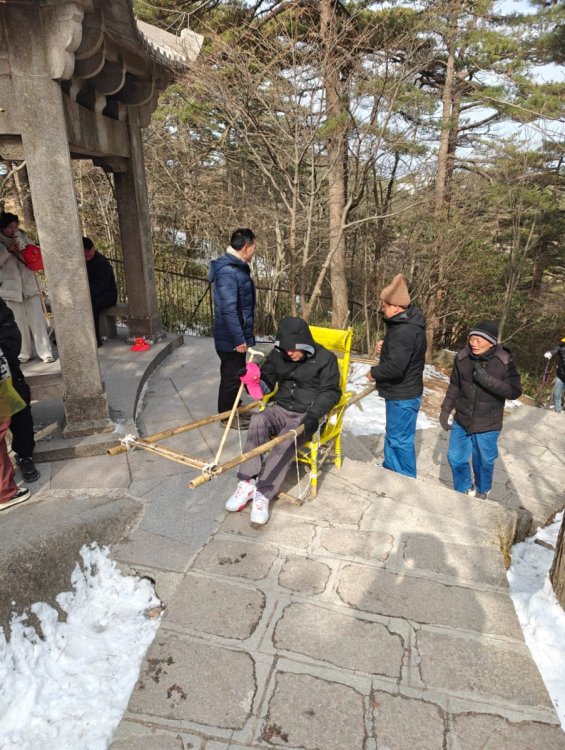


- 48 replies
-
- 19
-
-
AUDI E Concept Noticed something unusual with this new concept from Audi? The grill (or rather the lack of one), it headlights, taillights on the rear bumper, or yah you get it, the missing 4 rings. If I tell you this is NOT an Audi, I believe one of the very first thing that pops up in your mind is that this a copycat from China, am I correct? Well the car IS from China, but just NOT copycat. This isn’t an Audi but an AUDI. Confused? So am I. Audi Is Launching a New Car Company Called… AUDI tl;dr: This a new sub brand by Audi and China SAIC, for the Chinese. With many new sub-brand formed in China every other weeks, they decided to go with AUDI and call it a day. To prevent confusion (what an irony), its logo is a 4 letter words in capital, instead of the 4 rings on the parent Audi. These AUDIs will peacefully coexist with the regular crop of Audis featuring the historic logo harkening back to the Auto Union era. And you have guess, the brand new AUDI will only be carrying EVs, no gasoline model in its lineup of 3 model (in 2025). On a side note, if one day you see a CARBON82 in MCF, it is not me but maybe a new account of Carbon82 for posting some nonsense here. @kobayashiGT boleh / KYM?
- 11 replies
-
- 21
-
-